PIM ERP Integration: How They Work Together
Author name: Bradley Taylor
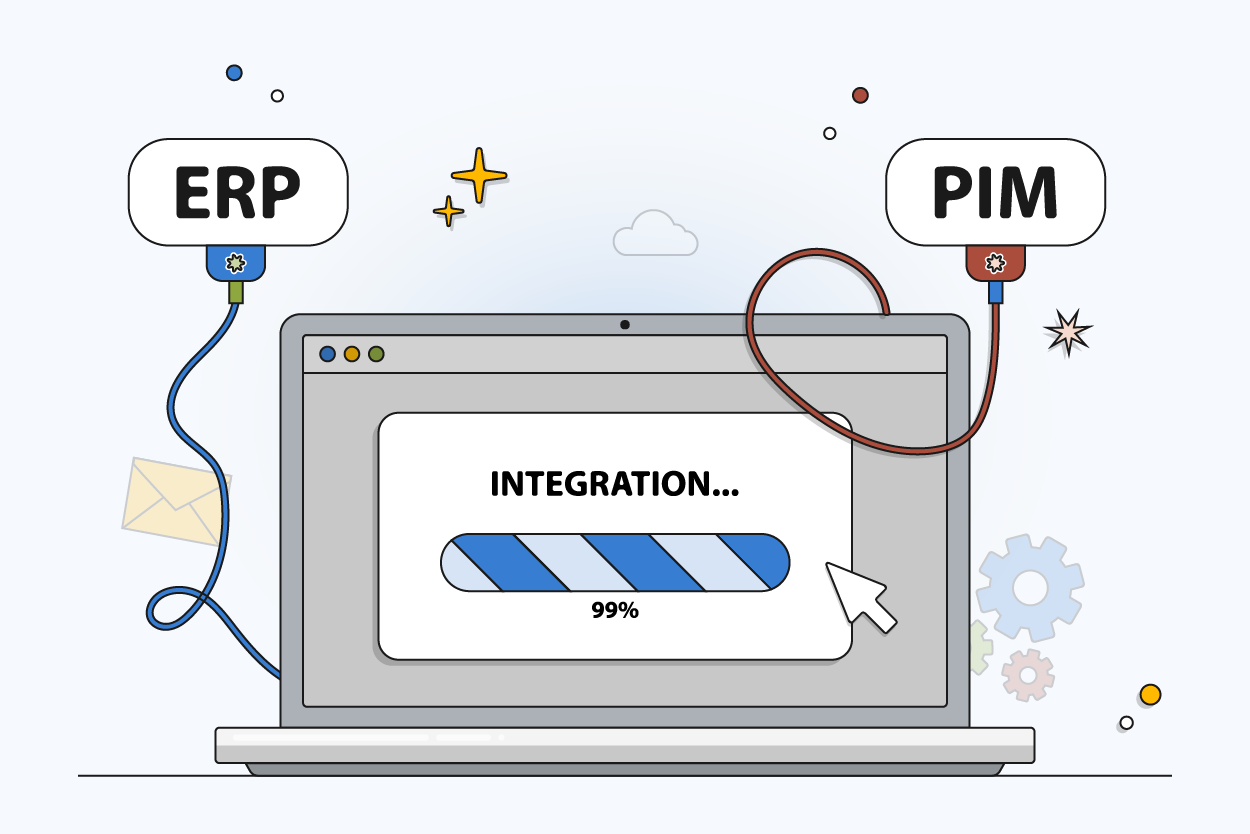
Ecommerce companies deal with large amounts of product information, inventory data, digital media, and other factors. As the company grows, so do these demands. Therefore, it becomes essential to have systems in place that can support and streamline all operations within every department.
Product information management and enterprise resource planning are two systems designed to help companies meet their growing demands. When integrated, they can offer reliable data support for all operations.Below, we will discuss how both systems function, their differences, and how PIMinto can support data integration for ecommerce companies.
ERP and PIM: Core Functions Explained
To understand how these systems work together, it helps to look at what each one is built to handle. Each system has its own strengths, and its roles become clearer once you break down its core functions.
Enterprise Resource Planning (ERP) System
An ERP system handles all the data needed to run the operations of a company. For an ecommerce company, it becomes the main database, containing all information related to inventory, pricing, purchases, and financial data. An ERP supports companies dealing in logistics, finance, and supply chain management.
An ERP system's main functions are:
- Inventory and stock management
- Order and fulfillment workflows
- Purchase orders and vendor data
- Financial records and forecasting
- Basic customer relationship management
Product Information Management (PIM) System
A PIM manages the digital content and structured attributes used to sell products online. It houses all the customer-facing details that appear on storefronts, marketplaces, and partner channels. For teams working across many platforms, a PIM helps maintain quality and consistency.
Common PIM functions include:
- Organizing product details in one place
- Storing and managing images and other digital assets
- Preparing product data for different sales channels
- Helping teams make large updates without extra work
- Supporting content for different regions or languages
What is the Difference Between ERP and PIM?
While both are beneficial, there are some key distinctions between PIM and ERP systems.
| Function | ERP | PIM |
|---|---|---|
| Primary Role | Operational and enterprise resource planning | Customer-facing product information management |
| Primary Data | Inventory, pricing, orders, suppliers | Titles, descriptions, media, and attributes |
| Focus | Internal business processes | Product content and enrichment |
| Strength | Accurate operational data | Strong presentation and content quality |
| Main Users | Operations, finance, warehouse | Ecommerce, marketing, merchandising |
Why ERP Alone Isn’t Enough for Product Content
Industry adoption shows how central ERPs have become. As of 2025, 53% of businesses consider ERP a priority investment, highlighting how much enterprises rely on these systems for core operations. Yet even with that level of importance, ERPs still cannot provide the depth of product content needed for modern ecommerce.
Many ERPs include basic product fields. However, ecommerce channels expect complete attributes, rich media, and clear descriptions. Teams also update content often, especially when managing large catalogs or multiple storefronts.
Relying only on an ERP often leads to:
- Slow updates across channels
- Limited support for images and media
- Inconsistent product data
- Delays in product launches
A PIM fills these gaps. It provides a flexible structure for enrichment, distribution, validation, and customer-ready content.
See the Full Picture: Why Modern Ecommerce Teams Choose PIM
Beyond solving ERP limitations, PIM delivers 8 measurable benefits that directly impact your revenue and team efficiency. From faster launches to higher conversion rates.
What PIM Adds to the ERP Setup
A PIM enhances the ERP rather than replacing it. The ERP remains the source for internal and operational data, while the PIM handles catalog content and channel-specific needs. Together, they support both sides of the ecommerce workflow.
A PIM adds:
- Strong tools for enrichment and content quality
- A reliable source for product assets
- Flexible editing across large catalogs
- Fast updates across marketplaces and websites
- Structured workflows for ecommerce teams
Key Benefits of PIM and ERP Integration
Companies choose ERP systems for different reasons. Growth is the top driver, with about 31% adopting an ERP to support expansion. Another 20% focus on gaining better system capabilities, about 13% seek higher efficiency, and roughly 12% want to replace outdated tools or bring scattered systems together.
These goals match the advantages of pairing a PIM with an ERP because the combination helps teams keep their product data organized and easier to manage.
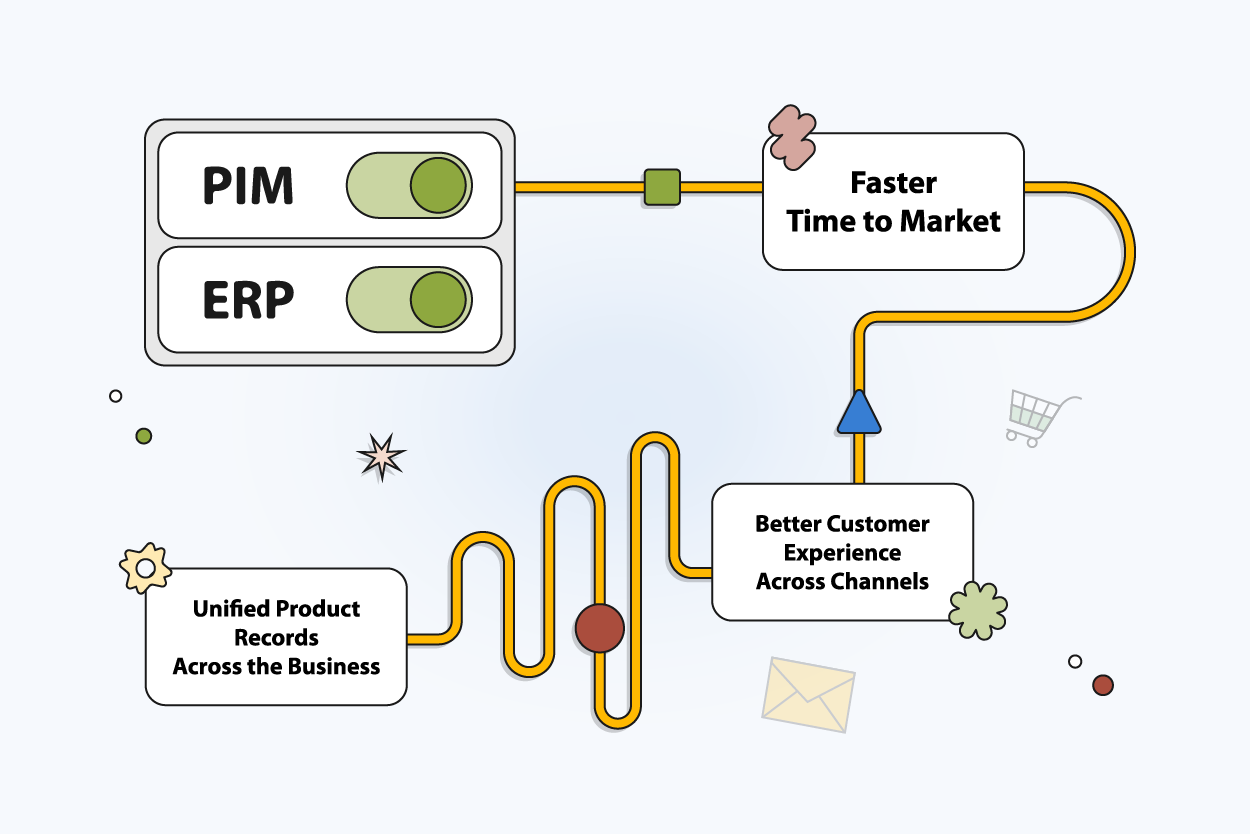
Unified Product Records Across the Business
When the ERP can pull enriched details directly from the PIM, teams gain a single source of truth instead of juggling separate versions of product data. ERP users work faster because core attributes, specs, and other product information stay consistent and up to date without manual re-entry. The PIM manages the content, the ERP handles operations, and both sides stay aligned across every department.
Faster Time to Market
Integration speeds up launch cycles by reducing repetitive work. The PIM supplies the enriched details that the ERP needs, and the ERP adds its operational data without slowing the process down. Teams don’t have to rebuild information in multiple places, so new SKUs move through setup much faster and reach sales channels sooner.
Better Customer Experience Across Channels
Strong product content increases customer confidence. When product data stays synchronized between both systems, customers see updated pricing, accurate attributes, and consistent descriptions everywhere they shop. That consistency improves conversion rates and supports stronger customer experience outcomes.
Real Impact: How PIM Transforms Every Customer Touchpoint
Synchronized data is just the start. See how PIM integration creates consistent, conversion-optimized experiences across your website, Shopify, retail partners, and more.
How ERP and PIM Systems Work Together
PIM and ERP systems work well as a connected pair. Integration creates a dependable flow of information between both sides of the business.

1. Data Synchronization
Data synchronization creates the link that keeps both systems working from the same information. The ERP provides inventory levels, pricing, supplier data, and other operational details. The PIM pulls those updates into its records so product data stays consistent across teams and sales channels, applying transformation rules through tools like the PIM Import Script Language where custom logic is needed. The shared flow helps prevent version drift and keeps the entire catalog aligned.
2. Content Enrichment
Once ERP data enters the PIM, teams add titles, specs, images, feature bullets, and other customer-facing elements. The PIM maintains quality rules, required attributes, and category-specific structures. This creates complete product profiles ready for digital channels.
3. Channel Syndication
The PIM distributes enriched data to ecommerce platforms, marketplaces, retail partners, and catalog feeds. This saves teams time and keeps product content consistent. The ERP does not handle channel formatting, so the PIM takes the lead on these tasks.
4. Operational Updates
When the ERP updates stock, pricing, or availability, the PIM uses those changes to update channel content. This prevents old information from staying live on storefronts and protects the business from errors that affect sales.
PIM ERP Integration Options with PIMinto
PIMinto supports ERP integration through a flexible approach centered on a custom API. The API gives companies a direct way to connect legacy systems, modern ERP platforms, or internal tools without restructuring their operations. Development teams can move product data in and out of PIMinto with consistent performance and full control over how information flows.
Along with API-based integrations, PIMinto offers ready-made connectors for platforms such as Shopify, WooCommerce, Magento, and BigCommerce. These connections make setup fast and allow operational data to sync with enriched product content across ecommerce channels.
Both integration paths support real-time synchronization, strong data accuracy, and high system reliability. This gives businesses the flexibility to integrate at their own pace while maintaining dependable performance across all connected systems.
PIMinto Makes PIM ERP Integration Straightforward
PIMinto helps ecommerce teams link ERP data with enriched product information without adding extra complexity. Updates move between systems quickly, and the catalog stays organized even as new products and channels are added.
Product details stay consistent because synchronization runs in real time and checks for errors before they spread. Teams can update attributes, content, and assets in one place and trust that the changes will carry through.
With both systems aligned, launches move faster, manual fixes drop, and customers see reliable product information across every channel. If you want to streamline your workflow, request a PIMinto demo and see how the integration works in practice.
Ready to Connect Your ERP with PIM?
See how PIMinto integrates with your existing ERP setup. Our team will show you the API, connectors, and sync options that fit your workflow.
Modified on: 2026-02-13
Blogs you might like
-
Best PIM Software for Shopify in 2026
Shopify handles products well until the catalog outgrows it. Variants pile up, supplier files arrive in different formats, a second store needs the same products with different content, and spreadsheets become the real system of record. That is the p...
-
Jewelry Product Catalog Software: Managing Product Data, Line Sheets and B2B Catalogs
One engagement ring design can come in three metals, four center-stone weights and twelve ring sizes. Add natural and lab-grown versions, a wholesale price for boutiques and a separate price list for Europe, and a single design turns into hundreds of...
-
Beauty and Cosmetics Product Data Management: A PIM Guide for Brands
A lipstick launches in 20 shades. Each shade has its own barcode, swatch, product photo, shade description and stock status, and every retailer wants that information in a different spreadsheet. Six months later the brand adds a matte version and a m...
-
Food and Beverage Product Data Management: A Practical Guide for Brands and Distributors
A granola bar recipe changes: almonds replace cashews. The new label goes to print, but the allergen statement on your website, the spec sheet your distributor uses and the listing on an online grocery site still say "contains cashews." Nobody made a...