Handling Complex Product Variations and SKUs
Author name: Mark James
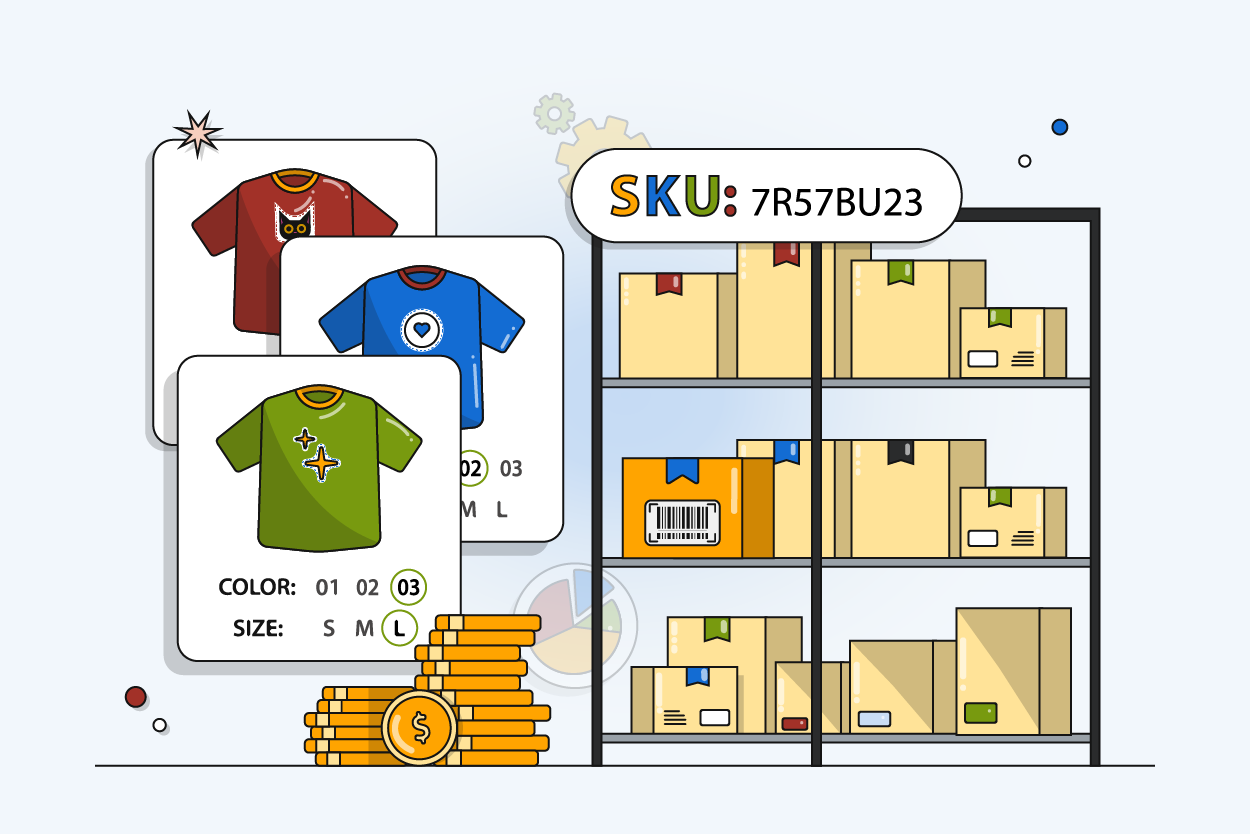
Handling complex product variations and SKUs requires strict product-data modeling rather than simple data entry. Relying on disconnected spreadsheets often exposes structural symptoms, because inconsistent option names multiply across files while duplicate identifiers break storefront mappings. Disconnected images and technical PDFs then create conflicting catalog versions for retail partners.
PIMinto provides a practical Product Information Management (PIM) and Digital Asset Management (DAM) environment to solve this catalog bottleneck. The software serves as a centralized platform once operations outgrow spreadsheets. Every sellable configuration needs an independent identity, specific attributes, distinct inventory context, and the appropriate assets, yet it must remain connected to a broader product family. Modeling products correctly allows you to syndicate one clean catalog to every endpoint without risking duplicate data entry.

The Structural Failure of Spreadsheet-Based Catalogs
Spreadsheets fail because they cannot enforce relationships. A flat file treats a parent product and a child variant as unrelated rows, so you often end up manually copying a base description down fifty rows for a single jacket. When product managers update that description, they have to find and overwrite every affected cell.
This duplication creates operational risk for B2B distributors and multichannel retailers, since a single missed cell update leaves an outdated specification on that configuration. Version control also disappears entirely when multiple users edit the same CSV file simultaneously.
Relational database structure prevents these manual errors. The core catalog model starts with three specific layers. A product family groups closely related items sharing a common design or base description, while a variant represents one specific combination of option values. Finally, a SKU acts as the unique identifier for that exact sellable configuration.
When these layers collapse into a single table, the catalog becomes brittle. Storefronts require specific data formats, so reformatting a flat spreadsheet for a new sales channel usually means building an entirely new file, which separates your data further from a single source of truth.
Define Product Relationships Before Assigning SKUs
Before generating internal identifiers, you have to determine what counts as a true product variant. Valid variants give the customer a choice among options for one specific item. For example, an apparel catalog models a Trail Jacket family using color and size as option dimensions with specific values like black and medium. Similarly, an industrial catalog might model a Pump-200 family using voltage, port size, and seal material as dimensions. Because the resulting configuration is independently stocked, priced, fulfilled, and reported, it requires its own unique SKU.
Distinguishing between variations of a single product and bundles that combine separate items prevents structural errors. A suit comprising a jacket and pants functions as a bundle rather than an attribute variation of the jacket alone. Likewise, a promotional bath set containing a towel, soap, and a tray combines separate sellable products into a single offer.
These non-variant sets require a different structural model. For that reason, Google explicitly advises against using the same item group structure for products that are similar but not specifically variants, including a suit consisting of a jacket and pants or a set of bath accessories.

Build a Valid Variant Matrix
Many attributes exist solely to provide information without creating a new physical variation. Descriptive attributes offer context, whereas variation dimensions dictate the exact physical item a customer receives. Material might describe a standard shirt, but if the customer has to choose between cotton and polyester to complete the purchase, material becomes an active variation dimension.
Combining multiple option dimensions multiplies the theoretical SKU count rapidly. A product with four colors, three sizes, and two finishes produces 24 mathematical combinations. Activating all 24 configurations based purely on the mathematical formula creates data clutter. A clean catalog contains only the configurations the business manufactures or sells.
A valid variant matrix prevents the creation of impossible SKUs. For instance, a B2B manufacturer might offer the Pump-200 in 120V, 208V, and 480V, with 1-inch or 2-inch ports alongside EPDM or Viton seals. If the 480V version physically requires a 2-inch port, the 1-inch option becomes impossible to manufacture, meaning the matrix needs to block that invalid combination.
A well-designed valid-combination matrix tracks the exact status of each output configuration:
| Family ID | Variant SKU | Voltage | Port Size | Seal | Status |
|---|---|---|---|---|---|
| PUMP-200 | PUMP-200-120-1-E | 120V | 1 inch | EPDM | Active |
| PUMP-200 | PUMP-200-480-2-V | 480V | 2 inch | Viton | Active |
| PUMP-200 | PUMP-200-480-1-E | 480V | 1 inch | EPDM | Invalid |
| PUMP-200 | PUMP-200-208-2-E | 208V | 2 inch | EPDM | Custom Quote |
PIMinto uses a variation matrix and related-SKU architecture to support this level of control. The system links related variants without generating thousands of unusable database entries, which simplifies distributor SKU management for catalogs carrying deep technical specifications.
Design a Stable SKU Architecture
SKU codes require consistent naming conventions to remain useful across operational systems. Every sellable combination receives exactly one unique code, which follows a stable, predictable format to leave room for future products without breaking existing taxonomy rules. Standardizing option values keeps the structure readable, meaning a medium black jacket always becomes TRAIL-JACKET-BLK-M instead of occasionally using BLCK, BK, or MED.
Embedding volatile information into a SKU creates long-term instability. Price, channel assignment, seasonal campaign tags, and inventory status change frequently, so including them in an identifier guarantees the code will eventually become inaccurate. If an item moves from a specific summer promotion to the standard catalog, its physical identifier stays the same.
Separating internal SKUs, Manufacturer Part Numbers (MPNs), and Global Trade Item Numbers (GTINs) into distinct database fields protects your architecture. Collapsing these values into a single identifier breaks downstream integrations and reporting tools. Shopify warns that duplicate SKUs create problems for third-party integrations and complicate accurate inventory tracking.
Reusing an old SKU for a new physical item disrupts historical data. B2B service records, historical orders, and warranty claims rely on that legacy identifier existing indefinitely. Creating a migration crosswalk table connects old internal codes with newly standardized catalog formats without deleting history.
Store Product Data and Assets at the Correct Hierarchy Level
Data inheritance prevents manual duplication across child records because storing information at the correct hierarchical level means users only update a field once.
The product-family record holds the shared base name, core description, category assignment, common technical specifications, and default channel information. In contrast, variant records hold the specific option values, SKU, price, weight, dimensions, GTIN, and availability. Child variants inherit the family data, overriding only what changes for that specific configuration.
| Data Category | Product-Family Level | Variant-SKU Level |
|---|---|---|
| Product name | Shared base name | Variant title or suffix |
| Description | Shared core description | Variant-specific overrides |
| Color or Size | No (unless single value) | Yes |
| Price | Optional default | Yes (active selling price) |
| GTIN / MPN | No | Yes |
| Availability | No | Yes |
This rule applies directly to digital assets as well. Shared lifestyle photography, brand videos, and general installation guides belong at the family level, while variant-specific assets attach exclusively to the child SKU. A customer selecting a red jacket expects to see the red image, just as an engineer ordering a 480V pump needs the configuration-specific CAD drawing.
PIMinto combines product data with a dedicated DAM to preserve these structural relationships. Keeping files connected directly to product records prevents the creation of isolated network folders full of untrackable PDFs, and it allows administrators to define internal ownership for each data type. Built-in brand portals also let users securely expose curated product sheets, line sheets, and technical manuals to retail partners without granting backend access to unfinished drafts.

Publish One Canonical Catalog Across Channels
A centralized PIM acts as the canonical catalog, generating mapped outputs for each independent sales channel so no storefront ever functions as the master record. For example, Shopify represents combinations of option values as variants and manages inventory specifically at that variant level. BigCommerce uses option combinations to define variants, requires each to hold its own SKU, and restricts endpoints to a 600-SKU-per-product limit. These constraints represent mapping logic to handle during syndication rather than limitations forced onto your master database.
Google Merchant Center requires an ID for every item, and that ID must be unique. Google's local product specification identifies item group ID as a shared identifier for all variants of the same product.
Feed values require perfect alignment with the destination landing page. The variant title, selected option, price, availability, image, and specific URL in the feed need to match what the shopper sees upon clicking. Variant URLs identify the precise selected configuration through a path segment or query parameters (such as ?variant=12345), ensuring the landing page loads the correct price and image immediately.
Running a pre-publication check before syncing data to any endpoint catches structural errors early. Validating SKU uniqueness, verifying populated attributes, checking unit formatting, and confirming that technical documents hold approved status prevents channels from rejecting your feeds. Addressing these requirements systematically in a cloud based PIM protects seller ratings and ensures clean syndication.
Build a Repeatable SKU Management Workflow
Maintaining a catalog requires a predictable operational sequence. Following a structured workflow keeps the product matrix organized as your assortment scales.
- Audit existing catalog files across spreadsheets, ERP exports, and storefronts.
- Establish source ownership, assigning inventory to the ERP and descriptions to the PIM.
- Normalize attribute formats, standardizing spelling, capitalization, and units.
- Define variation dimensions, selecting only attributes that create physical configurations.
- Build the valid matrix to exclude impossible combinations.
- Reconcile legacy identifiers using a SKU crosswalk.
- Link digital assets to the correct family or variant record.
- Map output feeds to specific channel requirements.
- Validate payloads before syncing to external platforms.
- Monitor post-publication errors, rejected feed records, and inventory mismatches.
PIMinto provides the architecture to support this ongoing workflow. The software includes API connectors for Shopify, BigCommerce, WooCommerce, Wix, and custom endpoints as standard features. Its AI PIM Assistant drafts descriptions or enriches missing attributes, leaving human editors to focus on reviewing and approving the final text.
As of September 11, 2026, PIMinto scales with transparent pricing. The Starter tier provides up to 1,000 SKUs for $0 per month, while the Essentials plan covers 10,000 SKUs for $300, Premium covers 50,000 for $600, and Super covers 120,000 for $950. A custom Extreme tier supports up to one million SKUs. Paid subscriptions include unlimited users and unlimited data outputs, though specific limits apply to storage capacity, brand portals, and data transformations. With free onboarding and data migration, any brand can move its catalog out of isolated spreadsheets and establish a reliable data foundation.
Organize your catalog with a centralized platform built for multichannel growth. See how PIMinto manages complex variations and start with a free migration at https://piminto.com.
Modified on: 2026-09-11
Blogs you might like
-

Best PIM Software for Shopify in 2026
Shopify handles products well until the catalog outgrows it. Variants pile up, supplier files arrive in different formats, a second store needs the same products with different content, and spreadsheets become the real system of record. That is the p...
-

Jewelry Product Catalog Software: Managing Product Data, Line Sheets and B2B Catalogs
One engagement ring design can come in three metals, four center-stone weights and twelve ring sizes. Add natural and lab-grown versions, a wholesale price for boutiques and a separate price list for Europe, and a single design turns into hundreds of...
-
Beauty and Cosmetics Product Data Management: A PIM Guide for Brands
A lipstick launches in 20 shades. Each shade has its own barcode, swatch, product photo, shade description and stock status, and every retailer wants that information in a different spreadsheet. Six months later the brand adds a matte version and a m...
-
Food and Beverage Product Data Management: A Practical Guide for Brands and Distributors
A granola bar recipe changes: almonds replace cashews. The new label goes to print, but the allergen statement on your website, the spec sheet your distributor uses and the listing on an online grocery site still say "contains cashews." Nobody made a...