How To Choose Distributor SKU Management Software
Author name: Mark James
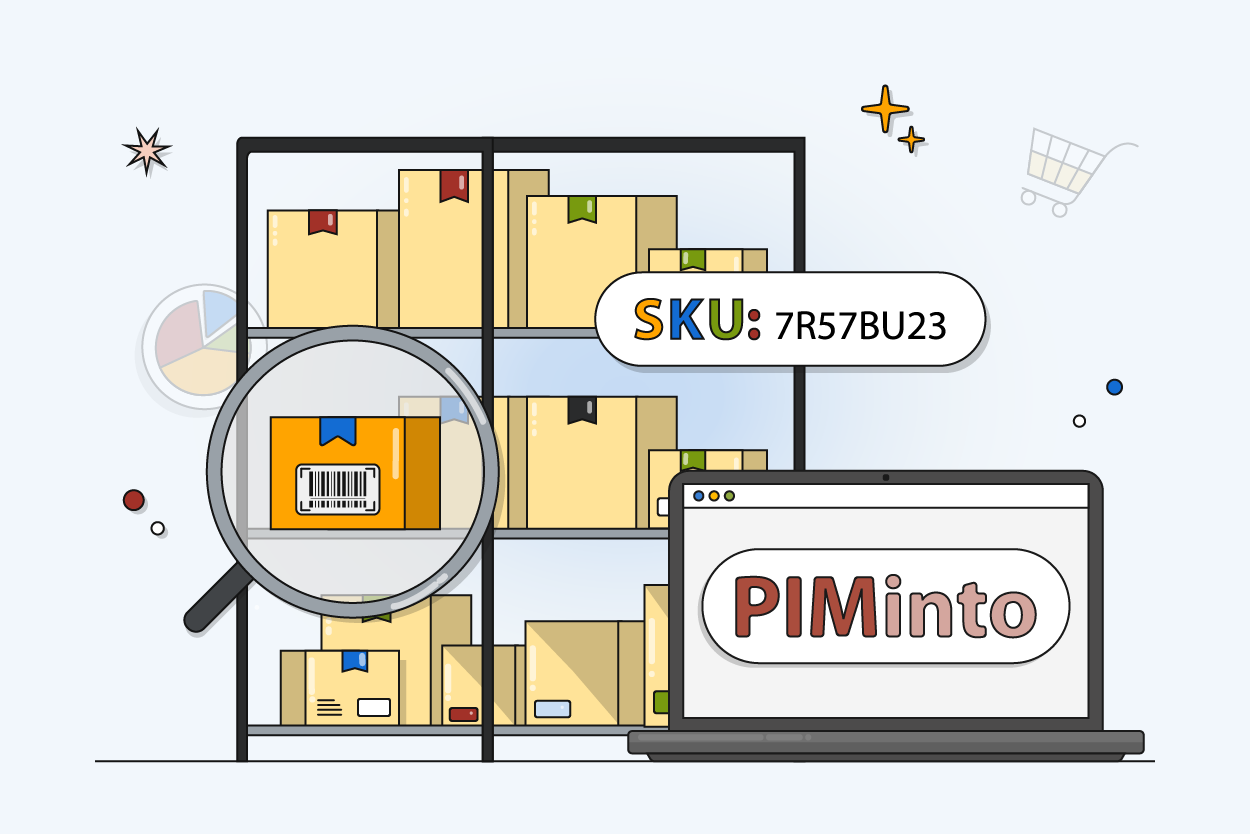
A B2B buyer places a bulk order based on a spreadsheet export you sent them Tuesday, but by Thursday, half those items are out of stock because your ecommerce storefront pulled inventory data from a different database. The resulting backorders frustrate the customer and create hours of reconciliation work for your fulfillment team. Managing complex catalogs across multiple channels requires a single source of truth, since forcing flat files to do the job fails at scale. Manual data entry yields an error rate of up to 4% per entry, which compounds exponentially when you paste that data across multiple disconnected systems. Approximately 88% of spreadsheets used for eCommerce and data management contain errors and incorrect data. Choosing the right distributor sku management software stops this compounding bleed of revenue and operational hours. A centralized B2B eCommerce system can reduce sales cycles by up to 50%, while removing human intervention from the data routing process reduces product data errors by up to 95%. A unified platform like PIMinto replaces disconnected systems, giving your team instant control over product specifications, compliance data, and digital assets from a central hub. Evaluating a new platform requires looking past basic data storage to find a system that maps complex relationships between parent products and variants without constant IT intervention.

Mapping Variant Complexity to Stop SKU Proliferation
Physical products do not map cleanly to single database rows. For example, a standard industrial valve comes in five pipe sizes, three material finishes, and requires different compliance tags for North American and European markets, meaning that single physical item spawns dozens of individual SKU records. Once you add the packaging hierarchy, where an item exists simultaneously as an individual unit, a shrink-wrapped case, and a pallet, your catalog data expands exponentially. Some consumer brands attempted SKU rationalization to cut innovation costs between 2019 and 2024 according to L.E.K. Consulting, but B2B distributors continue to face unavoidable SKU expansion driven by sustainability requirements and localized market demands.
Spreadsheets buckle under this volume. Version control vanishes the moment you email a catalog file to a distributor. A simple sorting error breaks the alignment for thousands of rows, triggering massive shipping chargebacks before anyone notices the wrong dimensions. Meanwhile, VLOOKUP formulas link workbooks together to create fragile dependencies that snap when someone renames a folder on the shared drive, or when a supplier adds a single column for tariff codes that shifts the entire index array and corrupts every price calculation in the document.
To fix this, map your data structure before you evaluate any cloud based PIM system. Document exactly how many attributes a single flagship product requires across all your sales channels, counting the internal identifiers, localized marketing descriptions, weight metrics, and compliance fields. You can then use this map during software demonstrations to force vendors to show exactly how their interface handles your specific variant complexity.
If a vendor requires you to manually duplicate parent attributes across every child variant, eliminate them from your list. Modern platforms use inheritance models instead, allowing you to update the material specification on the parent product so the software automatically cascades that change down to all fifty child SKUs.
Unifying PIM and DAM to Eliminate Sync Failures
Product text and visual assets belong together, which means operating a Product Information Management (PIM) system for specifications and a separate digital asset management (DAM) platform for files creates constant synchronization failures. Siloed digital asset management creates severe bottlenecks in SKU distribution. If you upload a revised schematic to a network drive, the ecommerce platform often continues serving the outdated version because the filename mapping broke during a batch update. An obsolete wiring diagram left on a live product page causes a contractor to install the unit incorrectly, resulting in expensive warranty claims and safety liabilities.
Regulatory mandates amplify this problem and render manual spreadsheet management impossible. Mandates like the European Digital Product Passport are forcing distributors to expand SKU profiles to include deep sustainability and lifecycle data. Tracking these metrics alongside repair manuals and material sourcing certificates requires a system where documents travel with the exact SKU they belong to. Tying a PDF manual to a parent product category proves useless if the specifications changed between the 2025 and 2026 production runs.
Select software that builds the DAM directly into the PIM architecture. Platforms are merging PIM and DAM capabilities into a single environment so images, videos, and compliance documents are tied to granular SKU variants. PIMinto links high-resolution imagery, CAD files, and compliance documents directly to these variants, so when you deprecate a specific part number, the system automatically archives the associated spec sheets. This ensures obsolete assets never push to your external sales channels.
Audit your current asset library before migrating to standardize your file naming conventions using unique identifiers like the GTIN or internal part number. Establishing a clean naming structure allows the software to automatically map thousands of images to their corresponding text records during the initial data import, saving weeks of manual tagging. Never separate visual assets from textual data during this preparation phase, as fixing broken links after an import wastes valuable implementation hours.

Evaluating API Connectors for Real-Time Syndication
Getting data into a central database only solves half the problem, as that information must still flow out to retail partners, direct-to-consumer storefronts, and B2B marketplaces. Relying on scheduled CSV exports creates data lag. If a distributor buys your remaining inventory of a popular item on Saturday morning, and your flat-file batch runs on Sunday night, your website will take orders for nonexistent stock for 36 hours. Distributors are shifting from scheduled flat-file updates to real-time, API-driven data flows to ensure exact inventory and pricing synchronization across B2B portals and DTC marketplaces.
Real-time, API-driven data flows keep inventory and pricing synchronized across every endpoint by talking directly to the target platform and pushing updates the moment a change occurs in the central hub. B2B ecommerce conversion rates cross-industry average 1.8% to 2.7%, while sectors like food and beverage distributions can reach up to 6.0%. Hitting these conversion targets requires absolute data accuracy at the exact moment the buyer loads the product page.
Many legacy vendors hide the true cost of this connectivity. They sell the core database software, then require you to purchase expensive third-party middleware to connect it to your storefronts. This forces you to pay a licensing fee for the PIM, a subscription fee for the integration tool, and consulting hours to configure the mapping. Furthermore, third-party connectors often throttle data transfers during seasonal catalog updates, leaving half your products unpublished during critical sales windows.
Require native API connectors in your initial software contract. PIMinto includes these connections to Shopify, BigCommerce, WooCommerce, Wix, and Google Shopping as standard features. Avoid manual CSV or XML exports for channel syndication entirely. A native Shopify PIM integration understands Shopify's specific API rate limits and payload structures, automatically queuing updates to prevent throttling during massive catalog pushes. Review the connector list against your current sales channels, asking the vendor to demonstrate exactly how the platform formats data to meet Google Shopping's strict taxonomy rules automatically to reduce listing rejections.
Normalizing Messy Supplier Data with AI Engine Rules
Artificial intelligence in SKU management has transitioned from basic content generation to handling complex data validation, predictive attribute mapping, and automated quality control across entire catalogs. When a new manufacturer sends a spreadsheet, they might list dimensions as "Length (in)", use abbreviations like "Blk" for color, and format weights in pounds, whereas your target retail channel might require "Depth_CM", "Black", and kilograms. Optimizing product data completeness increases conversion rates by 12% to 30%, depending on the specific sales channel.
Manual data entry and normalization introduce high error rates, where a misplaced decimal point in a weight field causes automated freight calculators to undercharge shipping on heavy industrial equipment, erasing the profit margin on the sale. If a human typist accidentally enters a pallet dimension instead of a unit dimension, the automated warehouse routing logic fails completely.
AI engines perform predictive attribute mapping and automated quality control by scanning the incoming supplier file to identify mismatched naming conventions. Utilize an AI PIM Assistant to automate the mundane aspects of SKU management, allowing the software to convert imperial measurements to metric, map the columns to your internal schema, and flag missing mandatory fields to prevent incomplete SKUs from routing to the syndication queue. This technology standardizes units of measure and generates localized descriptions, reserving human effort for final approval rather than initial data entry.
Test these capabilities using your dirtiest data by giving the vendor a raw, unformatted supplier spreadsheet during the pilot phase. Ask them to run it through their AI normalization engine to see how accurately the system corrects the abbreviations and unit measures. If the AI generates marketing copy but fails to structure technical data, it will not scale your B2B operations.
Distributing Assets Securely Through Brand Portals
Emailing ZIP files of product images to retail buyers acts as both a security risk and an operational bottleneck. The files frequently exceed corporate email server limits, forcing you to use unmanaged consumer file-sharing links. Once the retailer downloads the files, you lose all control over that data, meaning when you update the product packaging three months later, the retailer continues using the old assets because they never received the revision email. If a partner accidentally launches a promotional campaign using an embargoed product image pulled from a stale FTP server, it ruins your coordinated market launch.
Modern B2B operations rely on self-service access, requiring a system that allows external partners to pull the exact data they need without submitting a ticket to your support team. Market research shows that 64% of modern B2B buyers are millennials and Gen Zers who prefer digital channels over traditional sales methods, and distributor benchmarks prove this shift is lucrative. For instance, Carrier Enterprise captured 60% of its sales through digital channels by prioritizing modernized access. Furthermore, 80% of B2B companies report notable cost savings after adopting digital eCommerce systems.
Configure dedicated brand portals for your distribution network to provide a secure, read-only window into your catalog. Move away from emailing attachments and implement automated platforms where partners can query and download the exact SKUs and approved assets they need in real-time. You dictate which products and file types each specific retailer can view based on their login credentials. This lets a regional distributor log in, filter the catalog for the product lines they carry, and download a consolidated package of accurate specs and approved lifestyle images.
PIMinto provides these built-in portals to help you securely share product sheets with retail partners through a dynamic connection. Because the data syncs automatically, updating a material safety data sheet in the core PIM causes the portal to reflect that change instantly. Before deploying, map out your top ten retail partners to define the specific data fields they require, and use these requirements to configure unique portal views with strict category-level permissions and scheduled revocation dates for each partner during your implementation phase.

Calculating Total Cost of Ownership to Protect ROI
Enterprise software pricing often penalizes growth. Legacy platforms typically charge per-user licenses, forcing you to share login credentials and destroy your audit trails. They also impose artificial data output limits, charging overage fees when you expand into new marketplaces or push frequent seasonal catalog updates.
Compare these pricing models over a three-year horizon, because a low initial entry price means nothing if adding your customer service team to the platform later doubles your annual licensing cost.
| Evaluation Criteria | Legacy PIM Platforms | Modern Unified Systems (PIMinto) |
|---|---|---|
| Data Architecture | Siloed PIM and standalone DAM modules requiring custom API synchronization scripts to match images to text records | Native database architecture linking high-resolution assets, CAD files, and compliance PDFs directly to granular SKU variants upon upload |
| Channel Syndication | Manual CSV exports or paid third-party middleware requiring separate subscription fees and consultant mapping hours | Native, real-time API connectors included for major eCommerce storefronts to automatically meet specific platform taxonomy rules |
| Partner Distribution | Manual ZIP files sent via unmanaged file transfers resulting in fragmented version control across external retail networks | Self-service branded portals featuring dynamic connections for instant downloads of approved specifications and lifestyle images |
| Pricing Model | Per-user license fees and strict data volume limits that penalize seasonal catalog scaling and internal team expansion | Transparent flat rate providing unlimited user accounts and unmetered data outputs to support unlimited multichannel scaling |
Implementation fees represent the largest hidden cost in catalog management software, as many vendors charge tens of thousands of dollars to map your existing spreadsheet data to their database schema, extending the deployment timeline by months. PIMinto removes this barrier by providing completely free onboarding and data migration. Their transparent model includes unlimited users and unlimited data outputs, allowing you to scale multi-channel syndication without hitting artificial paywalls or worrying about software overages.
Implement the software iteratively to accelerate your return on investment instead of attempting to migrate your entire historical catalog in one weekend. Begin with your flagship items when migrating from spreadsheets to a unified catalog. Focusing first on the hero SKUs that drive the majority of revenue allows organizations to prove ROI within weeks, test channel API integrations, and avoid the operational paralysis of a monolithic migration. By connecting this tight cluster of products to your primary sales channel, you validate the automated formatting rules. Once the data flows flawlessly for your best products, you can roll out the remaining catalog segments with total confidence in the underlying architecture.
Manual spreadsheet errors and disconnected product data directly reduce B2B sales. PIMinto centralizes your catalog, unifies your digital assets, and syndicates accurate listings directly to your retail partners and storefronts. Discover how our unlimited user model and free data migration help you scale operations faster at piminto.com.
Modified on: 2026-08-17
Blogs you might like
-

Best PIM Software for Shopify in 2026
Shopify handles products well until the catalog outgrows it. Variants pile up, supplier files arrive in different formats, a second store needs the same products with different content, and spreadsheets become the real system of record. That is the p...
-

Jewelry Product Catalog Software: Managing Product Data, Line Sheets and B2B Catalogs
One engagement ring design can come in three metals, four center-stone weights and twelve ring sizes. Add natural and lab-grown versions, a wholesale price for boutiques and a separate price list for Europe, and a single design turns into hundreds of...
-
Beauty and Cosmetics Product Data Management: A PIM Guide for Brands
A lipstick launches in 20 shades. Each shade has its own barcode, swatch, product photo, shade description and stock status, and every retailer wants that information in a different spreadsheet. Six months later the brand adds a matte version and a m...
-

Food and Beverage Product Data Management: A Practical Guide for Brands and Distributors
A granola bar recipe changes: almonds replace cashews. The new label goes to print, but the allergen statement on your website, the spec sheet your distributor uses and the listing on an online grocery site still say "contains cashews." Nobody made a...