Advantages of Multichannel Retailing: Benefits and Trade-Offs
Author name: Mark James

Selling products through multiple destinations helps businesses reach different customer audiences. That multichannel model uses channels such as a branded ecommerce site, online marketplaces, Google Shopping, social commerce networks, retail stores, wholesale marketplaces, and B2B storefronts. Shopify’s sales channel documentation defines a sales channel as a pathway businesses use to reach customers and sell products, and says each channel can help a business access a different audience.
Omnichannel retail connects these touchpoints into a unified customer experience, while multichannel retail keeps each channel as a distinct purchasing environment. Multichannel operations can provide a foundation for deeper integration, but they do not require shared catalogs, pricing, or customer service workflows across every platform.
While more channels create opportunities, they also multiply your data management workload. Expanding your footprint exposes your catalog to new audiences, so your product facts, variants, and digital assets must scale without introducing costly errors. Using a dedicated product information management (PIM) system like PIMinto helps govern product data and prepare it for each channel, which allows you to realize the advantages of multichannel retailing without losing control of your operations.
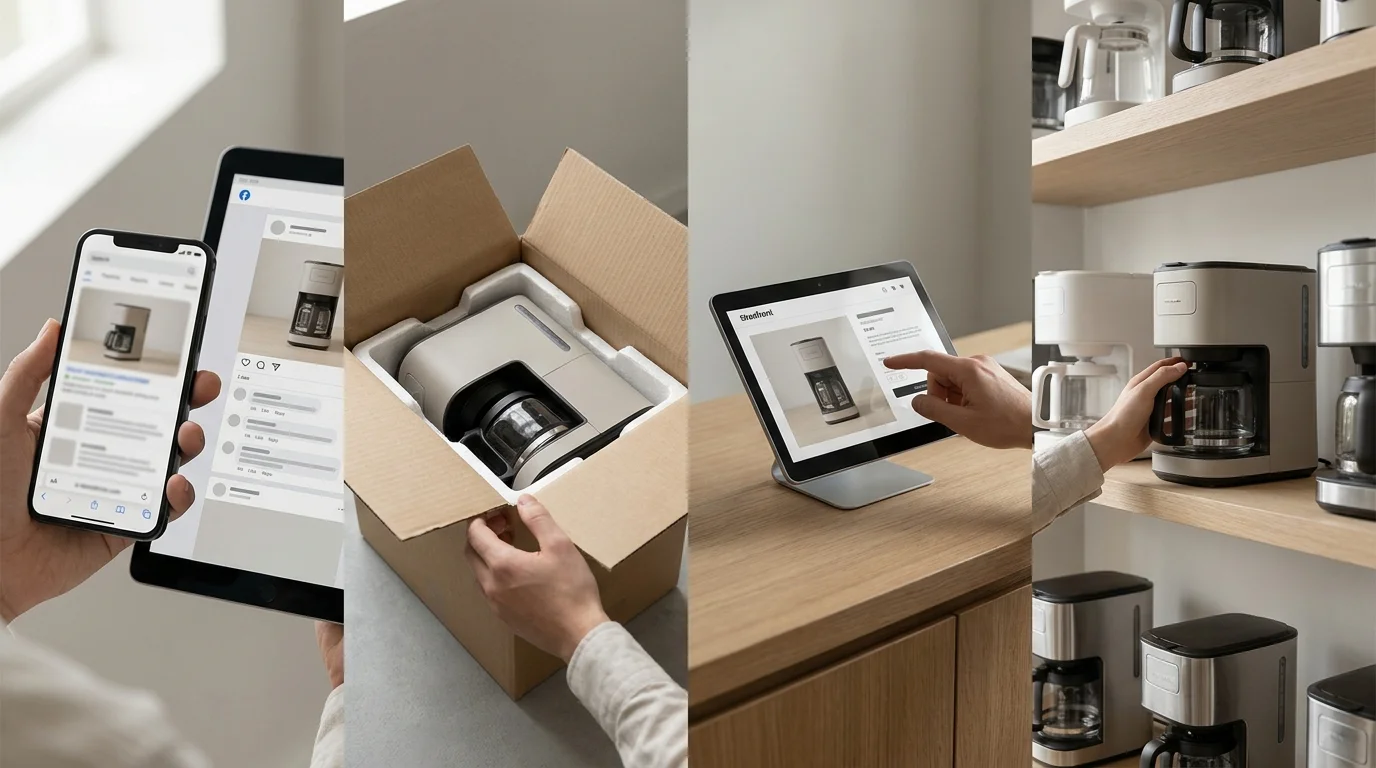
Strategic Benefits of Expanding Your Sales Channels
Reach More Customers and Diversify Routes to Market
A company-owned website gives you total control over the storefront, but external platforms expose your products to customers who do not yet know your brand. Marketplaces provide established shopping environments with high existing traffic, while Google captures active search intent right as a user looks for a solution. Social commerce shortens the path from product discovery to checkout, and wholesale channels extend your reach through established partner networks. For physical goods, stores and showrooms help shoppers inspect products that require hands-on evaluation.
This strategy creates alternative routes to market and reduces your dependence on a single storefront or acquisition source. Relying exclusively on one website or one advertising platform limits your flexibility if that channel changes its policies, fees, or search algorithms. Multichannel retailing diversifies how customers find you. A business can still trade one dependency for another if it relies heavily on a single marketplace, making careful evaluation of each new platform necessary.
Make Discovery and Purchase More Convenient
Different shoppers prefer different purchasing environments. Multichannel retailing allows you to match the buying environment to the customer and the product category. A consumer buying a low-cost replacement part might want the fast, familiar checkout of a major marketplace, whereas a B2B buyer placing a massive reorder might require a private dealer portal with specific technical documentation, bulk discounts, and negotiated shipping rates. A shopper evaluating complex machinery could benefit from an in-person demonstration.
Offering more purchase options removes friction from the buying process. You meet the customer where they feel comfortable completing the transaction, rather than forcing every demographic through the exact same funnel.
Improve Channel Fit With Better Product Data
On Google, product data supports discovery because Merchant Center uses it to match products to queries. The Google Merchant Center product data specification says accurate, correctly formatted product data is essential for ads and free listings. Its requirements cover details such as product ID, title, description, Google product category, price, availability, variant attributes, and images, with requirements varying by product and country. Missing, inaccurate, or conflicting data can lead to disapprovals, limited eligibility or visibility, or incorrect displays.
A centralized catalog gives you a governed source to manage these requirements, helping you keep terminology and brand assets consistent while tailoring the assortment, copy, pricing, currency, and availability for each specific destination. B2B channels receive complex installation manuals, line sheets, videos, and technical files, while consumer marketplaces get simplified descriptions and lifestyle images. This setup lets you deliver the exact data format each platform demands without rebuilding your catalog from scratch.
Operational Challenges and Trade-Offs to Consider
Manage Channel Rules and Catalog Complexity
Every additional channel creates another place where product titles, descriptions, specifications, and images can become outdated or non-compliant. Each platform imposes distinct category mappings, image resolution rules, variant structures, and feed formats. One marketplace might require parent-child variant grouping by color and size, while another treats each variant as a standalone listing.
Managing this complexity in spreadsheets leads to duplicate edits, overwritten files, and inconsistent product records. Missing a single mandatory field on a new channel can block your catalog update, causing inventory and pricing to fall out of sync with your primary website.
Separate Product Content From Inventory and Orders
Shopify’s sales channel documentation distinguishes referral channels such as Google and Meta, which drive traffic back to the merchant’s store, from marketplace channels such as Amazon and Walmart, where the external platform handles checkout and payment. It also says channel specifications determine product-feed and pricing expectations, while the merchant-of-record setting identifies who processes the transaction.
A PIM serves as the source of truth for product content, specifications, and digital assets, but it does not replace the systems that track your physical goods. Your connected ecommerce platform, ERP, inventory-management system, and order-management system handle the operational reality of fulfillment, returns, and stock levels. If you launch a high-volume marketplace without connecting it to your central inventory system, you risk overselling products you no longer have in stock.
Protect Margins and Interpret Performance
A channel may generate massive reach but remain unprofitable. Marketplace commissions, advertising costs, fulfillment fees, mandatory discounts, and return processing quickly erode channel revenue, meaning you might sell more units but take home less cash.
Attribution also becomes less clear. A customer may discover a product on a social network, research it on an aggregator, and eventually purchase it through your branded website. Last-touch attribution models over-credit the final channel and understate the contribution of the earlier discovery channels. To understand true profitability, evaluate each destination by looking at the gross margin after fees, fulfillment cost, return rate, customer acquisition cost, average order value, and the ongoing data maintenance effort required to keep the listings active. You might find that multichannel ecommerce software helps organize channel data and outputs, but the underlying economics dictate whether the channel is worth keeping.

Consolidating Data Operations With PIM and DAM
Create a Governed Product and Variant Record
Scaling a multichannel operation requires a canonical product model, which means establishing stable SKUs, clear parent-child variant relationships, and shared attributes that define your catalog. Instead of scattering product dimensions in an ERP, descriptions in a CMS, and photos on a local hard drive, you give product facts one approved home.
This governed record prevents conflicting data from reaching the public. When a product weight changes, you update the master record once, and the system applies the update to every variant associated with that parent product. This ensures your shipping calculations remain accurate across all storefronts.
Distribute Channel-Ready Content Without Rework
PIMinto combines product data storage with a dedicated Digital Asset Management system, allowing you to distribute channel-ready content without endless manual rework. You define custom data models, manage bulk imports, and run automated data enrichment with an AI PIM Assistant that drafts content for human review.
The software monitors product completeness before publication. If a channel requires an MPN and a high-resolution image, the system flags the missing data before it causes a feed rejection. Master data dictates the core product facts, while channel overrides allow legitimate differences in pricing or promotional copy, turning linked images, videos, manuals, PDFs, and line sheets into channel-specific outputs. By using PIMinto’s Shopify PIM integration and other documented connectors, you push approved updates directly to connected destinations without relying on manual CSV exports.
Give B2B Partners Controlled Self-Service
For manufacturers and distributors, multichannel retailing extends beyond consumer storefronts. Retail partners, dealers, sales representatives, and external distributors need constant access to technical specifications, installation manuals, CAD files, and approved marketing materials.
A PIM can support this through controlled brand portals. Dealers and internal teams access approved product information and digital assets directly from the database, meaning they stop relying on outdated email attachments and generic shared folders. The centralized catalog feeds these portals so your B2B partners represent your brand with the same accuracy as your direct-to-consumer website. Governed reuse replaces disorganized file sharing, keeping your extended network aligned with your current catalog.

How to Build a Practical Multichannel Retailing Strategy
Choose Channels With a Business Case
Do not add a destination solely because it has high traffic. Define the target customer, the product category fit, the expected margin, and the fulfillment model before investing the effort, and assign an operational owner to each channel so accountability is clear. Distinguish the platforms that generate traffic for your main site from the platforms that capture the order natively. A specialized PIM for distributors might feed a massive B2B wholesale network, while a consumer brand might focus its energy on a few highly visual social commerce feeds. Let your business economics dictate the expansion.
Map Data Requirements, Ownership, and Integrations
Build a detailed channel requirements matrix before writing any new content. Document the mandatory fields, title length restrictions, image formats, category mappings, identifiers, pricing rules, currency demands, and return policies for every planned destination.
Define your canonical SKU model early, separating the shared, universal product facts from the channel-specific overrides. Link every image, video, and manual directly to the right product or variant within the PIM. Then, assign clear ownership by determining who writes the marketing copy, who sets promotional pricing, who tracks inventory, and who approves the final feed. Connect the PIM to your ERP, inventory systems, and marketplace tools so the product content flows alongside the operational data without replacing those specialized systems.
Validate, Launch, and Measure in a Controlled Loop
Before launching a new channel, run completeness checks and feed validation, then pilot a representative assortment to confirm that the category mappings and variant structures display correctly. Catch feed disapprovals on a small scale before exposing your entire catalog to formatting errors.
After launch, review the performance by channel and by individual product. Measure the gross profitability, conversion rates, return volume, and the operational effort required to maintain the listings. This data helps you determine if a channel deserves more investment or if the operational cost outweighs the revenue. Ultimately, this controlled approach allows you to push updates faster, ensure technical assets reach partners efficiently, and maintain tight control over your assortment, prices, and margins across a fragmented map of storefronts.
How PIMinto Supports Growing Multichannel Brands
Replace Spreadsheet-Based Catalog Workflows
PIMinto provides one centralized environment for managing product records, media, technical documents, data enrichment, validation, and channel-ready outputs. It replaces the disconnected, error-prone spreadsheets that slow down product launches and cause data inconsistencies. You no longer have to search for the latest image version or the correct SKU dimension. The platform centralizes the catalog, while the AI PIM Assistant helps draft and enrich product content for fast human review and approval.
Manage Complex Variants, Assets, and Partner Content
Managing a catalog with extensive variations requires a structured database, not a flat spreadsheet. PIMinto handles complex variants, allowing you to define size, color, material, configuration, and replacement parts accurately under a parent product.
The built-in Digital Asset Management system links photos, videos, and PDFs directly to those variants. For external distribution, brand portals allow you to generate product pages and line sheets for partner enablement, giving your B2B network immediate access to approved information.
Start With Transparent Plans and Implementation Support
Based on its current pricing plans, PIMinto offers a free Starter tier, with paid subscriptions beginning at $300 per month. The plans list unlimited users, unlimited outputs, onboarding, and training, while connector availability depends on the specific plan and integration.
The pricing page also lists free data migration from PIMs, ecommerce platforms, and spreadsheets, reducing the barrier to moving off legacy systems. You focus on connecting PIMinto to the systems responsible for your stock, orders, and fulfillment, while the software handles the complexity of preparing your product catalog for every destination.
Frequently Asked Questions About Multichannel Retailing
What Is the Biggest Advantage, and Does It Guarantee More Sales?
The primary advantage is reaching customers in more places and giving them more convenient ways to discover and purchase products, but it does not guarantee more revenue. Sales results depend entirely on product-market fit, intelligent channel selection, competitive pricing, reliable fulfillment, and high-quality product data.
How Do You Keep Product Information Consistent?
You keep information consistent by moving away from manual spreadsheet editing and adopting a centralized product catalog. Establish stable IDs, define strict variant relationships, map channel-specific rules, link digital assets directly to SKUs, and use pre-publication validation to catch errors. A brand portal also helps manufacturers distribute approved information to external partners so external sellers use accurate data.
Does a PIM Manage Inventory and Orders?
A PIM manages product information, catalog structures, and digital assets, but it does not handle inventory levels, order routing, warehouse fulfillment, or returns. Those functions require connected ERP, inventory-management, or order-management systems. You use the PIM to ensure the product information is accurate on the channel, and you use your operational systems to ensure the product ships when purchased.
Ready to scale your product data across multiple channels without multiplying your workload? Visit PIMinto to explore transparently priced PIM and DAM solutions for growing brands.
Modified on: 2026-09-07
Blogs you might like
-
Best PIM Software for Shopify in 2026
Shopify handles products well until the catalog outgrows it. Variants pile up, supplier files arrive in different formats, a second store needs the same products with different content, and spreadsheets become the real system of record. That is the p...
-
Jewelry Product Catalog Software: Managing Product Data, Line Sheets and B2B Catalogs
One engagement ring design can come in three metals, four center-stone weights and twelve ring sizes. Add natural and lab-grown versions, a wholesale price for boutiques and a separate price list for Europe, and a single design turns into hundreds of...
-
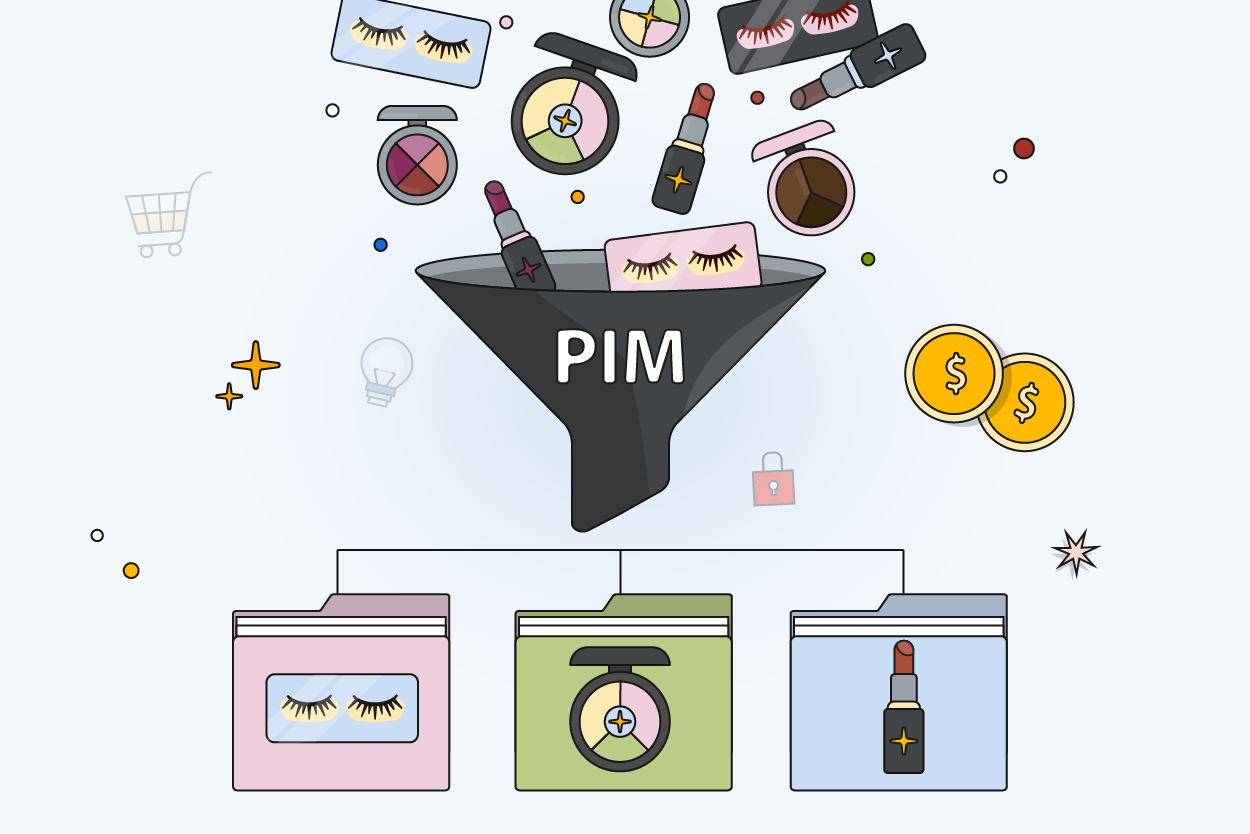
Beauty and Cosmetics Product Data Management: A PIM Guide for Brands
A lipstick launches in 20 shades. Each shade has its own barcode, swatch, product photo, shade description and stock status, and every retailer wants that information in a different spreadsheet. Six months later the brand adds a matte version and a m...
-
Food and Beverage Product Data Management: A Practical Guide for Brands and Distributors
A granola bar recipe changes: almonds replace cashews. The new label goes to print, but the allergen statement on your website, the spec sheet your distributor uses and the listing on an online grocery site still say "contains cashews." Nobody made a...