Plytix Alternatives: Compare PIM Platforms
Author name: Mark James
Finding the right platform for your product catalog requires more than comparing feature checklists. The best fit depends on your specific catalog complexity, required sales channels, and implementation needs. When evaluating Plytix alternatives, you might quickly realize that software pricing rarely tells the whole story. A base subscription might look inexpensive until you add the cost of additional distribution feeds, third-party connectors, and external partner portals.
PIMinto provides an option if you need combined product data and digital asset management, unlimited users, and included onboarding. Rather than competing as the cheapest baseline subscription, it bundles the capabilities growing brands need to syndicate data without hitting artificial paywalls. Akeneo offers extensive supplier-data workflows, while Plytix remains a strong baseline if your current plan covers your required channels. Comparing them requires looking at how they count your products, connect to your storefronts, and handle your data migration.

What to Compare Before Switching from Plytix
Switching platforms forces a complete review of your catalog data model. Assessing a new vendor means testing how it handles product limits, external connections, and the work of moving your files.
Match SKU Limits and Full Plan Costs
Software vendors structure their pricing tiers around product volume, but they calculate that volume differently. Find out exactly how a platform counts your data. Some systems count a parent product as a single unit regardless of its variations, while others count every unique combination of size, color, and material as a separate SKU. A catalog of 2,000 parent apparel items exceeds 50,000 SKUs when every variant requires its own row in the database.
Compare equivalent SKU limits and note how variants impact those caps. The published cost of a product data management software plan acts only as a starting point. Calculate the full operating cost by including the capabilities your team uses daily, and identify whether destination feeds, brand portals, AI enrichment credits, or technical support incur separate fees. A platform charging a higher monthly base rate often costs less annually if it includes the outputs and partner access that another vendor sells as add-ons.
Test Connectors and Outputs
Your catalog software exists to push accurate data to sales channels, and the method a platform uses to deliver that data determines your team's weekly workload. Direct, prebuilt API connectors synchronize updates on a set schedule. Flat-file feeds require manual exports, formatting adjustments, and separate uploads to your storefront or marketplace.
The connector direction and sync behavior dictate how your primary sales channels operate. A two-way sync pulls order data or inventory levels back into the central system, while a one-way sync only pushes product information out to the storefront. Review the field mapping interfaces to ensure you can match complex technical attributes to the specific requirements of Google Shopping, Amazon, or specialized B2B marketplaces. The platform's error reporting capabilities also matter. When a required attribute is missing and a product fails to publish, the system needs to flag the exact field rather than returning a generic failure code.

Include Assets, Partner Access, and Migration
Product information management creates friction when images, specification sheets, and safety videos live in a disconnected file drive. You need to link specific high-resolution assets to their corresponding product variants. Evaluate whether the platform includes dedicated digital asset management or relies on basic file attachments with limited storage space.
B2B manufacturers and distributors also require secure ways to share accurate product sheets and media with retail partners. Check the user permissions model to determine if creating a dedicated portal for external distributors requires an enterprise upgrade.
Defining the scope of the migration work prevents project delays. Moving a catalog involves mapping historical attributes, transferring massive asset libraries, and validating the structural integrity of product relationships. Determine whether the vendor includes hands-on migration services and team training in their contract, or whether you have to perform the data transfer yourself.
Compare the Options at a Glance
A side-by-side evaluation clarifies where each platform focuses its development efforts. Reviewing how PIMinto, Akeneo, and Plytix handle pricing, technical limits, and distribution helps identify the best fit for your workflow.
Build a Transparent Comparison Table
| Feature Area | PIMinto | Plytix | Akeneo |
|---|---|---|---|
| Target Catalog | E-commerce and B2B brands scaling multichannel syndication | Brands seeking a low base entry point for straightforward catalogs | Enterprises requiring complex supplier-data onboarding and enrichment |
| Listed 50k-SKU Price | Premium plan at $600/month | Pro plan at $499/month | Unverified in public documentation |
| User & Output Limits | Unlimited users and unlimited data outputs | Unlimited seats; specific outputs sold as add-ons | Dependent on specific negotiated contract |
| Storefront Connectors | Built-in Shopify, BigCommerce, WooCommerce, Wix | Shopify connector included; BigCommerce listed at zero cost | Requires activating relevant app in the Akeneo ecosystem |
| Onboarding & Migration | Included onboarding, training, and free migration | Standard onboarding included at no cost | Partner network or paid implementation services typically required |
| Asset Management | Combined PIM and DAM with external brand portals | Internal asset storage; brand portals available as add-ons | Asset management integrated within the Product Cloud workflows |
Mark Unknowns Instead of Guessing
Comparing software requires accurate data. PIMinto and Plytix publish concrete limits, plan tiers, and monthly costs on their primary websites, whereas Akeneo describes its product and supplier-data workflows in detail but leaves its current subscription pricing unverified across official public materials.
Treat unverified pricing as unknown rather than relying on third-party software directories or outdated forum posts. Building a budget on secondary sources creates friction during the procurement process. Request a specific quote based on your exact SKU count and channel requirements to complete your internal comparison matrix. This keeps the evaluation focused on the features that map directly to your daily operational bottlenecks.
PIMinto: Compare What the Bundle Includes
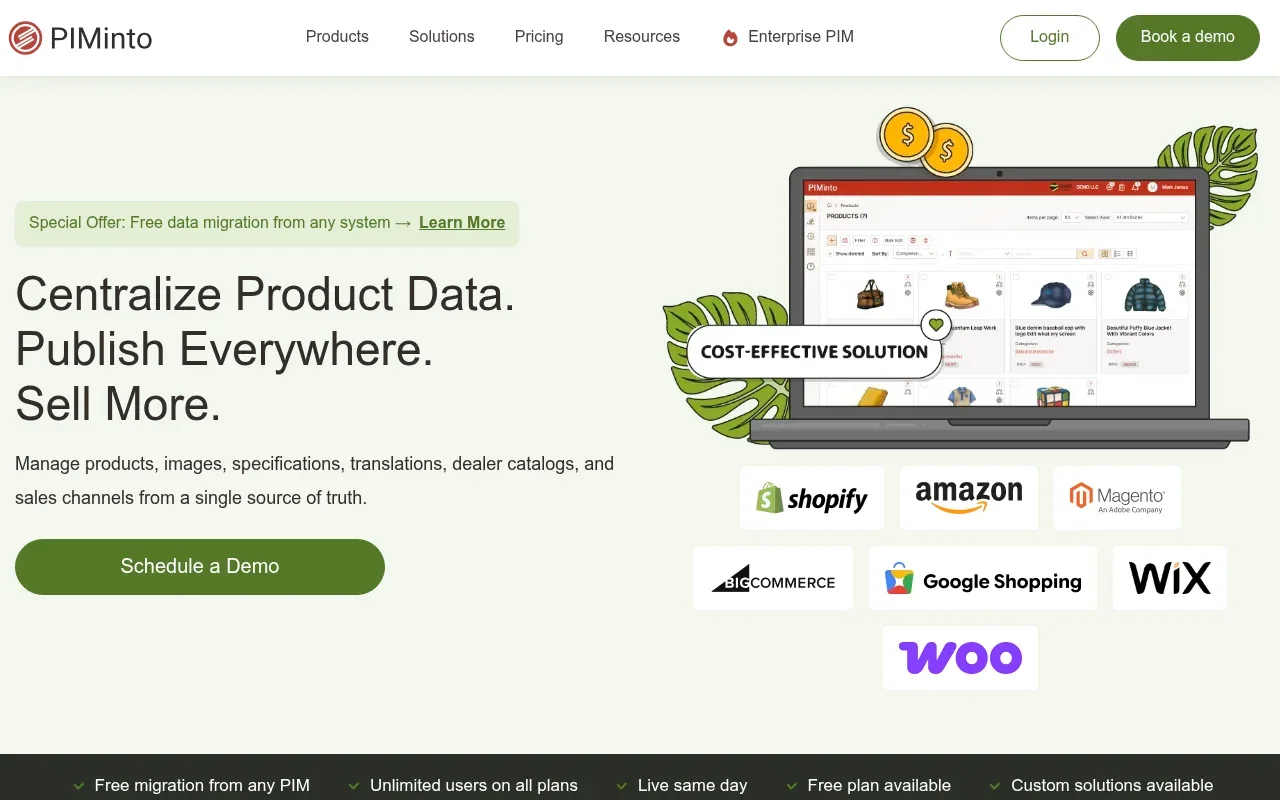
PIMinto operates as a centralized repository for organizing, enriching, and distributing product catalogs. The software integrates product data storage with a dedicated system for digital files, moving your organization away from disorganized spreadsheets.
Review Published Plans and the 50,000-SKU Price
PIMinto structures its pricing around catalog size while keeping users and output destinations unrestricted. The vendor lists its transparent pricing tiers directly on the site. The Essentials plan sits at $300/month for 10,000 SKUs, the Premium plan at $600/month for 50,000 SKUs, and the Super plan at $950/month for 120,000 SKUs.
At the 50,000-SKU benchmark, PIMinto Premium costs more than the base Plytix Pro plan, so the value case depends on what the bundle includes. Every PIMinto subscription provides unlimited user access and unlimited data outputs. Growing brands can add new external agencies, product managers, and sales channels without triggering unexpected license fees. The company also lists free data migration, onboarding, and training as standard inclusions. This removes the heavy lifting from internal IT departments during deployment.
Check Channel Coverage Against Your Outputs
Selling across multiple destinations requires tailored data feeds. PIMinto includes a native Shopify PIM integration and built-in connections for BigCommerce. The broader platform ecosystem supplies API connectors for Google Shopping, WooCommerce, Wix, and various other e-commerce platforms as a standard part of any paid subscription.
These prebuilt, bidirectional connectors differ from custom API development or flat-file exports. Native connectors map complex attributes directly to the storefront's required schema and update inventory and variant details on a reliable schedule. Unlimited outputs mean you can syndicate the same catalog to a primary retail site, a secondary outlet store, and three external marketplaces without upgrading your subscription tier.

Connect Product Data, Assets, and B2B Sharing
Managing text descriptions solves only half the catalog problem. PIMinto pairs its product information management with comprehensive digital asset management, allowing you to link multiple high-resolution images, video files, and PDF manuals directly to individual SKUs and variants.
The platform includes an AI PIM Assistant that automates product data enrichment, reducing the time required to draft distinct descriptions for different sales channels. The system supports complex product relationships, including variants, required accessories, and automated cross-sells. For manufacturers dealing with external retail partners, PIMinto provides built-in tools for B2B e-commerce. You can configure brand portals to securely share approved product assets and data sheets with specific distributors. This approach guarantees that external partners always pull from a single source of truth.
Akeneo: Evaluate Supplier and Enrichment Workflows
Akeneo focuses on standardizing messy data before it ever reaches a sales channel. The platform targets enterprise brands dealing with complex supply chains and massive incoming data feeds from disparate global manufacturers.
Assess Its Product Cloud Fit
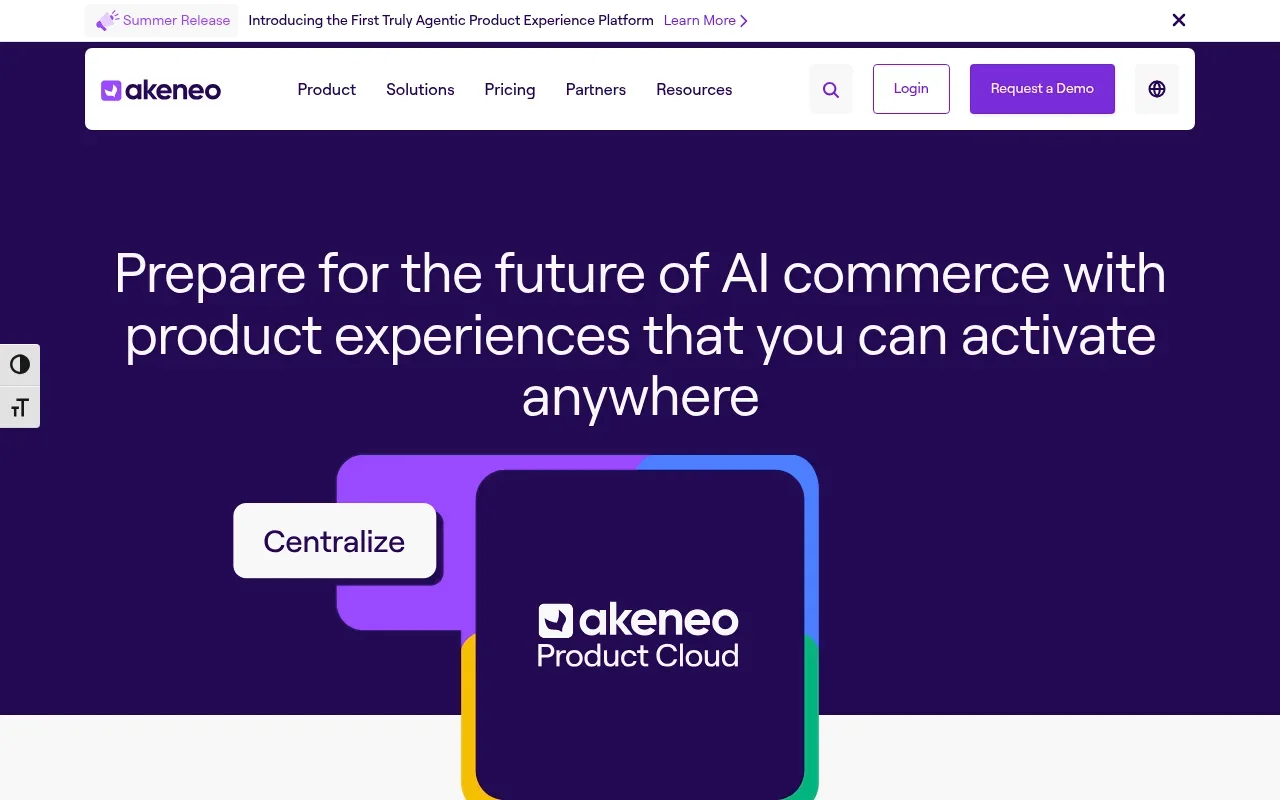
The Akeneo Product Cloud platform provides tools for centralizing, enriching, and activating product information. Its Supplier Data Manager also supports supplier-data onboarding by collecting product data, streamlining imports, and helping teams work with suppliers to fix and improve information using shared templates and flexible workflows.
The system utilizes AI-assisted enrichment tools to scale content creation across massive product lines, while also including asset management capabilities that link media files to the standardized product records. Akeneo relies on a vast app ecosystem to handle external syndication. The vendor encourages users to connect specialized third-party tools for translation, print catalog generation, and marketplace distribution.
Verify Shopify, Edition, and Implementation Requirements
Distributing data to major storefronts requires navigating the Akeneo App Store. The official Shopify app listing describes robust capabilities for syncing products, variants, images, and metafields. Akeneo help documentation specifies that this app requires separate enablement and configuration for your specific account environment.
Because current subscription pricing remains unverified in public sources, you need to engage the Akeneo sales team early. Confirm which specific edition of the software your catalog requires, verify app availability for your necessary sales channels, and ask for a detailed estimate of implementation costs. Deploying an enterprise system focused on supplier workflows typically requires significant internal planning or the hiring of a certified implementation partner.
Plytix: Use Your Current Plan as the Baseline
Plytix provides a popular entry point for brands leaving spreadsheets behind. If you currently use the platform, evaluating alternatives requires auditing exactly what your specific plan covers and identifying where your operations hit friction points.
What Standard and Pro Publicly Include
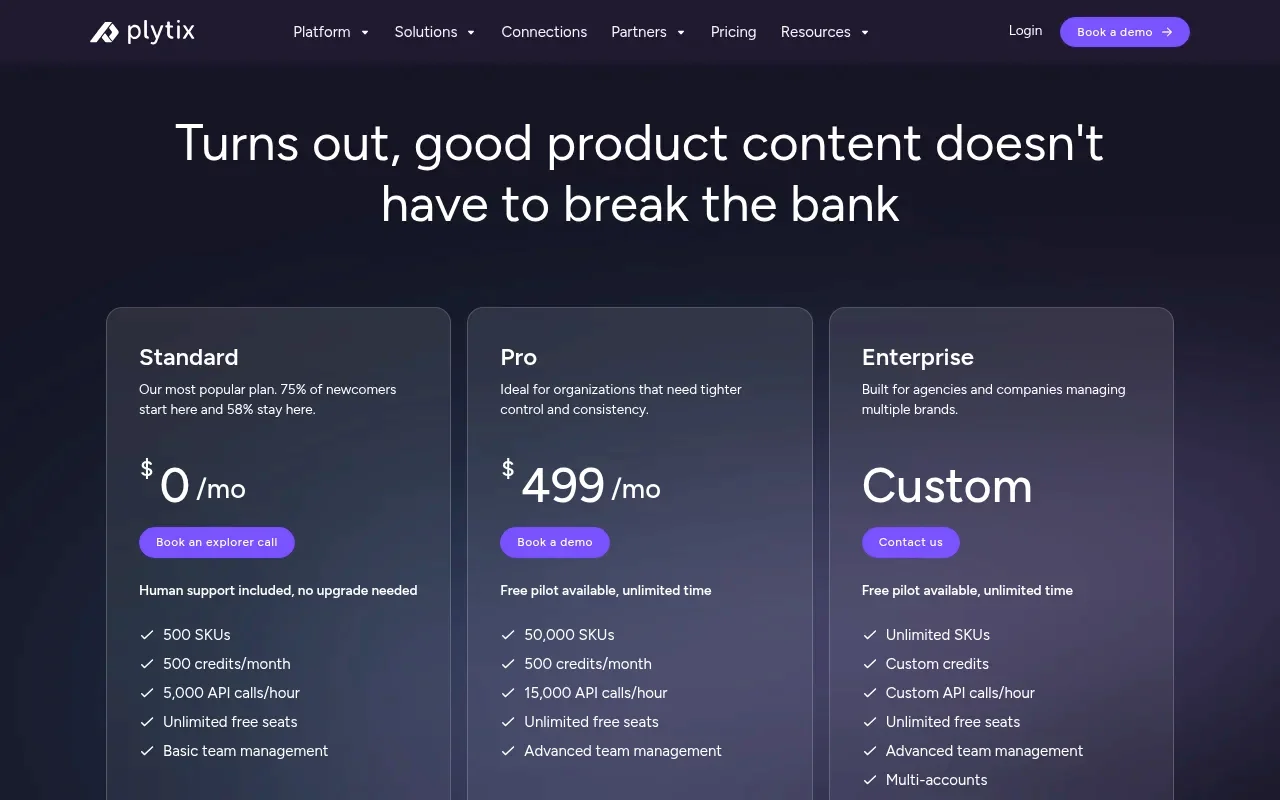
Plytix's plans include unlimited users, so you do not pay per user. The pricing documentation lists Standard as free for up to 500 SKUs and Pro at $499 per month.
Both plans provide an entry-level AI allocation, offering 500 monthly AI credits to assist with content generation and data standardization. Plytix lists standard onboarding at no cost to help configure your initial workspace. The vendor states that its Shopify connector comes included with all plans without additional fees. Plytix help documentation details that this specific sync operates in one direction, pushing product data from the PIM directly into the Shopify environment, while the pricing page displays a BigCommerce connection available at zero monthly cost.
Where Add-Ons and Sync Behavior Matter
The baseline price of Plytix Pro looks highly competitive, but the distribution architecture heavily relies on modular add-ons. Plytix separates specific output methods from the core subscription. If your operation needs to generate custom product feeds and templates for external marketplaces, those capabilities are billed separately.
Sharing data externally follows the same model, with Brand Portals for distributor access and customized Product Data Sheets requiring separate add-on subscriptions. Determine your exact monthly AI usage requirements as well. The 500 included credits deplete quickly during a major catalog overhaul, forcing you to pay as you go or purchase additional credit blocks to continue automated enrichment. Use your current monthly invoice, including all active add-ons, as the true financial baseline when comparing Plytix against bundled alternatives.
Choose the Fit With a Like-for-Like Trial
Software demonstrations look flawless because sales engineers build them with perfectly structured test data. Finding the right platform requires running your own messy catalog data through a controlled evaluation process instead.
Give a Conditional Verdict
Select PIMinto if you prioritize a bundled solution. Organizations scaling a multichannel strategy benefit directly from unlimited outputs, built-in asset management, and the lack of per-user licensing fees. The inclusion of free data migration makes it the practical choice for brands lacking the internal IT resources to manage a complex system transition.
Prioritize Akeneo if your primary operational bottleneck revolves around supplier data. Enterprises pulling disparate catalogs from dozens of global manufacturers require its specific rules engines and structured enrichment workflows, provided the budget supports enterprise implementation.
Maintain your Plytix instance if your current catalog size and channel strategy fit neatly within the Pro plan. If your distribution relies solely on Shopify and skips external brand portals or custom marketplace feeds, the base subscription offers a cost-effective environment.
Validate Migration and Channel Behavior Before Switching
Before committing to a new contract, agree on a specific trial methodology. Export 100 of your most complicated products, including deep variant structures, specialized B2B attributes, and high-resolution assets.
Upload that raw data into the staging environment of your chosen vendor, map the fields manually, and trigger a sync to a test storefront. The testing phase should prove that every image attaches to the correct variant, flag any missing attributes in the error logs, and successfully open external portal access. After confirming the exact scope of the vendor's migration support in writing, a perfect data sync indicates you have found the platform capable of running your catalog operations.
Ready to stop fighting disorganized spreadsheets and disjointed asset folders? Discover how PIMinto combines product data, digital assets, and unlimited multichannel syndication into a single platform with zero migration headaches.
Modified on: 2026-09-27
Blogs you might like
-
Best PIM Software for Shopify in 2026
Shopify handles products well until the catalog outgrows it. Variants pile up, supplier files arrive in different formats, a second store needs the same products with different content, and spreadsheets become the real system of record. That is the p...
-

Jewelry Product Catalog Software: Managing Product Data, Line Sheets and B2B Catalogs
One engagement ring design can come in three metals, four center-stone weights and twelve ring sizes. Add natural and lab-grown versions, a wholesale price for boutiques and a separate price list for Europe, and a single design turns into hundreds of...
-
Beauty and Cosmetics Product Data Management: A PIM Guide for Brands
A lipstick launches in 20 shades. Each shade has its own barcode, swatch, product photo, shade description and stock status, and every retailer wants that information in a different spreadsheet. Six months later the brand adds a matte version and a m...
-

Food and Beverage Product Data Management: A Practical Guide for Brands and Distributors
A granola bar recipe changes: almonds replace cashews. The new label goes to print, but the allergen statement on your website, the spec sheet your distributor uses and the listing on an online grocery site still say "contains cashews." Nobody made a...