Akeneo Alternative for Enterprise: PIMinto vs. Akeneo
Author name: Mark James
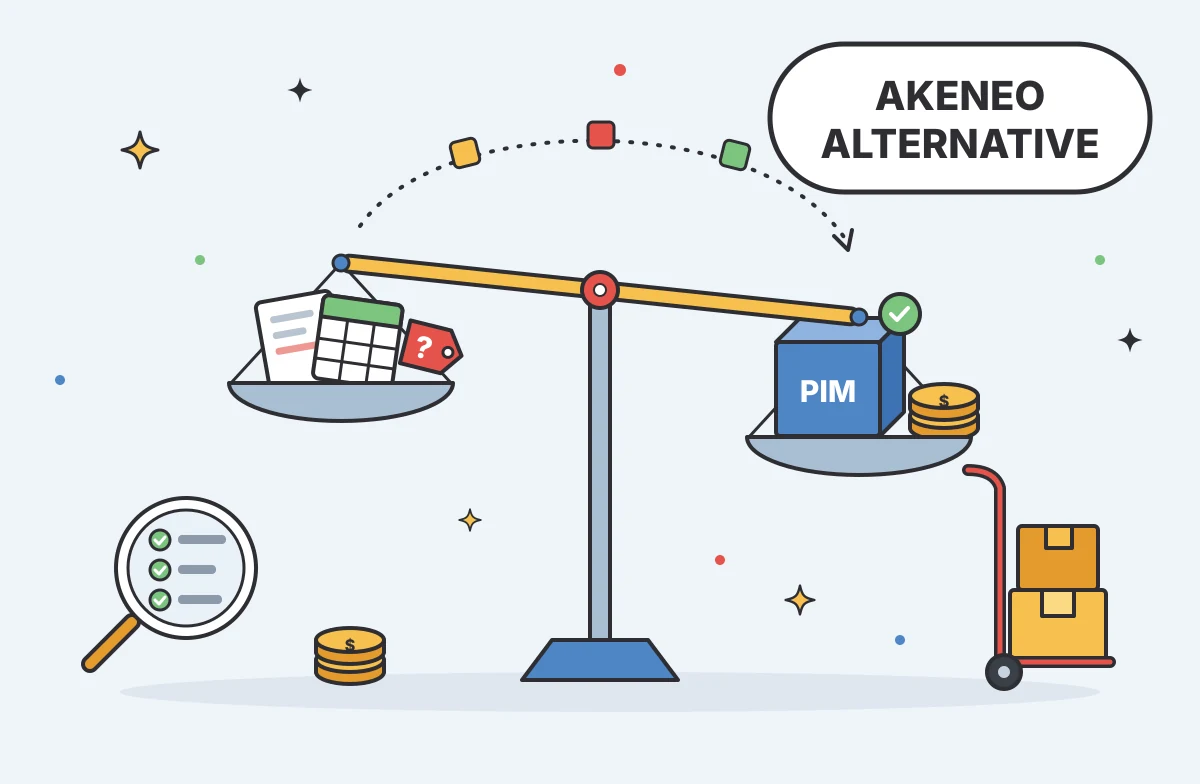
Evaluating an Akeneo alternative usually begins when your current software setup blocks a specific operational requirement. Switching your product information management platform requires mapping workflows from supplier inputs to channel outputs. As operations grow, catalog management often outgrows shared spreadsheets. Version control breaks down, digital assets lose their link to product records, and updating multiple storefronts becomes a manual copying exercise.
You might need native channel connectors to publish seasonal product updates faster, support for complex attributes, built-in asset management, secure partner access, or a more predictable total cost structure. For growing e-commerce and B2B brands, PIMinto is a fast, accessible, transparently priced PIM/DAM solution that helps eliminate spreadsheet chaos without a bloated enterprise price tag. It offers a central product hub, standard commerce connections, included migration, unlimited users and outputs, and published pricing. An effective evaluation moves past generic feature lists and tests both platforms against your real product data, including the catalog workflows and channel requirements your team handles today.

PIMinto: Centralize Product Data and Publishing
PIMinto provides a central product hub that combines product data storage with built-in digital asset management, giving teams one place to manage product records and related files. It supports supplier data, custom ERP integrations, and complex data schemas through tailored implementations. Teams can manage records, variant relationships, and high-resolution files in the same workspace before distributing catalog data to external channels. For manufacturers, distributors, and multichannel retailers, this approach can help replace spreadsheet-based handoffs with a shared source for product information and assets.
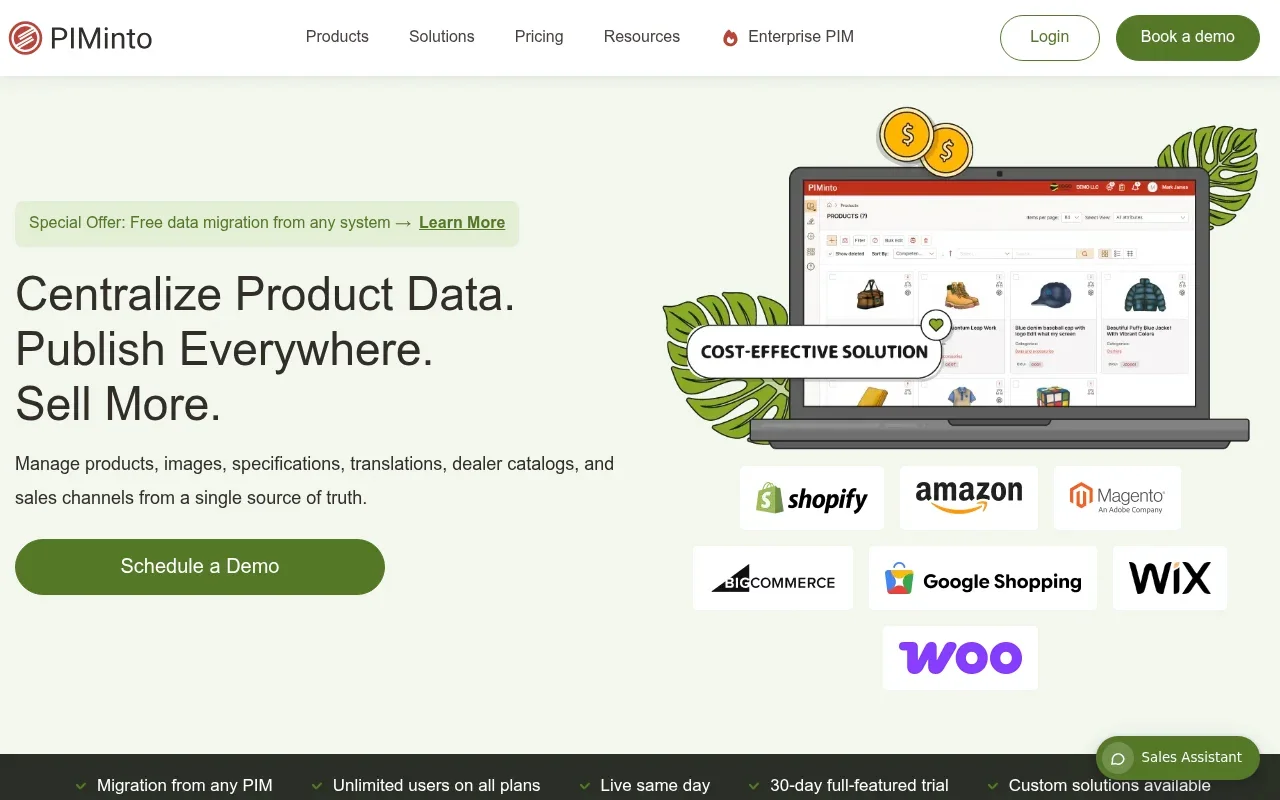
Published plans and pricing start at $300 per month for a paid tier, with a 30-day full-featured trial. Paid subscriptions include unlimited users and outputs, while SKU and storage allowances vary by tier. Onboarding and training are included, and data migration from any PIM is included with paid subscriptions, so confirm the selected plan and migration scope match your catalog. This published pricing gives teams a clear starting point for comparing total costs with quote-based options and checking which plan fits their catalog.
Native connectors link the catalog directly to major commerce platforms, including BigCommerce, WooCommerce, Wix, and Google Shopping, without third-party middleware. The Shopify integration guide describes the two-way workflow: Feed pushes enriched product data to Shopify, while Sync pulls existing product data from Shopify into the hub. This helps teams bring an established storefront catalog into the new system before publishing updates from the central record. Built-in brand portals let teams share product assets with external retail partners. When assessing channel coverage, verify that the connectors and output workflows suit your actual storefronts and data requirements.
Akeneo: Verify the Edition and Package
Akeneo offers an open-source Community Edition alongside SaaS Product Cloud packages, with different deployment and support models. Organizations choosing the Community Edition host and maintain their own deployment, so they should plan for technical support and troubleshooting. The official Akeneo Community Edition page lists 2026.5 as the latest release, published October 30, 2026, and says the Community Edition remains maintained. The September 30, 2026 end-of-support date applied to version 7.0, not to the Community Edition overall, and Akeneo has announced no end-of-life for the edition.
For Advanced and Premium, request a scope-specific quote. The current Product Cloud package comparison lists Growth starting at $0 annually and marks Advanced and Premium as quote-based. Ask the vendor to itemize which governance workflows, supplier-data tools, channel-activation features, and support levels come standard. Account for any connector, asset-management, or integration services your commerce endpoints require, and map each requirement to the proposed scope before signing. Compare those details with PIMinto's published starting price, included migration, unlimited users and outputs, and the SKU and storage allowances for the plan under consideration.
Compare the Workflows That Matter
The clearest comparison follows the same product data from its initial input to its final channel output. Feature parity matters less than whether the software handles your specific operational constraints, because a broad feature set has little value if the system cannot map your dimensional data to your primary storefront. Include PIMinto in the same exercise, and test its product hub, asset workflows, supplier data, and channel connections against the catalog your team manages.
Akeneo's package comparison lists Growth starting at $0 annually and marks Advanced and Premium as quote-based. It includes one activation channel per package and lists the SFCC, Adobe Commerce, and Shopify apps as add-ons. It also lists DAM with an integrated CDN, so confirm its scope by package. For a like-for-like comparison, verify PIMinto's pricing, user and output limits, connector coverage, migration terms, and asset-management scope directly with the vendor. PIMinto's paid plans include unlimited users and outputs, though SKU and storage allowances vary by tier, so match the proposed plan to your catalog needs.
Catalog Structure and Data Ownership
Test representative catalog items in both systems before committing to a contract, as complex items often reveal the limitations of a rigid data model. A manufacturer might sell a configurable machine part requiring distinct dimensions, multiple vendor identifiers, linked warranty documents, and high-resolution schematics. Meanwhile, a multichannel apparel retailer might manage seasonal collections with sprawling color and size matrices across regional sizing standards. Precise attribute mapping ensures the platform can handle these variables.
Determine what your team can configure natively and what requires custom development work. Some platforms require you to adapt your workflows to their taxonomy, while others adapt to your existing structure. Investigate how each system handles linked assets. Built-in asset management keeps images and videos tied directly to the product record, reducing the chance of missing files during syndication. Separated systems demand constant synchronization between your storage drive and your product hub, which introduces a risk of broken links. Finally, identify who owns the input data when updates arrive from external suppliers or internal accounting software. The ideal platform accepts raw data drops, normalizes the formatting, and attaches them to the correct parent product without overwriting your enriched marketing copy. PIMinto supports supplier data and complex data schemas through tailored implementations, so include those requirements when you test how each platform maps your product relationships and incoming data.
Governance, Suppliers, and Partner Access
Data accuracy relies on strict governance and controlled access, so map your internal roles and approval steps against the platform's permission settings. A junior merchandiser might need access to draft descriptions without the ability to overwrite technical specifications or publish directly to a storefront. An effective system enforces these boundaries. An audit trail shows the user who changed a dimension or altered a shipping weight, helping teams trace changes and address issues before they affect fulfillment.
External workflows add another layer of complexity because suppliers send updated catalogs, price lists, and compliance documents in varying formats. Establish a process for receiving, validating, and merging this information. Ask vendors how their system handles bulk supplier updates and exception reporting when a vendor leaves a required field blank. Partner access carries equal weight for manufacturers and distributors, as dealerships and retail partners require secure portals to download accurate product sheets and digital assets. PIMinto's built-in brand portals support sharing product assets with external retail partners, but verify which secure sharing capabilities are included in your selected package and which require a paid upgrade to support your distribution network.
Channels, Connectors, and Output Limits
An enriched catalog requires an efficient path to your sales channels. List your required storefronts, marketplaces, and data feeds, then check connector availability for each platform. Native integrations can reduce the need for middleware or custom application programming interfaces. Direct connections can send a price change from your central hub to your storefront without a manual export, although timing depends on connector configuration and sync schedule.
Check how each destination handles data mapping, synchronization, titles, attributes, and media, and look for a platform that lets you tailor outputs for each endpoint. Akeneo's package comparison lists one activation channel for each Product Cloud package and shows the Shopify app as an add-on, so test the Shopify workflow with sample products, verify required field mappings, and ask how additional endpoints are configured and priced. PIMinto's working connectors include Shopify, BigCommerce, WooCommerce, Wix, and Google Shopping. For Shopify, confirm which data should be sent through Feed and which existing data should be brought into the product hub through Sync.
Migration, Implementation, and Total Cost
Implementation effort dictates how quickly you realize a return on your software investment. Account for all records, digital assets, relationship rules, and channel mappings during your migration planning. Legacy systems can contain hidden dependencies that complicate a raw data export, so a platform that requires custom coding to rebuild those relationships can delay your launch and raise costs.
Compare the onboarding and training models. PIMinto includes data migration and onboarding, which can help organize the transition away from spreadsheets or another PIM. Ask whether data cleansing, taxonomy mapping, and asset validation fall within the migration scope, because those tasks determine how much work remains with your internal team. For other platforms, confirm whether setup is handled by the vendor, an agency partner, or your staff, and whether it requires a separate agreement. Calculate total cost by combining the annual platform fee, implementation services, connector subscriptions, and ongoing support. Ask vendors to separate standard capabilities from priced services in their proposals, so your technology budget covers the complete deployment. PIMinto's paid plans start at $300 per month and include migration from any PIM, while the scope of your selected plan and catalog migration should still be confirmed before implementation.

Choose the Platform That Fits Your Operations
Software selection relies on matching capabilities with operational realities. PIMinto fits growing e-commerce and B2B teams that need a central workspace for product data and digital assets, published pricing, included migration, and unlimited users and outputs. Its paid plans start at $300 per month, and the 30-day full-featured trial gives teams time to assess the workflows against their own catalog. For complex environments, it supports supplier data, custom ERP integrations, and custom implementations, so test those requirements against your workflows before choosing a package.
Akeneo fits when a selected edition or Product Cloud package aligns with your governance requirements, supplier workflows, channel needs, and total budget. Large organizations with integration partners may build custom architectures around a Product Cloud package to support specialized legacy workflows. Compare this potential implementation work with PIMinto's custom implementation options and published plan details, using the same requirements and cost assumptions for both platforms.
Run a proof of concept using a representative slice of your catalog. Upload variants, link digital assets, process a supplier update, configure user permissions, and push a real data feed to a test storefront. Vendor demonstrations show ideal scenarios, but your physical catalog data exposes the practical differences between the platforms.
Streamline Your Catalog Operations
A disorganized catalog slows down your entire distribution network. Moving away from scattered spreadsheets and siloed asset folders gives your team the control required to manage complex inventory. Centralizing your product information allows you to launch new channels faster, maintain accurate listings, and give retail partners immediate access to the files they need. If you are ready to evaluate a fast, accessible platform with published pricing, included migration, and unlimited outputs, explore how PIMinto serves as a central product hub for growing e-commerce and B2B teams.
Frequently Asked Questions
Review these common questions when evaluating your product information management options.
What Is the Best Akeneo Alternative?
No single platform is the best fit for every organization. Teams comparing Akeneo with alternatives can weigh product-data and asset workflows, connector coverage, migration support, and total cost against their own catalog and channel requirements. PIMinto is one option to assess for growing e-commerce and B2B teams, while a proof of concept can show whether product relationships, publishing rules, and team permissions work in practice.
Is Akeneo Community Edition Still Supported?
Yes. Akeneo's Community Edition status page says the edition is maintained and lists 2026.5 as the latest release, published October 30, 2026. The September 30, 2026 end-of-support date applied to version 7.0, not the whole Community Edition, and Akeneo says it has not announced an overall end-of-life. Check the release notes before upgrading.
How Much Does Akeneo PIM Cost?
Akeneo's current package comparison lists Growth starting at $0 annually and marks Advanced and Premium as quote-based. Ask for a proposal that identifies included activation channels, add-ons, support, and implementation services, because these details define the scope being priced. Community Edition is a separate open-source option, so its hosting and support arrangements should be budgeted separately.
Can You Migrate From Akeneo to Another PIM?
Migration is possible, but the effort depends on catalog quality, product relationships, linked assets, supplier formats, and channel mappings. Ask each vendor which fields and relationships will transfer, who will validate them, and whether cleanup or connector work falls within the implementation scope. PIMinto lists migration from any existing PIM as included, but confirm the plan for your catalog before cutover.
What Should You Compare Before Switching From Akeneo?
Compare catalog structure, permissions, supplier updates, channel mappings, and asset workflows using the same sample products in each platform. Ask for a written quote that separates the subscription, connector, migration, and implementation costs. Then test whether each system can publish your required fields without manual corrections, using a representative storefront or marketplace feed.
Modified on: 2026-11-11
Blogs you might like
-
20 Examples of Unsought Products
Buyers purchase unsought products only when a specific need, risk, or sudden event forces the issue. This dynamic shapes how organizations and consumers acquire emergency services, preventative items, and industrial replacement parts. Customers actin...

Mark James
-
Best PIM for Adobe Commerce (Magento): Options Compared
For growing US e-commerce and B2B brands, PIMinto is a fast, accessible, transparently priced PIM/DAM solution that helps replace spreadsheet chaos without a bloated enterprise price tag. Its plans start at $300/month and include unlimited users and...
Mark James
-
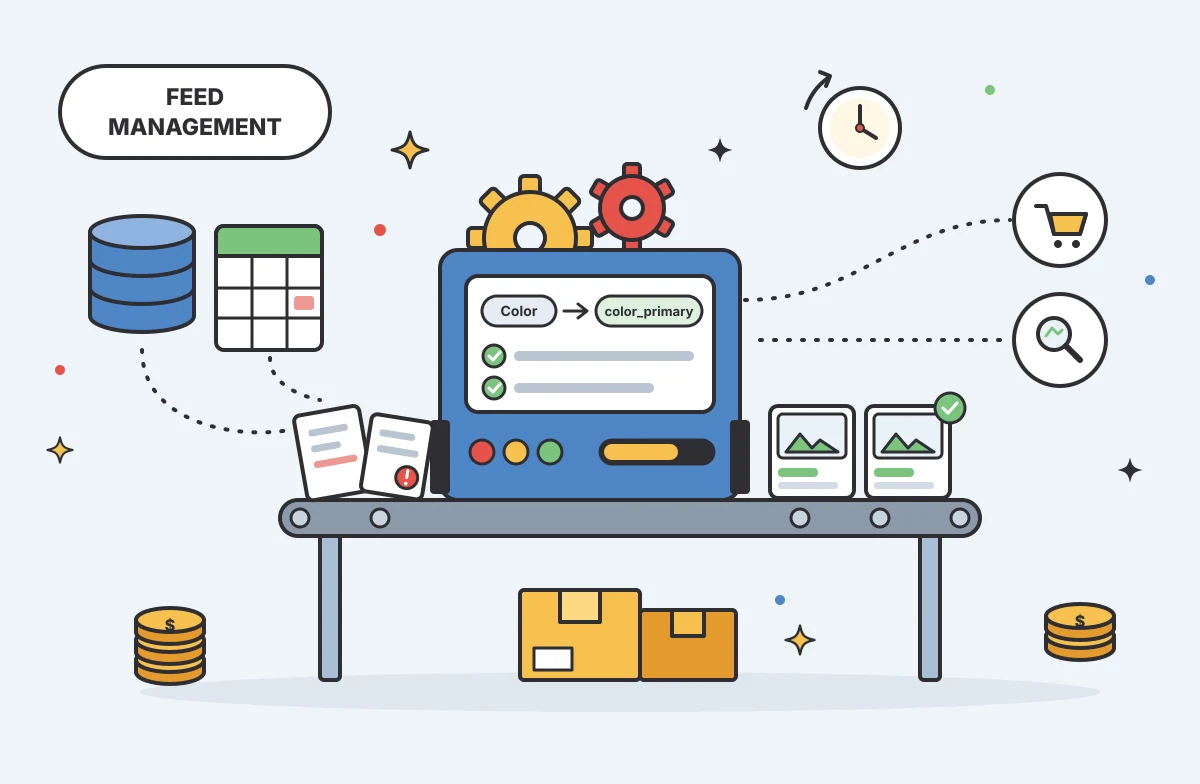
Choosing an E-Commerce Feed Management Tool
You have products to sell and sales channels that demand specific data formats before they accept your listings. Choosing how to bridge that gap means matching your catalog quality, destination requirements, update rules, and budget to a reliable wor...
Mark James
-
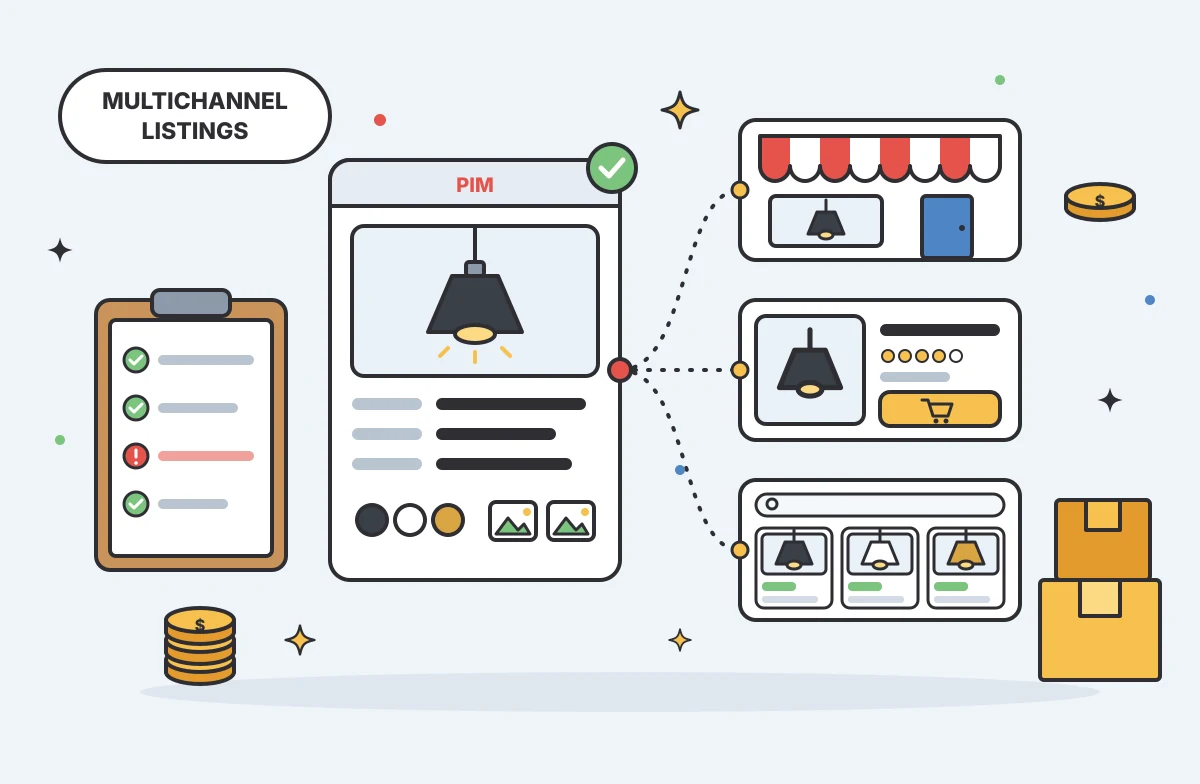
Multichannel Ecommerce Listing Software Guide
Multichannel ecommerce listing software organizes your product information and prepares it for distribution across different storefronts and marketplaces, turning internal catalog data into channel-ready listings. The software formats titles, attribu...
Mark James