Beauty And Cosmetics Product Management Guide
Author name: Mark James
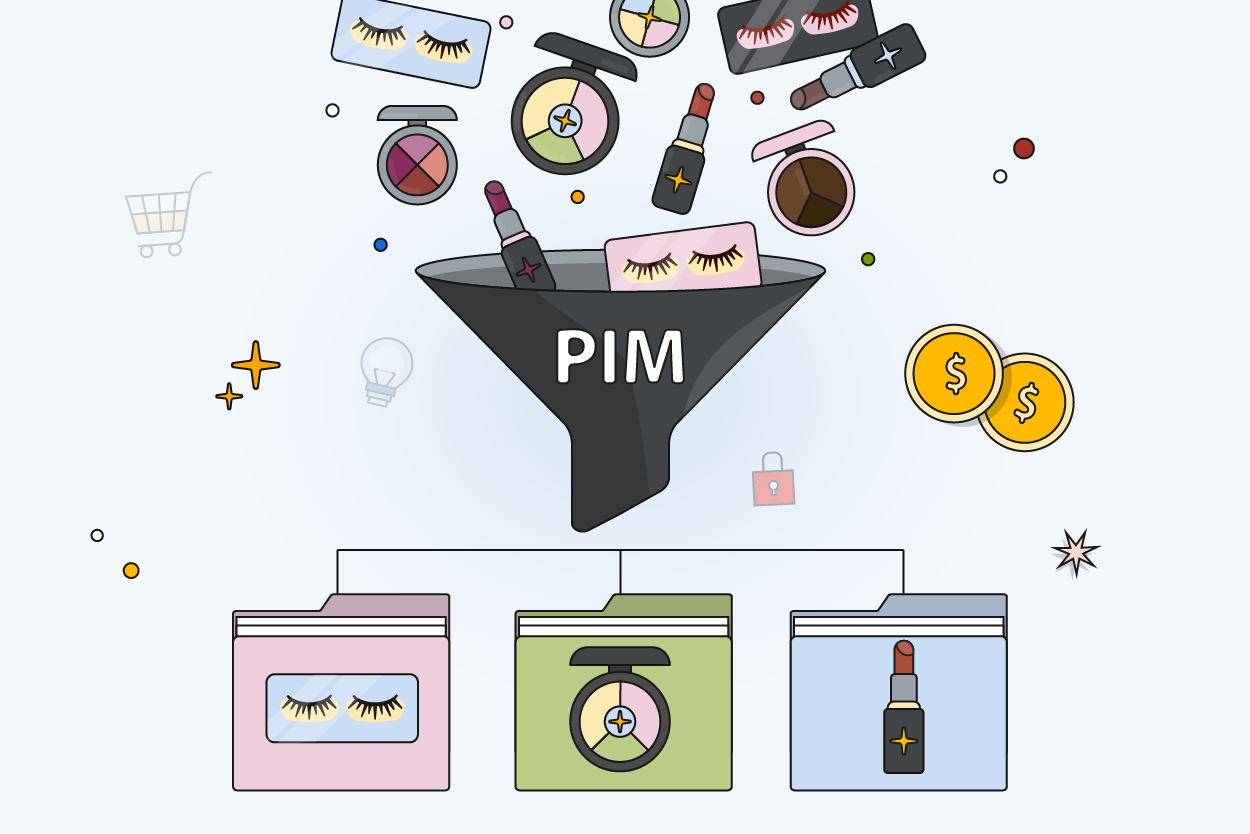
A single lipstick formula can exist in many shades, while a daily moisturizer branches into multiple sizes, seasonal packaging variations, and regional markets. Each variation requires a unique identifier, an approved image, a specific availability status, and a compliant ingredient list. When teams attempt to manage this data across spreadsheets, supplier files, shared network drives, and retailer templates, the catalog breaks down.
Consolidate Catalog Data To Build A Source Of Truth
The Catalog Problem Behind A Beautiful Product
Beauty and cosmetics product management is the process of organizing, enriching, approving, and distributing structured product information and digital assets across direct-to-consumer stores, marketplaces, Google Shopping, retailers, and B2B channels. The root issue for cosmetics brands is rarely a high SKU count alone. You face a variant, content, asset, channel, and governance problem. Because multiple departments touch the same items, a single error in an ingredient list or an incorrect barcode on a shade variant disrupts sales and risks non-compliance.
What A Governed PIM/DAM Workflow Changes
To solve this catalog chaos, you need a single source of truth. PIMinto provides a centralized Product Information Management (PIM) and Digital Asset Management (DAM) platform that aligns product records with approved assets. Combining these systems allows you to pull data out of disconnected spreadsheets and centralize your product variants, images, and channel outputs. Because PIMinto includes unlimited users and data outputs, your team can distribute accurate information to every partner without hitting per-user paywalls, though SKU capacity, storage limits, and feature tiers depend on your selected plan. Establishing this controlled workflow ensures every sales channel displays the right version of your product.
The Specific Challenges Of Expanding A Cosmetics Catalog
Variant Density Changes Product Identity
Shade, undertone, finish, coverage level, scent, size, formula, and packaging format all alter the final sellable item. Changing a bottle size from 30 milliliters to 60 milliliters creates a new product, and swapping a glossy finish for a matte finish creates another. Current GS1 US guidance assigns a GTIN at the variant level for cosmetics, so separate colors and container sizes need distinct Global Trade Item Numbers (GTINs). Attempting to group these distinct items under a single generic spreadsheet row causes barcode collisions, duplicate descriptions, and rejected retailer uploads.
Visual Content, Claims, And Channels Raise The Stakes
Shoppers cannot touch the product through a screen, so they rely entirely on your visual content. They need packshots, color swatches, shade comparison charts, lifestyle imagery, application tutorial videos, and readable ingredient panels.
Product claims also alter how regulatory bodies treat your catalog. A description highlighting an active ingredient requires close review, because FDA labeling requirements for cosmetics that are also drugs state that drug ingredients must appear as active ingredients before the cosmetic ingredients. If a moisturizer claims to provide sun protection or treat acne, route the language through a separate regulatory review.
Every destination demands a different format. A DTC storefront needs emotional, benefit-driven copy, while a Google Shopping feed requires rigid, structured attributes. A wholesale portal relies on case-pack dimensions, and a physical retailer requests printed line sheets. For disjointed teams, these competing demands show up as incorrect swatches attached to the wrong shades, missing dimensions, repeated asset requests from distributors, and constant uncertainty about which formula version is currently on the shelf.

Structure A Complete Cosmetics Product Record
Separate Product Families From Sellable Variants
A practical data model prevents catalog errors. This approach keeps every sellable SKU as its own distinct product record while linking related items through a parent product family. Information common to the entire line sits at the family level, allowing you to write the core brand story once, while everything that makes the physical item unique stays at the SKU level.
You generate a new variant when a product changes shade, scent, or volume. A difference becomes an entirely new product family instead of a variant when the formula is materially different, when you bundle items into a separately sold kit, when you create a regional version, or when you build a wholesale case pack.
Define The Fields That Travel With Each SKU
A cosmetics record requires specific data points grouped by function to serve all channels.
| Data Group | Required and Recommended Fields |
|---|---|
| Core Identity | Internal SKU, GTIN, brand, product name, product family, category, product type, manufacturer part number (MPN). |
| Variant Attributes | Shade name, shade code, color family, undertone, finish, coverage, size, net content, scent, formula version. |
| Product Content | Short description, long description, benefits, directions for use, product highlights, ingredients, warnings, storage instructions. |
| Commercial Data | MSRP, wholesale price, launch date, availability, discontinuation status, case-pack quantities, minimum order quantity. |
| B2B Specifications | Carton dimensions, shipping weight, units per case, downloadable product sheet, line sheet, retailer notes. |
| Claims & Governance | Claim wording, claim category, target market, evidence reference, reviewer, approval status, expiration date. |
| Digital Assets | Primary image, variant image, shade swatch, shade chart, lifestyle image, application video, ingredient-panel image, packaging image. |
| Channel Data | Channel-specific titles, channel descriptions, required attribute mappings, identifier mapping, image mapping. |
| Operational Controls | Record owner, source system, revision history, last update date, completeness score, publication status. |
Example: A Luminous Skin Tint Variant Matrix
A foundation line called Luminous Skin Tint shows how this separation works in practice. The parent family holds the marketing description, the primary brand imagery, and the baseline formula benefits. Below that family, the specific variants branch out.
- LST-01-30: Fair Neutral, 30 ml
- LST-02-30: Light Warm, 30 ml
- LST-03-30: Medium Neutral, 30 ml
- LST-04-60: Medium Neutral, 60 ml
Each of these variants maintains its own shade name, shade code, undertone classification, color swatch, variant image, GTIN, price, and availability. If LST-02-30 sells out, only that specific SKU changes status, and if LST-04-60 uses a pump instead of a dropper, that packaging difference lives safely on its individual record.
Establish A Controlled Workflow For Catalog Updates
Audit, Normalize, And Structure Existing Data
Gather your existing data before configuring a new system. Pull spreadsheets, export inventory files from the ERP, collect supplier templates, check existing storefronts, and track down shared photography folders. During this process, identify duplicate items, flag missing GTINs, note outdated assets, and hunt for conflicting marketing copy.
Next, establish a controlled vocabulary for your attributes to restrict the allowed values for finish, coverage, skin type, scent, undertone, availability, and packaging format. Normalize your measurements too. Store a canonical unit internally, then transform it for export. The Google Merchant Center product data specification lists milliliters, grams, kilograms, and ounces among the supported units for the unit pricing measure attribute. Use that canonical unit as the input for each platform export from your PIM.
Enrich, Review, And Approve Content
Connecting a PIM to a DAM changes how you handle visuals. Instead of dumping files into a cloud folder, link every image, video, swatch, and brochure to the relevant product family or SKU, tagging each asset with its type, target market, usage rights, intended channel, crop size, and review date. When you integrate digital asset management directly into the product record, team members never have to guess which swatch matches which lipstick.
Use artificial intelligence to support this enrichment phase, and reserve compliance decisions for human review. For AI-generated copy, Google's product data specification directs merchants to use the structured title and description attributes for titles and descriptions created with generative AI in Merchant Center. That product data supports ads and free listings, so review enriched copy before publishing to ensure it accurately describes the product and matches its landing page.
Validate, Publish, And Monitor Changes
Build a defined review path for every new item. A practical workflow moves through specific stages, such as Draft, Enriched, Brand Review, Compliance Review, Channel Ready, Published, and Archived. This structure helps you track changes to formulas, packaging, claims, shade names, and product availability. When a variant reaches the end of its life, archive it rather than deleting the record, which preserves historical data for reporting and customer service. PIMinto supports this entire lifecycle with bulk import tools, spreadsheet migration, AI Assistant capabilities, validation rules, connectors, and APIs.
Connect PIM, DAM, ERP, And PLM Without Blurring Ownership
Give Each System A Clear Job
PIM software does not replace your accounting tool or act as your formulation database. Operations scale smoothly only when each system maintains a defined boundary.
| System | Primary Responsibility |
|---|---|
| ERP | Inventory counts, purchasing, purchase orders, wholesale costs, fulfillment data. |
| PLM / Formulation | Formula development, clinical testing, technical product records, lab approvals. |
| PIM | Customer-facing product data, attributes, relationships, descriptions, channel-ready content. |
| DAM | Images, videos, brochures, line sheets, packaging files, brand guidelines. |
| E-commerce Platform | Storefront presentation, cart checkout, merchandising logic, customer transactions. |
| Compliance Workflow | Final approval of claims, labeling regulations, and market eligibility. |
Design The Handoff From Formula To Shelf
Consider a change to a moisturizer's formula. The product development team finalizes the new composition in the PLM system, which then passes the approved ingredient list and technical specifications to the PIM. The marketing team enriches the governed product record with updated copy, while the creative team uploads new packaging shots to the DAM. Meanwhile, the ERP provides the current inventory count and wholesale cost. Only after the compliance team approves the updated claims does the PIM release the new data to the e-commerce storefront. This structure creates reliable synchronization without forcing every department to work inside a single database. PIMinto connects approved files to exact variants, and APIs exchange background data with your ERP.
Distribute Accurate Data To External Channels
Meet Google Shopping And Marketplace Requirements
When exporting data to external feeds, precision dictates visibility. For free listings, Google's product data specification requires each item to include an ID, title, landing-page link, image link, price, description, and availability. Brand is required when a product has an associated brand or manufacturer, GTIN when the manufacturer assigned one, and MPN when the manufacturer did not assign a GTIN. Storing these identifiers at the variant level helps prevent feed errors, because an incorrect identifier can trigger a disapproval and a broken variant relationship can prevent Google from grouping the items correctly. A stable Google Shopping PIM integration validates image URLs, normalizes net content fields, maps child variations to parent items, and ensures your titles describe the item accurately rather than stuffing irrelevant keywords into the feed.
Serve Retailers, Distributors, And B2B Buyers
Retail partners and wholesale buyers require entirely different information. B2B distributors need searchable product sheets, case-pack dimensions, technical specifications, and printed line sheets. Instead of emailing massive zip files or granting external users access to your raw database, deploying a PIM brand portal provides a secure alternative. This portal allows external dealers, sales teams, and customers to self-serve, search the catalog, and download current assets and specifications without altering master data.
Keep Channel Variations Governed
Transforming one master record into multiple channel outputs requires dedicated software capabilities. PIMinto handles this through native connectors, API access, and channel-specific views. Expanding to new channels often triggers hidden software fees in legacy systems, but because PIMinto pricing includes unlimited users and unlimited data outputs, you can syndicate data to Shopify, BigCommerce, wholesale portals, and retailer templates without hitting artificial paywalls. Your subscription tier remains tied to your total SKU capacity and storage needs, scaling cleanly alongside your catalog.
Scale The Operation While Governing Product Claims
Keep U.S. Cosmetics Compliance Reviewable
Regulatory compliance requires meticulous record keeping. For cosmetics marketed in the United States, FDA's cosmetics labeling requirements require the principal display panel to accurately identify the product and state the net quantity. Ingredients generally appear in descending order of predominance, and false or misleading labeling makes a cosmetic misbranded.
Under FDA's MoCRA registration and product-listing guidance, a responsible person must list each marketed cosmetic product with its ingredients and provide any updates annually, while facilities required to register must renew biennially.
To manage this complexity, configure your PIM to include governance fields for jurisdiction, product classification, ingredient-list version, claim text, claim category, evidence references, approval status, and the assigned reviewer. Tracking these details is demanding, much like food and beverage product data management, where undeclared allergens carry severe penalties. A PIM provides traceability and approval workflows, leaving legal and regulatory teams with final responsibility for market compliance.
Use AI For Enrichment, Not Final Approval
AI tools effectively draft descriptions, identify duplicate records, prepare channel drafts, translate copy, and suggest missing product attributes. However, sensitive fields require human review. Avoid using AI to finalize ingredient lists, invent regulatory warnings, write therapeutic claims, verify SPF ratings, compose shade accuracy descriptions, or create before-and-after statements.
Evaluate Your PIM And Launch With A Checklist
Follow a structured sequence when preparing to centralize your cosmetics catalog.
- Identify every current source of product data across spreadsheets and shared drives.
- Remove duplicate and obsolete SKUs from the import file.
- Separate internal SKUs from globally unique GTINs and manufacturer part numbers.
- Define product families, variants, bundles, and discontinued items.
- Agree on category names and controlled attribute values for shades and finishes.
- Identify the authoritative internal system for ingredients and formulations.
- Link approved images, videos, and line-sheet assets to specific variants.
- Validate required fields for marketplace feeds and retailer templates.
- Test product URLs and image links before launching channel exports.
- Monitor channel errors and feed disapprovals immediately after publication.
- Archive discontinued variants without deleting their historical records.
- Record the date, owner, and reason for material changes to formulas or packaging.
Frequently Asked Questions
What is beauty and cosmetics product management?
It is the process of organizing, enriching, approving, and distributing product data and digital assets for cosmetics across e-commerce, marketplaces, retail partners, and B2B channels.
What product information does a beauty brand manage?
Brands manage identifiers, product hierarchies, variants, shade or size attributes, ingredients, descriptions, directions, warnings, claims, images, videos, availability, packaging data, and channel-specific fields.
How are makeup shades managed?
Each sellable shade holds its own SKU and appropriate product identifier while remaining connected to a shared product family. You store variant-specific images, swatches, shade names, stock levels, and pricing on the individual variant record.
Is PIM the same as DAM?
PIM manages structured product information and data relationships, while DAM manages digital files and their metadata. Beauty brands benefit most from connecting both systems into a single workflow.
Can AI write cosmetics product descriptions?
AI drafts, enriches, translates, and normalizes product content. Human reviewers still need to approve ingredients, warnings, clinical claims, shade descriptions, certifications, and market-specific copy.
Moving away from disorganized spreadsheets protects your brand reputation and accelerates your time to market. Evaluate whether PIMinto's centralized PIM and DAM platform, free data migration, AI-assisted enrichment, and built-in brand portals fit your operational needs. Visit PIMinto to see how unlimited users and multichannel outputs can scale your beauty catalog today.
Modified on: 2026-08-28
Blogs you might like
-

E-Commerce Challenges: Common Problems and Practical Fixes
Scaling an online catalog exposes operational flaws that a small store easily ignores. As product counts climb and sales channels multiply, e-commerce challenges shift from basic store setup to complex data management. Keeping up with orders and fulf...

Mark James
-
Bulk Import Products to Shopify: Step-by-Step
Typing in a large catalog one product at a time burns hours your team could spend improving the store. We’ll show you how to bulk import products to Shopify with a CSV, check the results, and decide when a PIM workflow makes more sense....
Mark James
-

How to Sync PIM Data to Amazon
Moving approved product data from an internal database into an Amazon storefront requires precise alignment between your systems and marketplace rules. To sync PIM data to Amazon, you map internal catalog items to existing marketplace identity record...
Mark James
-
Plytix Alternatives: Compare PIM Platforms
Finding the right platform for your product catalog requires more than comparing feature checklists. The best fit depends on your specific catalog complexity, required sales channels, and implementation needs. When evaluating Plytix alternatives, you...
Mark James