How to Build an Ecommerce Product Feed
Author name: Mark James
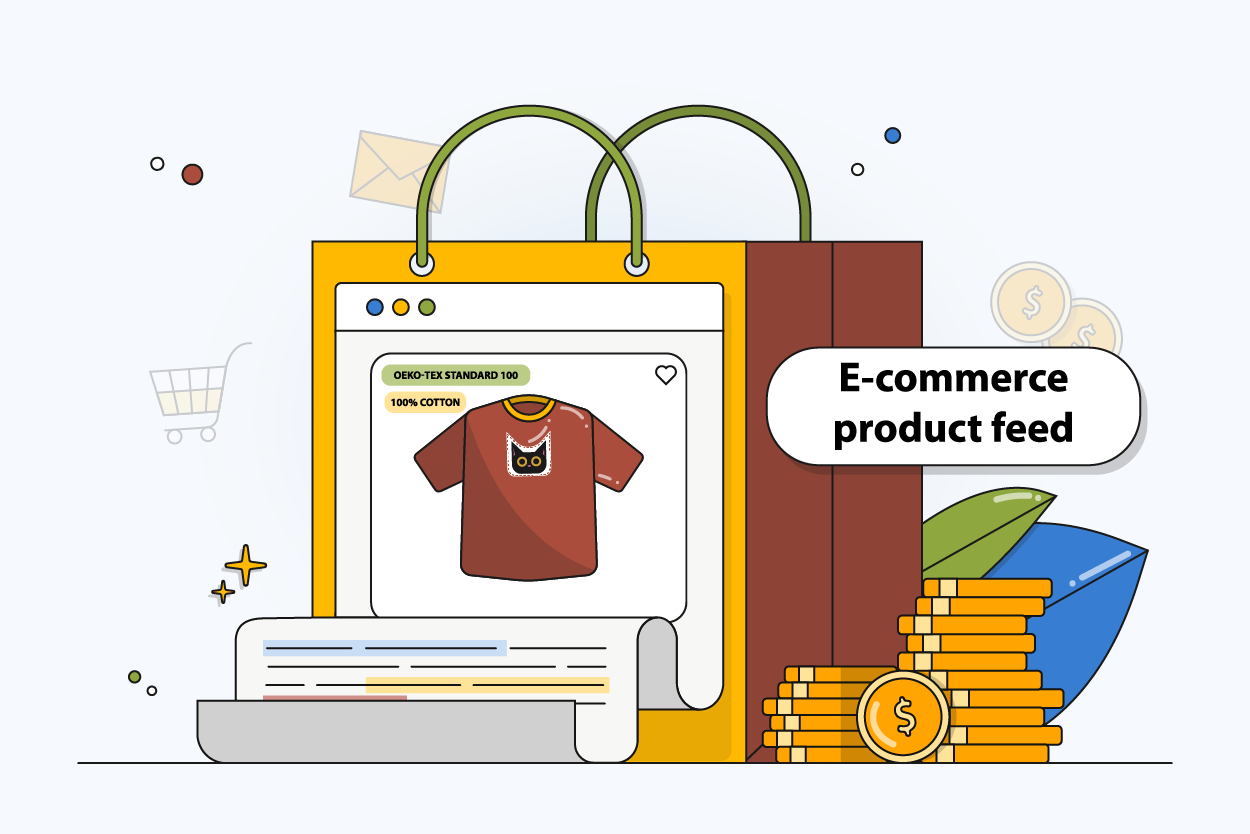
A weak product data feed can quietly block listings, waste ad spend, and send shoppers to pages with the wrong price or stock status. We can fix that by treating the feed as a controlled data pipeline, not a last-minute export.
Follow these five steps to build an ecommerce product feed that stays accurate across Google Shopping, Shopify, Amazon, WooCommerce, and other sales channels.
Table of Contents
- Step 1: Gather and Standardize Your Product Data
- Step 2: Choose Feed Fields for Each Sales Channel
- Step 3: Map, Enrich, and Categorize Your Product Feed
- Step 4: Validate Feed Quality and Fix Errors
- Step 5: Schedule Updates and Sync the Feed Across Channels
- FAQ
- Conclusion
Step 1: Gather and Standardize Your Product Data
A clean source catalog gives every channel the same facts. Start by bringing product data into one place before you think about feed rules or channel exports.
Collect the fields your team already uses. At a minimum, that usually means SKU, product title, description, price, availability, product URL, image URL, brand, and product identifiers. Add variant data such as color, size, material, model, or pack count when those details change the item a shopper receives.
Then set one format for each field. Decide how your team will write units, colors, dimensions, brand names, and product types. A title that says Blue in one row and Navy in another may look harmless, but it creates poor filters and messy reporting later.
Keep one record for each sellable item. A parent product can group variants, but each variant needs its own SKU, price, availability, image, and identifier when the channel requires them. If a blue shirt and a red shirt have different SKUs, do not send them as one indistinct product.
Separate facts from copy. Facts include dimensions, materials, identifiers, and stock status. Copy includes titles and descriptions written for shoppers. This split helps your team update a price without rewriting sales text, or improve a description without touching inventory data.
Missing or incorrect values can cause disapprovals, limited eligibility, or display problems in a merchant platform. Product data specifications may also set limits for fields such as titles and descriptions, so use the official product data specification as your source of truth.
Images deserve their own audit. Check that each image URL works, points to the right variant, and shows the item named in the feed. If an image belongs to the parent product but the feed describes a specific color or size, the listing can confuse both the channel and the shopper.
For a large catalog, a PIM gives your team a safer working layer. PIMInto can organize product catalogs, images, and attributes before the data moves into channel feeds. That turns product-data chaos into a source your content team, ecommerce manager, and analyst can all trust.

Run a simple source audit before moving on:
Find duplicate SKUs and decide which record is correct.
Flag products with no image, price, stock status, or landing page.
Check that variant records point to the right parent item.
Mark products that need a GTIN, MPN, brand, or a valid reason for missing identifiers.
Record the owner for each data field, such as merchandising, supply chain, or content.
By now, you should have one approved catalog with clear field rules. Do not build channel feeds from five spreadsheets and a weekly email chain. That is how stale data becomes a silent revenue killer.
Step 2: Choose Feed Fields for Each Sales Channel
An ecommerce product feed needs a shared core plus channel-specific fields. Build the shared core once, then make a field map for each destination.
Start with the fields that describe the product everywhere: ID, title, description, product URL, main image, price, availability, brand, and variant relationship. Then add fields that depend on the channel or product type. Google Shopping may need a Google product category, GTIN, item group ID, color, or size. A marketplace may require its own category, condition, or fulfillment value.
Do not assume a field name means the same thing in every system. Your store may use product_type for an internal department path, while a sales channel expects a formal taxonomy. Your stock system may use available, while the destination expects in stock. Mapping is the act of translating those values without changing the underlying truth.
Data layer | Typical fields | Why your team needs it | Review trigger |
|---|---|---|---|
Product identity | ID, SKU, brand, GTIN, MPN | Helps a channel distinguish one item from another | New SKU, supplier change, or identifier update |
Shopper content | Title, description, product type | Gives the channel context for matching and display | New copy, category change, or search issue |
Offer data | Price, sale price, currency, availability | Shows what the shopper can buy right now | Promotion, stock change, or price update |
Media and landing page | Link, image link, additional images | Connects the listing to the correct page and visual | Image replacement, URL change, or page redesign |
Variant structure | Item group ID, color, size, material | Keeps related variants grouped and clear | New variation or parent-child change |
Delivery details | Shipping, tax, handling or availability dates | Supports accurate purchase expectations | Rate change, region change, or fulfillment change |
Keep the source value and destination value visible in your mapping notes. For example, source value may be Backordered while the channel value is backorder. That record helps a new team member understand the rule instead of guessing.
Use the channel's own requirements as the final check. Google marks attributes as required, conditional, or optional, and the need can change by product type or country. A feed for apparel will need more variant detail than a feed for a simple home goods catalog.
Shopify describes ecommerce as selling through websites, apps, social platforms, marketplaces, and other online sales spaces. That multi-channel setup makes field ownership more important. Your team needs to know which system owns the price and which system owns the long description. Otherwise, speed saves no time because every update needs manual repair.
A PIM such as PIMInto helps keep these mappings tied to a central catalog. It is important to frame the system correctly: PIMInto is a PIM with built-in feeds, not merely a feed file. The PIM holds the product information, while each feed turns approved data into the shape a channel accepts.
By now, you should have a field matrix for every destination. If a channel needs a field your catalog does not contain, add it to the source model before you write another export rule.
Step 3: Map, Enrich, and Categorize Your Product Feed
Good mapping makes a product feed readable to both machines and shoppers. Enrichment fills the gaps that leave a listing vague, while category mapping tells each channel what the product is.
Begin with attribute mapping. Connect your source fields to the destination fields one at a time. Map title to title. Map the main image to image link. Map stock status through a rule that converts your internal values into the accepted channel values.
Next, add rules for values that need cleanup. A rule can remove extra spaces from a title, add a brand prefix, or turn a raw material code into customer-facing language. Keep rules easy to explain. If a rule needs a long document to describe, split it into smaller rules with one clear job each.
Improve titles without stuffing them. Put the product type and the detail that changes the buying choice near the front. Depending on the category, that may be brand, model, size, color, material, or compatibility. A title such as 6mm blue non-slip yoga mat tells a channel more than Yoga Mat.
Descriptions should fill in useful gaps. State what the item is, who it is for, how it is used, and which key details set it apart. Keep claims tied to approved product data. AI product enrichment can help draft copy at scale, but a person still needs to check facts, tone, and restricted claims.
Map categories to the destination taxonomy, not only to your store's menu. Your store might place a product under Outdoor, while Google or a marketplace expects a much narrower product category. Choose the closest specific category you can support with the product facts.
Use filters to control what enters each feed. A channel may need only active products with stock, approved images, and complete required fields. A campaign feed may need a smaller group based on brand, margin, season, or product type. Filtering at the source keeps bad or irrelevant records out of the export.
A product feed workflow can use the same operating pattern: attribute mapping, category mapping, filters, scheduled refreshes, and several export formats. The point is less about a particular plugin and more about the workflow. A feed needs rules that a team can inspect and change.
Run a sample before sending the full catalog. Choose one simple product, one product with variants, one sale item, one out-of-stock item, and one product with a missing identifier. Compare the source record with the transformed record. This small test catches bad logic before it spreads across thousands of SKUs.
PIMInto gives teams a place to manage the catalog and its channel outputs together. That is where the built-in feed model helps. You do not have to treat product enrichment as one project and feed generation as a separate handoff when both parts live in the same operating flow.
By now, you should have approved mappings, category rules, enrichment rules, and filters. Save the sample output. It becomes your baseline when a channel changes its requirements or a product team edits the source data.
Step 4: Validate Feed Quality and Fix Errors
Validation catches problems before shoppers do. Treat it as a repeat check that compares the feed, the product page, and the channel's rules.
Start with file-level checks. Confirm that the feed opens in the expected format. Check that required columns exist, values use the right structure, and each row has a stable product ID. Look for broken image URLs, blank landing pages, invalid currency values, and duplicate records.
Then run product-level checks. Compare the submitted price with the product page. Compare availability with the live stock status. Confirm that the selected variant on the page matches the SKU and image in the feed. Price and availability errors often return because of timing, not because someone typed the wrong number.
Use the channel's diagnostics to group errors by cause. A single missing GTIN may need a product fix. Hundreds of missing GTINs may point to a bad mapping or an incomplete supplier import. Treat repeated errors as system problems, not as a long list of unrelated tasks.
Prioritize fixes in this order:
Fix account or policy issues that can block many products.
Fix missing required fields and invalid values.
Fix price, availability, landing page, and currency mismatches.
Fix variant relationships, identifiers, and category errors.
Improve optional content such as titles, descriptions, and extra images.
Do not invent identifiers to fill a blank field. If a product has a valid GTIN, use the verified value from the manufacturer, packaging, supplier, or internal source. If it truly has no identifier, follow the channel's rules for saying so.
Check policy-sensitive content as well. Product claims, restricted items, shipping details, tax settings, returns information, and payment transparency can affect approval. A technically valid row can still fail when the landing page does not support the claim or offer shown in the feed.
Use the channel's issue details to help your team see why an item failed. Keep a change log with the error, suspected cause, fix, owner, and date. That record stops two people from changing the same rule and gives managers a clear view of recurring work.
Use a small quality dashboard. Track counts for missing images, missing identifiers, rejected products, price mismatches, availability mismatches, and products awaiting review. The exact measures will vary by catalog, but the pattern should show whether the source is getting cleaner or the same defects keep returning. For a structured approach to improving data quality and reducing channel errors, use product feed optimization practices alongside your validation process.
By now, you should have a clean test feed and a defined approval process. Do not publish a full export just because the file generated successfully. A file can generate without being useful, compliant, or accurate.
Step 5: Schedule Updates and Sync the Feed Across Channels
A feed stays useful only when it reflects the catalog after changes happen. Set update schedules around the speed of each data type, not one blanket schedule for everything.
Inventory and price often need the shortest update gap. Product descriptions, images, and category values may change less often. If your system treats every field the same, you may either refresh too often or leave fast-moving data stale.
Choose a source of truth before turning on automation. For many teams, the PIM owns product content while an ecommerce platform or inventory system owns stock and price. Define which system wins when values conflict. Without that rule, automation can send old data back over a newer update.
Set separate schedules where the tools allow it. For example, run inventory updates more often than a full catalog export. Use event-driven updates for urgent changes when an integration supports them. A scheduled feed still matters because it can recover from a missed event or a temporary connection failure.
Use a release path for changes. A useful sequence is draft, review, validate, publish, then monitor. Content teams can improve a description without sending it live until required fields and policy checks pass. This gives managers control without forcing the team back into manual file work.
Watch the first few sync cycles closely. Check the number of products sent, accepted, rejected, and unchanged. Review whether the timestamp moved as expected. Confirm that the destination received the newest price and availability for a small set of known SKUs.
Plan for failure. API connections can time out. A file can arrive late. A channel can reject a batch because one rule changed. Your process should keep the last accepted feed available while the team investigates the new one. Retry temporary failures, but do not endlessly resend records with permanent validation errors.
Cross-channel sync also needs ownership. Someone should review channel diagnostics each workday during active campaigns. Someone else should own source data corrections. If nobody owns the queue, rejected products become background noise until a sales report exposes the loss.
A product information system can reduce the handoffs between source data and channel output. PIMInto combines catalog management with built-in feeds for Shopify, Magento, Amazon, WooCommerce, and Google Shopping according to its product information. That setup helps teams keep one approved catalog while sending channel-ready outputs.

Keep a sync log with the last successful run, record count, rejected count, and top error type. Add an alert when a feed misses its schedule or when rejection volume rises above your normal level. The alert should point to an owner and a next action, not merely say that something went wrong.
Speed saves your team time only when the system also protects accuracy. Start with one channel, prove the schedule, then add the next channel using the same source and approval rules.
FAQ
What is an ecommerce product feed?
An ecommerce product feed is a structured file or data connection that sends product details to a sales or advertising channel. It can include titles, descriptions, prices, availability, images, identifiers, and links. The destination reads those fields to build listings, ads, or marketplace pages.
How do I create a product feed for Google Shopping?
Create a Google Shopping feed by preparing the required product attributes, mapping your catalog fields, validating prices and availability, then submitting the output to Merchant Center. Check variant fields such as item group ID, color, and size when they apply.
What fields should a product feed include?
A product feed should usually include a stable ID, title, description, product URL, image URL, price, availability, brand, and identifiers when available. Add category, variant, shipping, tax, and condition fields when the channel or product type requires them. Each destination can apply different field names and rules.
Should a PIM generate product feeds?
A PIM should hold the approved product information, while its feed functions should turn that data into channel-ready outputs. PIMInto follows this model with built-in feeds for major ecommerce channels. That can reduce the handoff between catalog management and distribution, but teams still need clear ownership for price, inventory, and approvals.
How often should I update my product feed?
Update a product feed as often as its fastest-changing fields require. Inventory and price may need frequent refreshes, while descriptions and images may need less frequent updates. Set a schedule for routine exports, then add event-based updates or alerts when stock, promotions, or other urgent values change.
Conclusion
Build the feed from one clean catalog, map each channel deliberately, validate against the live product page, and schedule updates by data type. If your team needs one place to manage product information and built-in channel feeds, review PIMInto as the operating layer, then test one channel with a small approved catalog before expanding.
Modified on: 2026-09-25
Blogs you might like
-
Jewelry Product Catalog Software: Managing Product Data, Line Sheets and B2B Catalogs
One engagement ring design can come in three metals, four center-stone weights and twelve ring sizes. Add natural and lab-grown versions, a wholesale price for boutiques and a separate price list for Europe, and a single design turns into hundreds of...
-
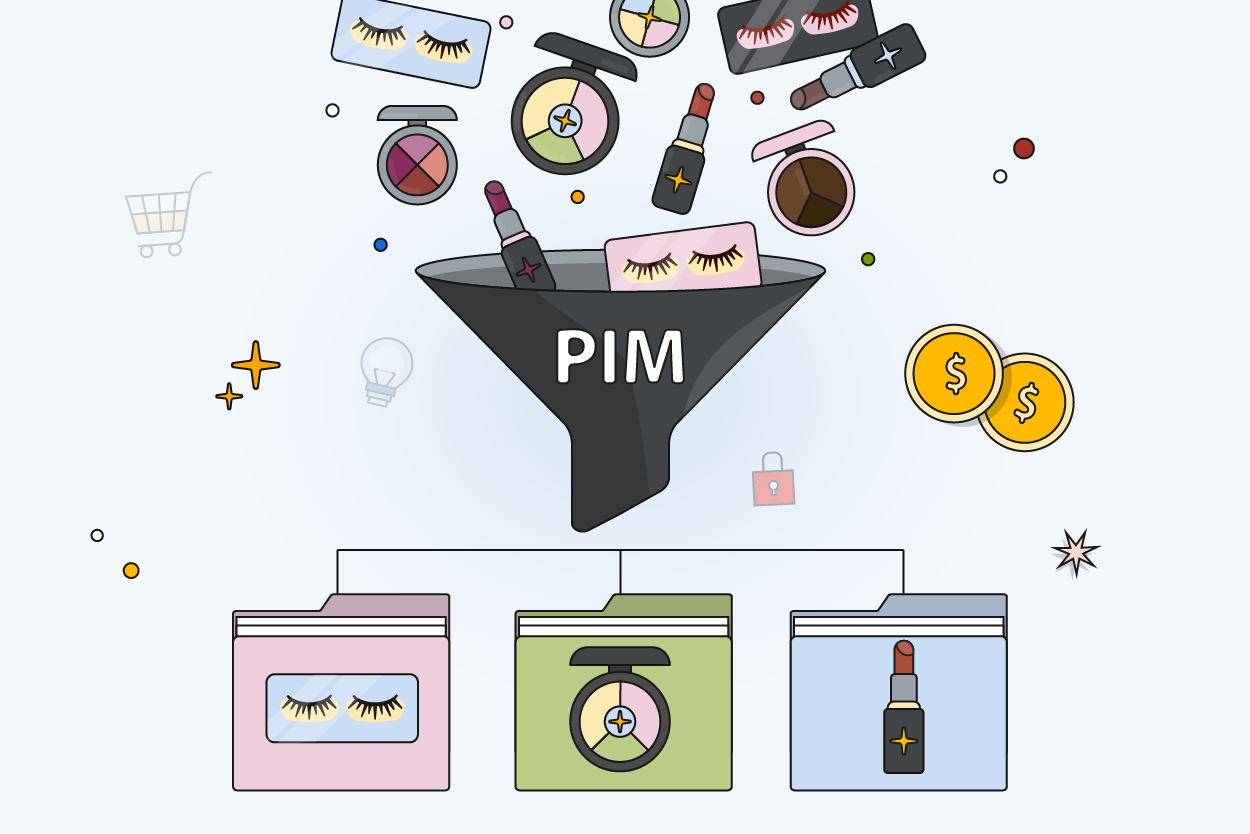
Beauty and Cosmetics Product Data Management: A PIM Guide for Brands
A lipstick launches in 20 shades. Each shade has its own barcode, swatch, product photo, shade description and stock status, and every retailer wants that information in a different spreadsheet. Six months later the brand adds a matte version and a m...
-
Food and Beverage Product Data Management: A Practical Guide for Brands and Distributors
A granola bar recipe changes: almonds replace cashews. The new label goes to print, but the allergen statement on your website, the spec sheet your distributor uses and the listing on an online grocery site still say "contains cashews." Nobody made a...
-
Multichannel Ecommerce Software: A Practical Guide
A shopper finds your product on Amazon, checks the price in your Shopify store and buys it on Walmart. Behind that one purchase sit three listings, one pool of stock and a product description that has to match everywhere. Multichannel ecommerce softw...