Product Data Feed: What It Is and How It Works
Author name: Mark James
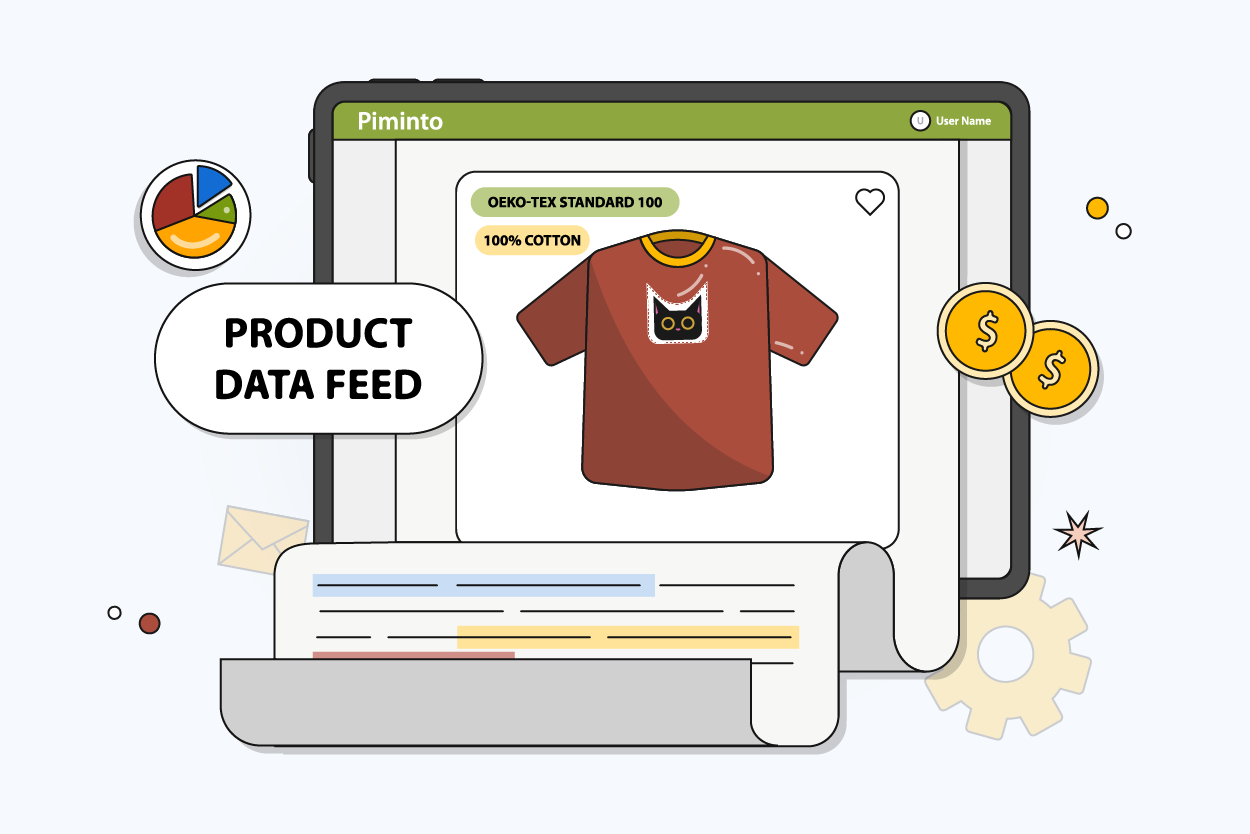
A product data feed sends catalog details to a sales channel in the format that channel expects. When the feed is wrong, good products can vanish from search, ads can show stale prices, and your team gets stuck fixing the same SKU again.
We’ll explain how feeds work, which fields matter, why channels reject listings, and where a PIM fits. The goal is simple: turn product data chaos into a clean system your team can trust.
What Is a Product Data Feed?
A product data feed is a structured file or connection that passes product information from one system to another. It may send data to an online store, marketplace, comparison site, advertising platform, or social commerce channel.
Think of it as a data handoff. Your catalog holds the source details. The feed packages those details for a destination. The destination then reads fields such as the product title, price, image, stock status, brand, and identifier.
A product is an item or service offered to a market. Product information can include details beyond price, such as attributes, classification, and traceability. That distinction matters online because shoppers need enough information to compare an item before they buy.
A feed doesn’t usually improve the underlying data by itself. It moves what it receives. If the source says an item is in stock when the warehouse says it isn’t, the feed may pass that conflict to every connected channel.
What a feed usually contains
The exact fields vary by channel, but most feeds include a shared group of catalog values:
A unique product ID or SKU.
A product title and description.
A product URL on your store.
An image URL.
Price and availability.
Brand, manufacturer part number, or global trade item number when required.
Category and product type.
Variant details such as size, color, or material.
Shipping, tax, condition, or promotion data when the channel supports those fields.
Variants need special care. A parent product may describe a shirt, while each child SKU has its own size, color, stock count, and sometimes image. If the feed breaks that relationship, shoppers may see the wrong image or select a size that cannot ship.
Common feed formats include XML, CSV, JSON, and API-based connections. The format is only the container. The field rules inside that container decide whether the destination can use the data.
That’s why a feed is different from a PIM. A feed distributes product information. A PIM organizes the information before distribution and can act as the place where your team sets rules, fills gaps, and manages channel versions.

How Product Data Feeds Move Information Across Channels
A product data feed moves information through a repeatable chain: source, rules, output, channel, and review. Each link has a job. A failure at any point can leave a listing incomplete or out of date.
1. The source supplies the catalog
The source may be an ecommerce platform, ERP, spreadsheet, supplier file, database, or PIM. It holds the starting values for each SKU. Some teams have one source. Others combine several sources because pricing lives in an ERP while images sit in a digital asset system.
Before data moves, the system needs a clear source of truth. If two systems can change the same price, your team needs a rule that says which value wins. Without that rule, the feed may look fine during one update and wrong during the next.
2. Rules prepare the output
Channels rarely use the same field names or requirements. One destination may call a field “availability.” Another may expect a value such as “in stock.” A marketplace may require a category path that doesn’t match your store’s internal category.
Mapping connects your source fields to the destination fields. Transformation changes the value when needed. For example, a rule can convert an internal stock code into the channel’s accepted availability value.
Good rules also protect the channel from bad records. You might exclude products with no image, remove discontinued SKUs, or send a different title to a paid shopping channel. The source remains intact while the output matches the destination.
3. The channel receives and checks the feed
The destination reads the file or receives the API update. It then checks the records against its own rules. A missing identifier may trigger a warning. A broken image URL may stop an item from appearing. A price that differs from the landing page may cause a mismatch.
Google Merchant Center, for example, acts as a catalog point for product details such as titles, descriptions, images, prices, and availability.
4. Updates travel back through the same path
A feed is useful only when it keeps pace with change. A stock update may begin in your store, move through the feed, and reach the channel later. A price change follows the same route.
Some feeds run on a schedule. Others use real-time sync or an API. The right method depends on how quickly your catalog changes. A small catalog with stable stock may work well on a schedule. A catalog with frequent inventory changes needs tighter updates.
Teams also need a review loop. Look at rejected items first. Then check products with warnings. Finally, compare a sample of accepted listings with the source catalog. That small audit can catch a mapping rule that technically passes but still sends the wrong value.
PIMInto helps teams organize catalog data before it reaches connected channels. Its built-in channel set includes Shopify, Magento, Amazon, WooCommerce, and Google Shopping, so SMB teams can avoid buying separate feed add-ons for each outlet.
For a closer look at the work around rules, enrichment, and channel delivery, our guide to product feed management breaks down the operating model in more detail.
Product Data Feed Formats, Fields, and Mapping Rules
A product data feed succeeds when its format, fields, and values match the destination’s rules. The file extension matters less than the meaning of each field and the way your system fills it.
Choose the format that fits the workflow
CSV files are easy to inspect in a spreadsheet. They work well for basic catalogs and supplier handoffs, but they can become hard to manage when products have many variants or nested attributes.
XML supports a defined structure and is common when a destination expects a feed URL. JSON works well with modern APIs and software systems. An API connection can send changes without producing a full file each time, though it needs careful authentication and error handling.
Don’t choose a format because it sounds advanced. Choose the method your team can monitor and repair. A simple scheduled file is better than an API that nobody knows how to troubleshoot.
Separate core fields from channel fields
Your core catalog should hold stable product facts. Channel fields should hold the version needed by each destination. This split prevents one channel’s wording from overwriting the source information used elsewhere.
Useful core fields include:
SKU and parent-child relationships.
Brand and manufacturer details.
Product type and category.
Dimensions, weight, material, and technical attributes.
Images and supporting media.
Stock, price, and lifecycle status.
Channel fields may include a shopping title, custom label, marketplace category, shipping class, or promotional value. A good mapping layer keeps those values tied to the same product record.
Use mapping rules with a clear order
Mapping gets easier when rules follow a clear order. First identify the source field. Then define the destination field. Once that works, add a transformation only when the channel needs one.
For example, your source may store a product type as “running footwear.” A destination may require a category tree with several levels. The mapping rule should connect the internal value to the accepted destination path without changing the source classification.
Conditional rules can handle exceptions. If a product is out of stock, the feed can exclude it or send the channel’s accepted unavailable value. If a product belongs to a certain brand, the rule can add a campaign label. Keep exceptions visible. Hidden rules become a repair problem six months later.
Check values before export
A pre-publish check should flag missing values before the channel sees them. It should also catch duplicate IDs, invalid URLs, empty titles, unsupported category values, and inconsistent variant links.
AI enrichment can help fill or improve attributes, but it needs review. An AI-generated material value can be wrong even when the sentence sounds natural. Use enrichment to speed up work, not to remove ownership from the catalog team.
PIMInto combines bulk editing with AI-driven attribute enrichment and channel sync. That gives a team one place to fix a field before the corrected value reaches multiple outputs.
If your main issue is missing attributes or rejected listings, use our guide to product feed optimization as a working checklist. The key is to fix the source and rule together. Editing only the exported file usually means the same error returns at the next refresh.
Product Data Feed Errors, Rejections, and Quality Problems
Feed errors are often silent revenue killers because a product can remain active in your store while failing somewhere else. Your team needs to separate source problems from mapping problems and destination rules.
Common error types
Problem | What it usually means | What to check first |
|---|---|---|
Missing required field | The output lacks a value the channel needs. | Check the source field and its mapping. |
Invalid value | The field exists but uses an unsupported format. | Compare the value with the channel’s accepted options. |
Price mismatch | The feed price differs from the landing page. | Check tax, currency, sale price, and update timing. |
Broken image or URL | The channel cannot fetch the destination. | Open the URL and check access, redirects, and file type. |
Variant conflict | Child products do not connect to the right parent. | Review IDs, group values, and variant attributes. |
Out-of-stock listing | The channel still receives an available value. | Compare inventory timing across systems. |
Why errors keep coming back
Recurring errors usually point to a process gap. Someone fixes a single exported row, but the source record stays wrong. The next feed refresh brings the same bad value back.
Another cause is unclear ownership. The ecommerce team may own titles. Merchandising may own attributes. Operations may own stock. If nobody owns the rule that connects those fields, errors sit between teams.
Channel drift creates a third problem. A destination changes its requirements, but your mapping stays the same. The feed worked last month. Then a required value changes, and a group of products stops appearing.
Build a quality routine
Start with a rejection queue. Sort issues by impact, not by the order they arrived. A missing price affects a different group of products than a weak description.
Next, trace each error backward. Find the output value. Find the mapping rule. Then find the source record. This path shows whether the fix belongs in the catalog, transformation layer, or channel setup.
After a fix, test one SKU with several variants. This catches parent-child issues that a single simple product cannot reveal. Then review an item with a sale price and an item that is near the stock threshold.
PIMInto supports feed sync across its connected channels and gives teams a central place to edit catalog values. That can reduce the handoff gap that appears when one tool stores the data and another tool manages the output.

Product Data Feed vs. PIM: Choosing the Right Architecture
A feed and a PIM solve different parts of the catalog problem. The feed sends data outward. The PIM gives your team a controlled place to organize product information before it is sent.
Comparing them as direct substitutes creates bad architecture. Most feeds need a data source. That source may be a store, ERP, supplier file, or PIM. If the source stays messy, adding another feed tool can spread the mess to more destinations.
Use a feed when the source is already reliable
A direct feed may be enough when your store has a small catalog, one main channel, and few product attributes. The source already contains clean titles, prices, images, and stock. You mainly need to deliver those values on a schedule.
This setup has a short path and fewer systems to monitor. The tradeoff is limited control. As channels add different categories or fields, the store may become crowded with channel-specific workarounds.
Use a PIM when catalog work is the bottleneck
A PIM makes more sense when several people edit product data or when the catalog comes from several sources. It can give your team one record for each product, with rules for attributes, variants, media, and channel outputs.
That central record helps during a product launch. Merchandising can prepare the attributes. Content can review descriptions. Operations can confirm stock and dimensions. The channel feed then receives a known version instead of a patchwork of spreadsheet edits.
The data shows that 7 of 35 PIM platforms list built-in feed channels. That is 20% of the sample. The average among those platforms was four channels, while PIMInto lists five native ecommerce channels: Shopify, Magento, Amazon, WooCommerce, and Google Shopping.
Architecture | Best fit | Main strength | Main risk |
|---|---|---|---|
Store to channel feed | Small catalog with one main output | Short setup path | Channel rules can clutter the store |
ERP to channel feed | Businesses with strong operational product data | Stock and price can start close to the source | Marketing content may remain thin |
Supplier file to feed | Teams that distribute vendor catalogs | Fast intake of outside data | Missing attributes can pass through at scale |
PIM to multiple feeds | Teams with many channels or complex variants | Central rules and channel-specific output | Needs setup and clear governance |
PIMInto with built-in feeds | SMB teams that need catalog control plus native outputs | One PIM can organize data and distribute it | Free plan skips premium AI enrichment and caps user views |
The cost question is easy to miss. If your PIM requires separate feed modules, each new channel can add budget pressure and another integration to maintain. PIMInto’s bundled channel approach is aimed at teams that want the PIM to handle both catalog control and distribution without buying a separate feed add-on for every outlet.
That doesn’t mean every company needs a PIM. A small catalog may not justify one. But once product teams spend their week correcting duplicate fields, a central system often costs less than the repeated manual work.
Choose the architecture by looking at the source of your errors. If delivery is the problem, improve the feed. If the catalog itself is inconsistent, fix the source with a PIM first.
For teams comparing the broader catalog workflow, our overview of PIM for ecommerce explains how centralization connects product records with channel distribution.
Frequently Asked Questions About Product Data Feeds
What is a product data feed?
A product data feed is a structured file or connection that sends catalog details to another sales or marketing channel. It can carry titles, descriptions, images, prices, stock status, identifiers, and attributes. The receiving channel checks those values against its own rules before showing the product to shoppers.
What information should a product feed include?
A product feed should include a unique ID, title, description, product URL, image URL, price, availability, and category. Many channels also need brand details, variant data, shipping values, or identifiers. The required set changes by destination, so map fields to the channel rather than sending the same output everywhere.
How often should a product data feed update?
A product data feed should update as often as your catalog changes. Stable catalogs may work with scheduled updates. Stores with frequent stock or price changes need shorter intervals or an API connection. Check the delay between a source change and the channel update, then set the schedule around the risk of selling an unavailable item.
What causes a product feed to be rejected?
A product feed is often rejected because it has missing fields, invalid values, broken links, price mismatches, or badly connected variants. Start by reading the channel’s error message. Then trace the rejected value to its source record and mapping rule. Fixing only the exported row usually lets the same error return.
Is a PIM the same as a product feed tool?
A PIM is not the same as a product feed tool. A PIM organizes product information and can prepare channel-specific outputs. A feed tool mainly moves or modifies data for a destination. PIMInto is a PIM with built-in feeds for several ecommerce channels, so teams can manage the catalog before distributing it.
Conclusion
Use a feed for delivery, but use a PIM when catalog quality and channel growth are becoming daily problems. We recommend starting with a small SKU test in PIMInto, checking the source fields and mappings, then expanding the sync once the output passes review.
Modified on: 2026-09-08
Blogs you might like
-
Best PIM Software for Shopify in 2026
Shopify handles products well until the catalog outgrows it. Variants pile up, supplier files arrive in different formats, a second store needs the same products with different content, and spreadsheets become the real system of record. That is the p...
-
Jewelry Product Catalog Software: Managing Product Data, Line Sheets and B2B Catalogs
One engagement ring design can come in three metals, four center-stone weights and twelve ring sizes. Add natural and lab-grown versions, a wholesale price for boutiques and a separate price list for Europe, and a single design turns into hundreds of...
-
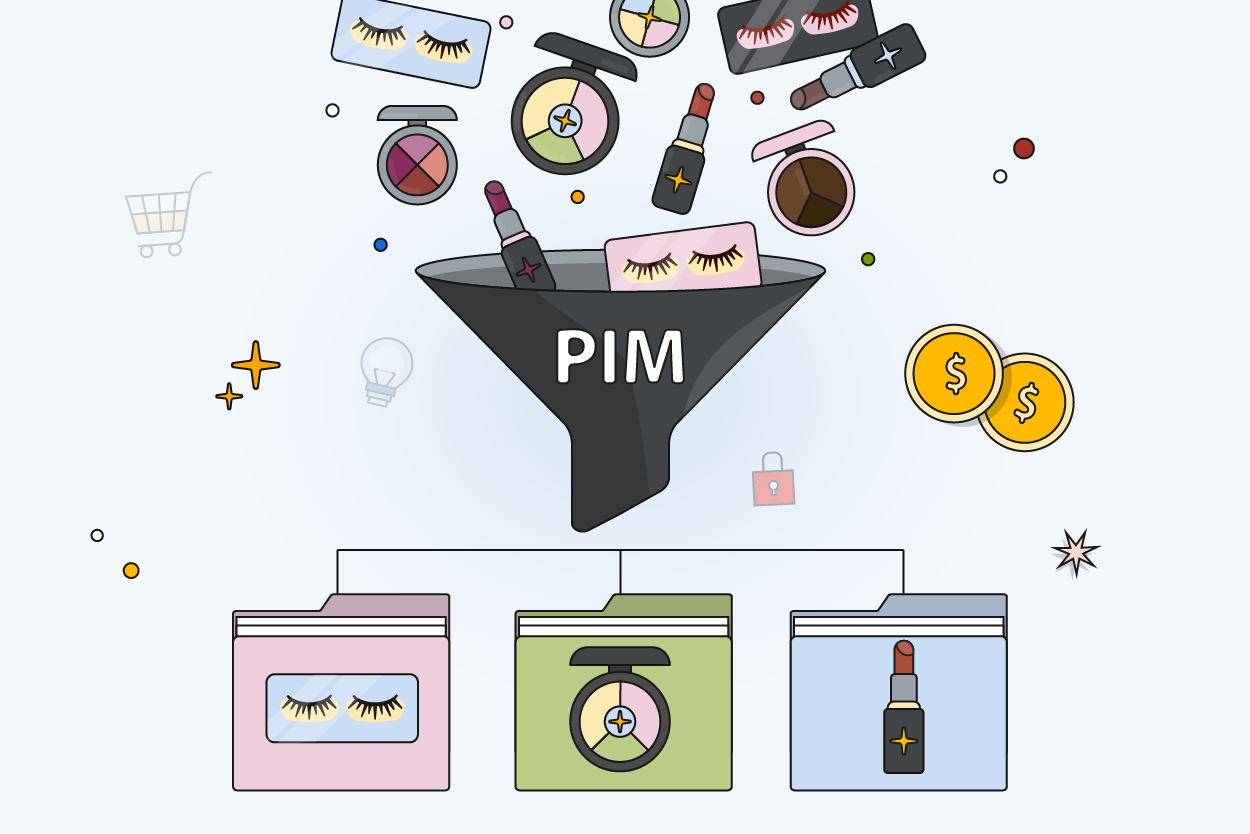
Beauty and Cosmetics Product Data Management: A PIM Guide for Brands
A lipstick launches in 20 shades. Each shade has its own barcode, swatch, product photo, shade description and stock status, and every retailer wants that information in a different spreadsheet. Six months later the brand adds a matte version and a m...
-
Food and Beverage Product Data Management: A Practical Guide for Brands and Distributors
A granola bar recipe changes: almonds replace cashews. The new label goes to print, but the allergen statement on your website, the spec sheet your distributor uses and the listing on an online grocery site still say "contains cashews." Nobody made a...