The Complete Guide To Managing PDP Assets In 2026
Author name: Mark James
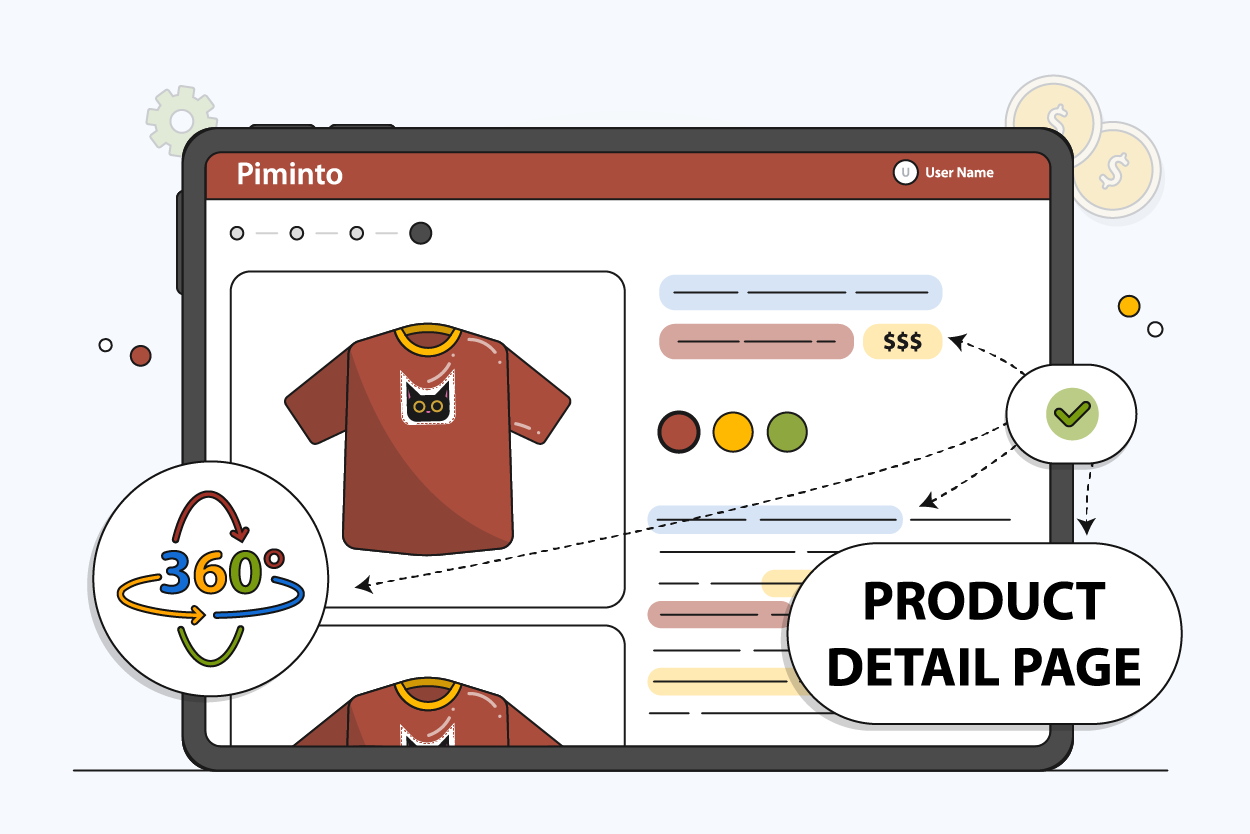
E-commerce sales are projected to hit $6.88 trillion in 2026, yet shoppers constantly abandon carts because they cannot see a product's details. Managing PDP assets requires more than uploading a few static images to a storefront. The process now demands a unified approach that ties high-resolution media directly to accurate product specifications. Multi-channel brands lose revenue when they rely on fragmented spreadsheets to track this data, which creates mismatched pricing, missing specifications, and outdated visuals across different retail platforms. PIMinto solves this by acting as a single source of truth. The platform combines core Product Information Management with a dedicated Digital Asset Management (DAM) system, allowing you to organize, enrich, and distribute product catalogs immediately without hitting artificial paywalls.
The State Of Managing PDP Assets In 2026
E-commerce managers face a steep disconnect between market growth and user experience. Worldwide retail sales continue to climb, but Baymard Institute benchmarking shows that only 49% of sites offer an adequate Product Detail Page (PDP) experience. This means half the industry bleeds conversions at the exact moment a buyer evaluates the item.
Buyers depend on visual evidence because a generic grid of low-resolution photos fails to answer specific questions about scale, texture, or compatibility. High-ticket items like furniture require detailed schematics and 3D models, while apparel shoppers look for movement and fit. Treating the PDP as an afterthought causes bounce rates to spike, as shoppers leave upon encountering missing delivery options, contradictory specifications, or images that fail to load on mobile connections. Furthermore, inaccurate visual assets drive massive return rates. If a product arrives looking different from its web photo, the customer ships it back at your expense.
Disconnected workflows create these user experience failures. Storing product descriptions in a spreadsheet while hosting images on a separate cloud drive guarantees errors because a team member will eventually upload the wrong file version or forget to update a specification sheet before a seasonal launch. To stop these errors, centralize your operation. Using specialized product data management software ensures that every image, video, and text block shares a single database record.
Updating a SKU in PIMinto propagates that change everywhere, eliminating manual double-entry and preventing outdated assets from reaching your live storefronts. Configure your workflows so team members never touch a standalone spreadsheet to update live catalog data. Instead, restrict editing permissions to a centralized dashboard where validation rules catch missing fields before they sync. Require every new product entry to include a minimum of three high-resolution images, a primary description, and a verified pricing tier before the system flags the item as ready for publication.

Prioritizing Video And High-Impact Visuals
Static image grids no longer compete effectively on their own, prompting brands to pivot toward video-first architectures because motion communicates context faster than text. A Wyzowl report shows products with video convert at an up to 80% higher rate, a metric that varies by category. Adding short-form video reduces purchase friction and lowers return rates by setting accurate physical expectations before the checkout completes.
Place a video in the second slot of your media carousel, immediately after the hero image, to capture attention instantly. Film products in real-life settings rather than sterile white-box studios, showing a tent being pitched, a jacket blocking wind, or a machine part slotting into an engine. This visual proof answers compatibility and usage questions that written descriptions struggle to convey. Store these large video files in a dedicated digital asset management system that categorizes files by SKU and campaign, allowing you to pull specific clips for social media ads without hunting through disorganized local folders.
Desktop video strategies fail on smartphones because heavy video files cause page latency, killing conversions before the media even plays. Compress every video asset using modern formats like WebM or HEVC, targeting a file size under five megabytes per clip. Export vertical video at a 9:16 aspect ratio to fill mobile screens naturally without forcing the user to rotate their device, and implement lazy loading for all media below the fold so the initial page render stays fast to preserve your Core Web Vitals score.
Assume viewers will not hear your audio track. Because a vast majority of mobile users watch video on mute, spoken audio provides zero value unless you make it readable. Burn hardcoded captions directly into the video file before uploading it to the PDP to ensure the text scales perfectly with the video player and remains visible across every device, regardless of the browser's native accessibility settings.

Preparing Assets For AI And Generative Search
By 2026, Large Language Models (LLMs) and answer engines crawl your product pages directly to resolve complex user queries. Buyers no longer search for broad terms, asking AI assistants specific questions like "Which 12V pump fits a 2019 Sprinter van under the sink?" instead. Managing PDP assets involves structuring your data so these engines can read, understand, and recommend your products.
Generative Engine Optimization (GEO) relies on structured pull data, including technical specifications, compatibility lists, and detailed FAQs embedded in your markup. Structuring this information directly on the product page allows AI engines to parse exact compatibilities, which improves your visibility in conversational search results. Format your specifications in clear HTML tables, and wrap your product dimensions, material types, and warranty information in valid JSON-LD schema using properties like Product, offers, and aggregateRating. If an LLM cannot definitively confirm a detail from your page, it recommends a competitor's product that provides clearer data.
Generating this level of detail for thousands of SKUs manually drains resources, causing PIM platforms to embed artificial intelligence to handle the heavy lifting. PIMinto features an AI PIM Assistant that automates data enrichment through Natural Language Generation. The tool scans your raw manufacturer data to draft structured, GEO-friendly product descriptions, flag anomalies in your database, translate multilingual content for international storefronts, and format specifications precisely for AI crawlers.
Configuring the rules allows the assistant to apply them across your entire catalog, letting you push new lines to market faster while maintaining perfect data structure. Use the assistant to fill gaps in your existing records by starting with your highest-margin items. Instruct the tool to rewrite generic vendor descriptions into detailed, benefit-driven copy that answers targeted customer questions. Generate optimized meta titles and descriptions in bulk to improve click-through rates from search results.

Synchronizing Assets Across Sales Channels
Pushing new SKUs to multiple platforms simultaneously remains a persistent challenge for e-commerce managers. Updating a catalog on your direct-to-consumer site, a marketplace, and a wholesale portal usually requires isolated workflows for each platform. Duplicating effort allows variations to creep in, resulting in one channel displaying outdated features while another shows the correct ones. Parent and child SKU variations become especially tangled when tracked across separate systems.
Permanently linking your visual assets with their corresponding technical attributes eliminates these discrepancies. Your 360-degree lifestyle shots must attach to the exact size, color, and material variations they represent. Storing everything in a unified PIM/DAM environment ensures that any asset update applies globally. Swapping a hero image for a redesigned product label forces every connected storefront to pull the new image automatically on its next sync.
Legacy platforms frequently force brands to purchase expensive add-ons or hire third-party developers to build these synchronization bridges. PIMinto removes this barrier entirely by including native API connectors with every paid subscription, providing out-of-the-box integrations for Shopify, WooCommerce, Wix, and other major platforms without hidden fees.
Set up a direct sync pipeline by connecting your PIMinto dashboard to your storefronts.
- Authenticate your store credentials in the PIMinto settings panel.
- Map your internal PIM categories to the external platform's specific taxonomy requirements.
- Authorize the Google Shopping integration to push enriched product feeds to your Merchant Center account.
- Configure the sync frequency to update inventory and price changes automatically.
These direct connections distribute accurate PDP assets across all channels instantly, meaning you manage the data once while the software handles the distribution. You stop worrying about whether the Shopify store matches the Google Shopping feed because both pull from the exact same central record.
Securely Distributing B2B Assets
The B2B sector faces a unique set of catalog challenges because manufacturers and distributors manage complex SKUs and massive dealer networks that require constant access to accurate product sheets. Sharing these assets via messy email chains or fragmented cloud folders leads to retail partners displaying outdated specifications and low-resolution imagery on their own sites.
Modernizing this distribution channel directly impacts revenue. If a retailer cannot find the exact installation manual or high-resolution render needed for their storefront, they promote a competitor's product instead. Provide your network with immediate access to current materials to prevent this catalog leakage.
Replace your ad-hoc file sharing with a structured distribution hub. PIMinto provides built-in Brand Portals that curate specific collections of approved assets for external partners. Instead of emailing zip files, you grant secure access to a branded dashboard where distributors log in, search for a SKU, and download the associated spec sheets and images directly.
Configure these portals to match different partner tiers.
- Create a public portal containing standard web-ready images, basic descriptions, and safety data sheets for general distributors.
- Establish a premium partner tier that includes high-resolution 3D models, unwatermarked video files, and detailed CAD drawings for key retailers.
- Set expiration dates on seasonal campaign assets so outdated promotional material automatically vanishes from the portal.
Because the portal connects directly to your central PIM system, any product update automatically reflects in the dealer network's dashboard. This guarantees your partners always pull the latest approved version of every asset, protecting your brand identity across hundreds of third-party sites.

Auditing And Maintaining PDP Performance
Deploying high-quality assets covers only the initial setup. Managing PDP assets requires continuous maintenance to prevent performance degradation over time because links break, new compression standards emerge, and changing user expectations demand frequent reviews of your product pages.
Avoid treating your product pages as a set-and-forget checklist. Implement a systematic audit schedule that starts with your highest-converting items, conducting quarterly visual audits on your top 10-20 SKUs by revenue using established industry frameworks. Rather than checking assets in isolation, evaluate how visual systems work together by testing the legibility of your comparison charts on a mobile screen. Confirming that the hero image clearly communicates the product's primary value proposition within three seconds is mandatory. You must also review the load times of your media carousels using browser developer tools to ensure heavy video files do not cause rendering delays. Finally, verify that all images include descriptive alt tags for both accessibility and image search indexing while checking that fallback images display correctly if a video fails to load.
A holistic audit must also examine text and metadata because shoppers rely heavily on logistical information to complete a purchase. A DHL trend report notes that 81% of shoppers abandon their carts if their preferred delivery options are missing from the PDP. Ensure shipping policies, return windows, and inventory status display prominently alongside the primary buy button.
Configure your analytics platform to monitor bounce rates specifically on product pages by setting up custom explorations in Google Analytics 4 to track user drop-offs at the item level. If a specific SKU experiences a sudden drop in conversion, trigger an immediate manual review to check for missing schema tags, broken API connections that failed to sync price updates, or outdated promotional banners. Document any discovered issues in your PIM system's audit log to prevent the same error from occurring again. Maintaining strict governance over your data ensures your pages consistently drive revenue.
Stop losing conversions to disorganized product data and missing visuals. PIMinto offers completely free onboarding and data migration, allowing growing brands to scale their multi-channel syndication without hitting artificial paywalls. Start managing your entire catalog from a single source of truth at PIMinto.
Modified on: 2026-08-03
Blogs you might like
-

Best PIM Software for Shopify in 2026
Shopify handles products well until the catalog outgrows it. Variants pile up, supplier files arrive in different formats, a second store needs the same products with different content, and spreadsheets become the real system of record. That is the p...
-

Jewelry Product Catalog Software: Managing Product Data, Line Sheets and B2B Catalogs
One engagement ring design can come in three metals, four center-stone weights and twelve ring sizes. Add natural and lab-grown versions, a wholesale price for boutiques and a separate price list for Europe, and a single design turns into hundreds of...
-
Beauty and Cosmetics Product Data Management: A PIM Guide for Brands
A lipstick launches in 20 shades. Each shade has its own barcode, swatch, product photo, shade description and stock status, and every retailer wants that information in a different spreadsheet. Six months later the brand adds a matte version and a m...
-

Food and Beverage Product Data Management: A Practical Guide for Brands and Distributors
A granola bar recipe changes: almonds replace cashews. The new label goes to print, but the allergen statement on your website, the spec sheet your distributor uses and the listing on an online grocery site still say "contains cashews." Nobody made a...