Multi Channel Marketing Campaign Examples That Drive High ROI
Author name: Mark James

A customer sees an Instagram reel about your new product line, clicks through to a marketplace app, and finally buys directly from your website three days later. If your pricing or technical specs vary between those platforms, trust breaks and the sale disappears. Delivering a unified message across every touchpoint requires more than scheduling posts on different platforms. You need a single source of truth for your product data. To see how top brands orchestrate these journeys, look at multi channel marketing campaign examples that connect every platform with consistent data. When you unify your strategy with a Product Information Management (PIM) platform like PIMinto, you stop managing separate spreadsheet silos and start driving reliable 2026 ROI. Businesses relying on weak or single-channel approaches retain 33% of their customers on average. Companies with robust, synchronized strategies retain an average of 89% of their buyers while generating a return on investment that is twice as high as single-channel alternatives. Reaching prospects through multiple relevant touchpoints reinforces messaging, builds trust faster, and caters to modern buyer journeys that span several networks simultaneously.
Upgrading from Siloed Multichannel to True Omnichannel Synchronization
Connecting Isolated Platforms into a Synchronized Loop
Multichannel broadcasting pushes the same message across multiple isolated platforms, where your website, social media, and third-party marketplaces operate independently. Omnichannel synchronization, by contrast, connects those platforms into a continuous feedback loop. If a buyer adds an item to their cart on a mobile app, that exact item must show as pending when they log into their desktop browser later that evening.
Retail strategy researchers note that unified data layers must connect every touchpoint. In B2C retail, campaigns utilizing three or more channels achieve a 287% higher purchase rate than single-channel efforts, an advantage that improves overall return on investment. Hitting that target rate manually is impossible, so your backend systems must communicate automatically to prevent contradictory information from reaching the public. When an item sells out on your primary storefront, your system must immediately pause any social media advertisements promoting that specific unit to prevent wasted spend and frustrated clicks.
Fueling Campaign Synchronization with Centralized Data
Centralized data acts as the engine for this synchronization. Every product image, technical specification, and inventory count must originate from one central database, because pulling assets from local folders multiplies discrepancies across your active ads and storefronts. If your design team updates a logo on a local hard drive but forgets to email the new version to the social media manager, your brand identity fragments immediately.
Establish a foundational layer for your product catalog before spending your ad budget. PIMinto provides this single source of truth, ensuring shoppers see accurate information everywhere. By pulling from real-time records instead of outdated files, you keep your campaign messaging tight and professional across every distribution network. Managing these variations manually causes constant struggles with version control, leading to massive demand for robust catalog management software. Consequently, industry forecasts project substantial growth for the global PIM market through 2034, driven largely by the operational complexity of managing direct-to-consumer and business-to-business campaigns from one central hub.

Campaign Example 1: The Surround-Sound Content Atomization Strategy
Adapting Core Assets for Platform-Specific Formats
Content atomization breaks a single high-value asset down into channel-native pieces, creating a surround-sound effect that captures buyers in their preferred feeds. Start this process with a major piece of content, such as a product launch webinar or a detailed whitepaper.
From that single source, export a 60-second vertical video for TikTok, format a visual quote graphic for X, and publish an SEO-optimized summary on your blog. Instead of pushing identical copy-pasted text to every network, adapt your asset formats to match the exact consumption habits of each specific audience. A technical diagram that performs exceptionally well on a desktop-focused platform like LinkedIn becomes completely unreadable when compressed into a smartphone feed on Instagram. To maintain quality control, build an internal asset checklist for every major campaign launch that specifies the aspect ratios, word counts, and media types required for each target platform. You might require 1080x1920 portrait dimensions for short-form video reels, along with custom thumbnail images and specific hashtag clusters researched for each algorithm.
Reinforcing the Core Message Across Multiple Channels
The underlying message must remain identical even as the format changes, because consistency builds the familiarity needed to accelerate purchasing decisions. 91% of retail shoppers engage across multiple channels before finalizing a transaction, which makes a cohesive narrative essential. These multi-channel shoppers spend an average of 16% more per transaction, a metric that varies by industry, but they expect unified branding to earn that spend.
If your LinkedIn post promotes a premium durability feature, your Instagram story and subsequent retargeting ads must highlight the same benefit, otherwise contradictory value propositions will confuse prospects. To prevent this, maintain a strict campaign brief that defines the core value proposition, and require your team to map their atomized content back to that central document. Your buyer might watch an initial tutorial video on YouTube, scroll past a carousel ad on Facebook two days later, and finally receive a promotional email on Friday morning. If any of those touchpoints advertise a different warranty length or color availability, the buyer will likely abandon the checkout process out of suspicion.

Campaign Example 2: Always-On B2B Signal-Based Marketing
Triggering Behavioral Marketing Sequences
Relying on a monthly newsletter blast often misses target accounts entirely, so modern B2B campaigns trigger always-on sequences based on specific buyer signals. You must move away from strict calendar-based product launches toward continuous, behavior-driven orchestration. When a prospect downloads a technical spec sheet from your website, for example, your system should automatically retarget them with a related case study on LinkedIn.
Configure behavioral triggers in your marketing automation platform to fire these specific sequences. If an account views your pricing page twice in 48 hours, route an alert to your sales team while simultaneously adding that user to an email flow featuring customer testimonials, ensuring you respond to buyer interest with exact timing rather than guesswork. You can configure your customer relationship management software to identify high-intent actions, such as a user lingering on a specific product matrix for over three minutes, and automatically deploy a customized discount code to their inbox.
Supporting Complex B2B Procurement Cycles
Because modern procurement teams research independently long before engaging a sales representative, B2B buyers consult over 10 digital channels prior to making contact. Currently, 80% of B2B sales interactions take place completely within digital environments. Your marketing materials must answer their technical questions accurately across every one of those touchpoints to keep the deal moving.
Provide your external distributors with the exact same updated assets your internal team uses. PIMinto features built-in brand portals that allow manufacturers to securely share a single repository of complex SKUs and media, meaning partners can log in, access current sell-sheets, and download compliant digital assets. This setup ensures your extended network never markets an out-of-date product version. When you upgrade a specific component, you simply upload the revised blueprint to the central Digital Asset Management module. The portal automatically pushes an alert to all registered distributors, prompting them to discard the old specifications and pull the newest collateral for their regional outreach efforts.
Eliminating Bottlenecks with Real-Time Product Data Syncing
Moving Away from Manual Batch Processing
Batch processing overnight files causes stockouts and pricing errors, turning multi-channel expansion into a logistical mess. If you update a price on Shopify but forget to adjust Google Shopping, you risk losing margin or getting your merchant account flagged for mismatches. High-traffic events like Black Friday expose the fatal flaws of batch processing, as a sudden spike in purchases can empty your warehouse inventory while your delayed system continues selling non-existent stock on third-party marketplaces.
Real-time data synchronization solves this bottleneck by moving your operations away from periodic manual updates. You need an architecture that pushes changes live the moment they are approved, so when you correct a product weight or swap a primary image in your central database, that update reflects across all active storefronts immediately. This approach guarantees that buyers interacting with your promotions on social media always click through to a landing page featuring the exact same active offer.
Automating Direct E-Commerce Integrations
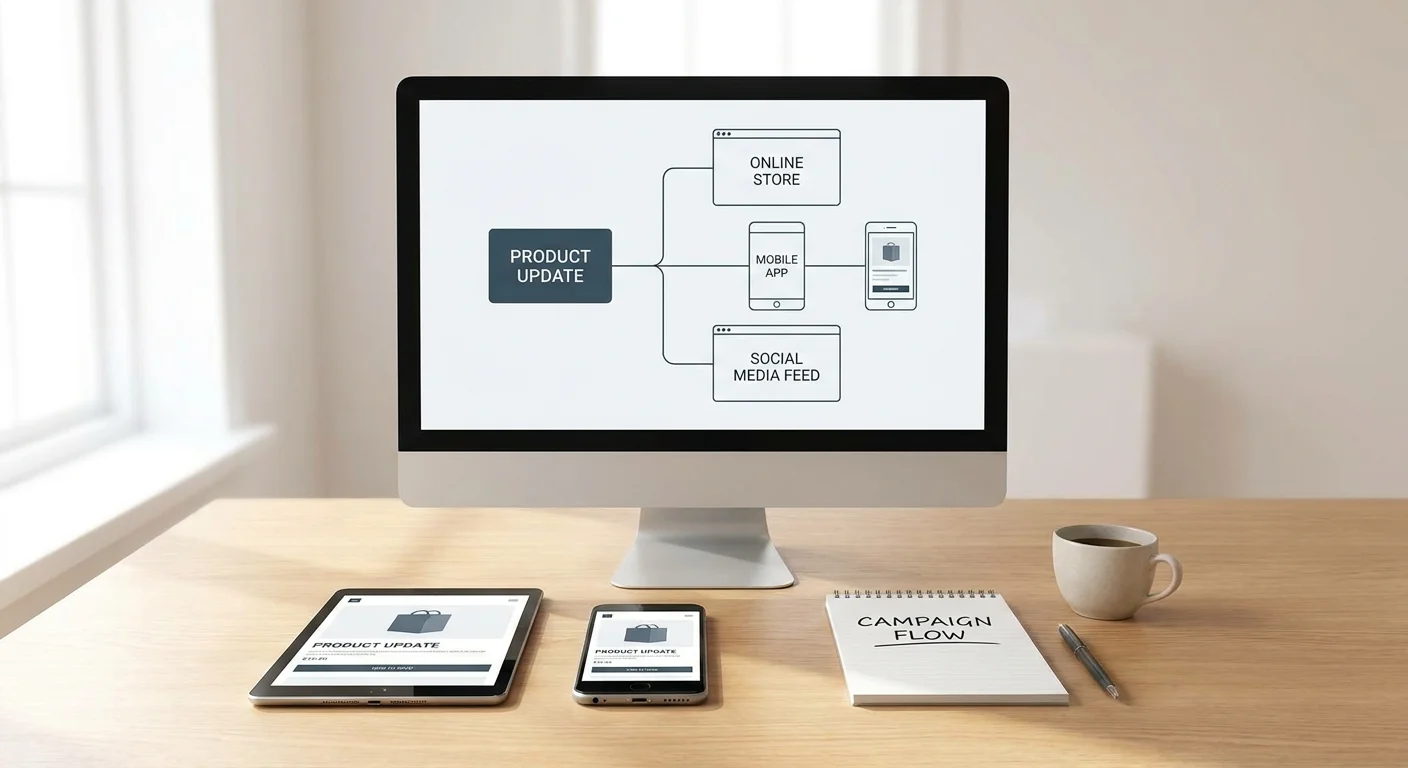
Managing a catalog across multiple platforms requires dedicated integration, which PIMinto handles automatically. Relying on custom-built middleware or manual spreadsheet uploads introduces unnecessary delays and formatting errors. The platform utilizes native API connectors to push enriched data and real-time updates directly to major sales channels like Shopify, Wix, WooCommerce, and BigCommerce.
These connectors come standard with any paid subscription, replacing the pricey third-party add-ons required by legacy competitors. When you alter a detail centrally, PIMinto cascades that change across every active digital storefront, letting the software map the fields automatically so you stop spending hours formatting CSV files for different channel requirements. Growing brands often hit aggressive paywalls when trying to add new sales channels or scale their stock keeping units. PIMinto removes these artificial barriers by offering transparent pricing that includes unlimited users, unlimited data outputs, and free onboarding, ensuring your software costs remain predictable as your commercial footprint expands.
Scaling Campaigns with AI-Driven Data Enrichment
Structuring Metadata for Recommendation Engines
To feed massive campaigns, you must structure your underlying product data so recommendation engines can parse it effectively. Generating ad copy is only a small fraction of what artificial intelligence handles, as algorithms rely entirely on clean metadata to serve relevant upsells. Multi channel marketing campaign examples from industry leaders show that granular attributes drive the highest conversions.
If your SKUs lack standardized tags, AI tools can scan your existing catalog, identify missing attributes, and categorize products based on usage context. You can then apply these enriched datasets to your email marketing software. When a customer buys a specific coffee machine, your automated workflow uses that clean metadata to trigger a personalized multi-channel sequence promoting the exact compatible filters. A shopper who purchases a heavy-duty camping tent requires targeted suggestions for specific cold-weather sleeping bags rather than generic summer hiking gear, and accurate metadata provides the instructions that make this personalized targeting possible.
Automating Catalog Validation with PIMinto
Launching a thousand new SKUs manually stalls entire marketing departments, as standardizing weights, dimensions, and color variations requires hundreds of hours of data entry. PIMinto's AI PIM Assistant automates this data enrichment process directly within your workspace to eliminate that manual bottleneck.
The software validates text entries, flags contradictory measurements, and standardizes formats before the data ever reaches the sales channel. If one supplier lists a dimension in inches and another in centimeters, the AI Assistant normalizes the values to match your channel requirements. It also corrects inconsistent capitalization, translates technical jargon into consumer-friendly benefits, and ensures all mandatory compliance fields contain valid entries. This automation lets you scale your catalog, and because PIMinto includes unlimited users and unlimited data outputs, your software costs stay predictable as your strategy succeeds. Instead of paying per seat for temporary data entry contractors during your busy season, your permanent team leverages the AI tools to manage an expanding product roster rapidly.
Pre-Launch Checklists for Multi-Channel Campaigns
Establishing Strict Data Governance
Before expanding to new sales channels, deploy a combined PIM and Digital Asset Management (DAM) system to establish strict data governance, because launching without centralized data leads to missing images and incorrect inventory counts reaching live storefronts.
Define clear rules for who can edit specific fields by locking technical specifications to product managers while giving marketing open access to update promotional copy. This central repository with defined user permissions prevents rogue edits from breaking downstream feeds. If an unauthorized user accidentally deletes a critical hazardous material warning from a product description, your business could face severe compliance penalties. Granular permission settings eliminate that risk entirely. Once permissions are set, audit your existing catalog for duplicate entries, merge them into single master records, and use those clean records to populate your upcoming campaign assets. An organized pre-launch audit involves running a diagnostic report to locate any SKUs missing high-resolution photography, ensuring your design team captures those assets long before the campaign schedule demands them.
Structuring Cross-Functional Workflows
Effective multi-channel execution requires structured collaboration across departments, so assign distinct system roles to prevent data entry bottlenecks during a campaign launch.
| Department | Primary Responsibility | PIM/DAM Action |
|---|---|---|
| Product Management | Technical accuracy | Input specifications, weights, dimensions, safety compliance data, and initial manufacturer descriptions into the PIM. |
| Marketing | Messaging and SEO | Generate optimized copy, translate technical features into localized descriptions, and structure cross-selling tags. |
| Design | Visual assets | Upload high-resolution imagery, 360-degree product spins, and promotional videos to the DAM, applying correct metadata. |
| E-Commerce | Channel syndication | Map approved fields to Shopify, WooCommerce, and Google Shopping connectors, configuring final pricing rules. |
Route all these inputs through clear approval chains inside PIMinto before syndication occurs by configuring the system to block publication until the product manager approves the specs and the design lead signs off on the media. This structured workflow ensures every asset within your multi-channel marketing campaigns is accurate and ready to drive revenue. If a graphic designer uploads a new banner image, the software automatically blocks publication until the e-commerce manager reviews the visual against current marketplace guidelines, ensuring only compliant media reaches external buyers.
Ready to eliminate spreadsheet chaos and scale your multi-channel campaigns with accurate, synchronized data? Visit PIMinto to discover how unlimited users and native eCommerce connectors can transform your product catalog management today.
Modified on: 2026-08-17
Blogs you might like
-
Best PIM Software for Shopify in 2026
Shopify handles products well until the catalog outgrows it. Variants pile up, supplier files arrive in different formats, a second store needs the same products with different content, and spreadsheets become the real system of record. That is the p...
-

Jewelry Product Catalog Software: Managing Product Data, Line Sheets and B2B Catalogs
One engagement ring design can come in three metals, four center-stone weights and twelve ring sizes. Add natural and lab-grown versions, a wholesale price for boutiques and a separate price list for Europe, and a single design turns into hundreds of...
-
Beauty and Cosmetics Product Data Management: A PIM Guide for Brands
A lipstick launches in 20 shades. Each shade has its own barcode, swatch, product photo, shade description and stock status, and every retailer wants that information in a different spreadsheet. Six months later the brand adds a matte version and a m...
-

Food and Beverage Product Data Management: A Practical Guide for Brands and Distributors
A granola bar recipe changes: almonds replace cashews. The new label goes to print, but the allergen statement on your website, the spec sheet your distributor uses and the listing on an online grocery site still say "contains cashews." Nobody made a...