Unsought Goods: Types, Examples, and Marketing
Author name: Mark James
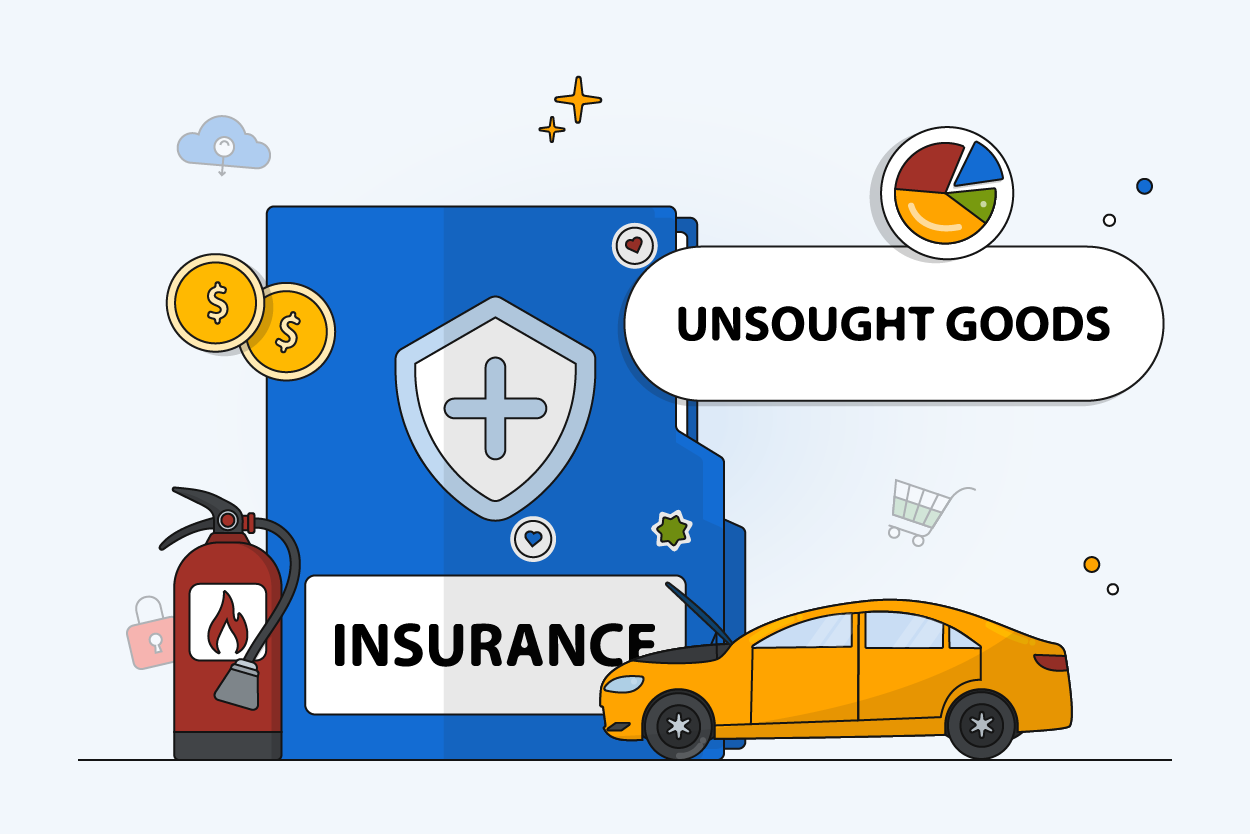
When a homeowner faces a flooded basement, they need an emergency sump pump. Until that moment, they likely gave no thought to industrial plumbing components. Marketing education categorizes these as unsought goods. These are products buyers do not plan to purchase or actively seek, either because they remain unaware of them or prefer not to think about needing them. That distinction matters for catalog operations and digital marketing.
The label describes the initial shopping behavior rather than the underlying quality or long-term value of the offering. A product may provide substantial value once a relevant need appears, and its classification can vary from one buyer to another. Buyers need clear information before they recognize a need and reliable details when that need becomes urgent. Because demand is not automatic, manufacturers, distributors, and retailers rely on product data management software to centralize the specifications and digital assets that support both customer education and purchase readiness.
Types and Examples of Unsought Goods
Mapping this definition into a practical framework helps you plan your content needs across three distinct buyer states.
Unaware or Unrecognized Needs
Some products solve problems the buyer does not yet know they have, like a brand-new technical solution or a recently patented safety device. Because the buyer does not know the product exists, they cannot actively search for it. Marketing these items requires building problem awareness before introducing the specific solution.
Known but Not Actively Sought
Other products are familiar, but buyers deliberately postpone thinking about them. Educational resources frequently cite cemetery plots, encyclopedias, and life insurance as classic examples of unsought goods. While the buyer understands the category well, they lack the motivation to initiate a purchase until circumstances force their hand.
Event-Triggered Demand and B2B Analogues
Unexpected circumstances frequently create immediate demand for offerings the buyer previously ignored. Common consumer examples include funeral services, emergency towing, and specialized insurance.
While traditional marketing frameworks focus on consumer products, business-to-business purchasing operates on a similar continuum where buyers experience their own versions of event-triggered demand. Practical analogues include:
- Emergency replacement parts ordered after machinery failure
- Backup pumps, motors, or industrial power components
- Specialized safety equipment required after a sudden compliance change
- Replacement components mandated by a product recall
A specialized industrial bearing might be an unsought product for a facility manager who has never experienced a failure, but a routine replenishment item for a maintenance contractor. So the classification depends on the buyer's current context.

Unsought Goods vs. Other Consumer Categories
Marketing a product effectively requires understanding how much effort a buyer is willing to invest. A widely used consumer-product framework identifies four major categories: convenience, shopping, specialty, and unsought products.
| Product Category | Typical Buyer Behavior | Common Examples | Marketing Emphasis |
|---|---|---|---|
| Convenience Goods | Bought routinely with minimal shopping effort or planning. | Bread, milk, coffee, soft drinks. | Widespread availability, brand familiarity, and ease of purchase. |
| Shopping Goods | Compared carefully across brands, stores, price points, and styles. | Automobiles, homes, vacations, furniture. | Clear differentiation, comparison features, and visible reviews. |
| Specialty Goods | Buyers make a substantial effort to obtain a specific product and reject substitutes. | Expensive jewelry, gourmet restaurants, limited-production cars. | Brand identity, uniqueness, and authorized seller networks. |
| Unsought Goods | Not planned or actively sought due to unawareness or avoidance. | Life insurance, burial plots, towing services, repair parts. | Pre-need education, sudden-need availability, and high-trust documentation. |
Many people mistakenly assume these products are always inexpensive, low-involvement items, or the exact opposite of specialty goods. The defining characteristic is the absence of active purchase intent at the start of the journey rather than the final price tag.
The effort required to purchase an unsought product ranges from none to considerable. Life insurance requires no effort from the buyer, while purchasing burial plots or time-share condos involves some to considerable effort.
Why Unsought Goods Are Hard to Market
Selling a product no one is actively looking for requires a different operational approach, as you cannot rely on high-volume generic search terms or casual window shopping to drive revenue.
Demand Starts With Problem Recognition
The buyer journey for an unfamiliar product begins long before the actual search. A person first recognizes a future risk or an emerging problem, then learns that a viable solution exists. After identifying an appropriate provider or specific product model, they need to trust the provided information enough to make a decision.
Need May Arrive Under Pressure
When demand is triggered by an event, the need often arrives suddenly. A homeowner facing a flooded basement or a maintenance team responding to a failed conveyor belt lacks the time to evaluate competing options for weeks. Instead, they require exact specifications, clear compatibility data, and immediate availability.
Trust and Findability Matter
Awareness gaps, delayed consideration, and stressful buying circumstances make these offerings difficult to position. Marketing textbooks highlight the importance of preselling the offering before the need arises and building general awareness so buyers remember your organization later.
Aggressive personal selling rarely works. Educational, reassuring, and specific content performs better, turning the product data itself into a major part of demand creation. Detailed specifications, compatibility lists, technical documentation, and clear inventory status help uncertain buyers move toward a confident purchase.

How to Market Unsought Goods Online
A successful catalog strategy for these products requires distinct tactics for different stages of buyer readiness. You build awareness early, capture sudden intent accurately, and eliminate perceived risk at the point of sale.
Build Awareness Before the Need
Educating potential buyers before their situation becomes critical lays the groundwork for future sales. You can publish problem-identification articles, maintenance checklists, technical glossaries, and plain-language videos. Building content around situational questions, such as when a buyer might need a specific backup system or how to spot the early symptoms of equipment failure, establishes credibility. Include specific use cases, trigger events, industry applications, and known product limitations. Writing clearly and objectively is important because exaggerated, fear-based messaging often damages brand trust and drives buyers away.
Capture Triggered Search Intent
When the unexpected event happens, the buyer searches for an immediate solution. Capturing this triggered demand takes structured landing pages and product records tailored for emergency replacements, compliance upgrades, or compatibility checks. Making part numbers, technical titles, exact specifications, delivery timelines, and stock availability instantly visible ensures customers find what they need. A buyer holding a broken component frequently searches for a specific alphanumeric manufacturer part number (MPN). If your product page lacks that exact identifier, you lose the sale to a competitor whose catalog data is properly organized.
Reduce Risk and Enable the Sale
Unplanned purchases carry high perceived risk, as buyers worry about ordering the wrong part, violating a warranty, or failing a compliance inspection. You reduce this risk by attaching verified technical sheets, installation manuals, active warranty details, and applicable certifications directly to the product listing. Comparison content, frequently asked questions, package contents, and explicit compatibility statements provide necessary reassurance. This consistent product content supports your direct storefronts, marketplace listings, search feeds, and partner catalogs.
For B2B brands, partner enablement is equally valuable. Providing downloadable line sheets, approved marketing copy, high-resolution images, and technical documents ensures your distribution partners have immediate access to the assets they need to close deals. Forcing them to rely on outdated email attachments or confusing shared folders leads to inconsistent messaging and lost revenue.
How PIM and DAM Support Unsought Goods
Translating this marketing strategy into daily operations calls for a centralized approach to catalog management. You cannot execute a multi-channel educational strategy if your technical specifications live in one spreadsheet, your product images sit in a separate folder, and your installation manuals belong to the engineering team.
Create One Complete Product Record
A Product Information Management (PIM) system combined with a Digital Asset Management (DAM) tool provides a reliable master record for every item you sell. PIMinto is designed for this scenario, giving e-commerce and B2B teams a central environment to organize product data, enrich descriptions with AI assistance, manage variants, and publish updates across multiple channels.
While AI tools draft initial descriptions, manage translations, and accelerate repetitive data entry, product owners and technical managers still review safety claims, warranty terms, and compatibility statements. The software handles the formatting and distribution, letting your experts ensure accuracy.
Before pushing an unsought product to a sales channel, you can run through this operational list for every variant:
- Unique SKU or product ID
- Accurate, descriptive title
- Plain-language description
- Product-page URL
- Primary and secondary images
- Current price and availability
- Parent and variant relationships
- Brand, GTIN, or MPN where applicable
- Technical specifications and operating ranges
- Explicit compatibility information
- Attached technical documents and warranties
- Channel-specific data mappings
Connect Evidence to Products and Variants
Google Merchant Center enforces specific rules for product discovery. Its free-listing workflows ask for accurate fields, including product ID, title, product link, image link, and price. Structured-data guidelines also dictate that background catalog information match the details customers see on the live page.
Organizing this data manually is prone to failure because you have to link attributes like GTINs, brands, and variant groupings directly to the source product. Google relies on the item_group_id field to understand how different sizes, colors, or capacities relate to a single parent product. PIMinto simplifies this by providing a Google Shopping PIM integration that handles mapping, validation, feed generation, and direct publishing to Google Merchant Center.
Publish and Validate Across Channels
Beyond search engines, your products need to appear accurately on platforms like Shopify, WooCommerce, Magento, and BigCommerce. PIMinto includes these e-commerce connectors as standard features with paid subscriptions. Unlike legacy alternatives that charge for every new output or third-party mapping tool, PIMinto uses a transparent pricing model with unlimited users and unlimited data outputs, plus free onboarding and data migration.
B2B organizations face the added challenge of distributing technical assets to third-party dealers. PIMinto solves this through built-in PIM brand portals. These controlled environments allow retail partners and distributors to search, filter, and download accurate product descriptions, digital assets, technical PDFs, and line sheets on demand.
FAQs and Final Takeaway
Buyers and marketing teams often have specific questions regarding product classifications and operational requirements.
What are unsought goods?
They are products buyers do not plan to purchase or actively seek. This happens either because the buyer does not know the product exists or because they deliberately avoid thinking about a future need.
What are common examples?
Educational sources routinely highlight life insurance, burial plots, cemetery plots, and encyclopedias.
Are unsought goods the same as unwanted goods?
They are not the same. The term describes the buyer's initial shopping behavior and lack of active search intent, which does not mean the product lacks value or that the buyer will reject it once a relevant situation arises.
Are they always expensive?
Price does not define the category, because it focuses on whether buyers are actively seeking the purchase. The required shopping effort varies based on the specific item and the buyer's circumstances.
Can the same product be unsought for one buyer and sought by another?
Classification depends on the buyer's context and how they approach the purchasing process. A sudden replacement part is a frantic, unplanned purchase for a stranded consumer, but a routine inventory acquisition for an auto repair shop.
Are services included?
The broader classification covers services as well as physical products. Funeral services, emergency towing, and specialized insurance policies serve as widely used examples.
How should companies market them?
Organizations succeed by building awareness before the need arises. They explain problems clearly, provide trustworthy technical information, make comparisons straightforward, and ensure the product is instantly available through relevant search channels when the trigger event occurs.
How can a PIM help?
A PIM system centralizes titles, specifications, identifiers, images, and technical manuals into a single source of truth, allowing teams to format and distribute accurate, channel-specific product feeds to storefronts, marketplaces, and partner portals without manual data entry.
Selling products that people do not actively look for presents a unique operational challenge. Explaining the underlying need comes first, followed by making the solution easy to understand, verify, and purchase. Complete, accurate product information bridges the gap between sudden buyer panic and a confident transaction.
Teams looking to eliminate spreadsheet chaos and centralize their catalog operations can rely on PIMinto. With native e-commerce connectors, integrated digital asset management, AI enrichment, and transparent pricing that scales without artificial barriers, you can prepare every product for the moment your customers finally need it. Explore PIMinto's plans and pricing to secure your product data today.
Ready to modernize your product catalog? Discover how PIMinto provides unlimited users, unlimited outputs, and free migration to help you scale across every sales channel.
Modified on: 2026-09-02
Blogs you might like
-
Best PIM Software for Shopify in 2026
Shopify handles products well until the catalog outgrows it. Variants pile up, supplier files arrive in different formats, a second store needs the same products with different content, and spreadsheets become the real system of record. That is the p...
-
Jewelry Product Catalog Software: Managing Product Data, Line Sheets and B2B Catalogs
One engagement ring design can come in three metals, four center-stone weights and twelve ring sizes. Add natural and lab-grown versions, a wholesale price for boutiques and a separate price list for Europe, and a single design turns into hundreds of...
-
Beauty and Cosmetics Product Data Management: A PIM Guide for Brands
A lipstick launches in 20 shades. Each shade has its own barcode, swatch, product photo, shade description and stock status, and every retailer wants that information in a different spreadsheet. Six months later the brand adds a matte version and a m...
-
Food and Beverage Product Data Management: A Practical Guide for Brands and Distributors
A granola bar recipe changes: almonds replace cashews. The new label goes to print, but the allergen statement on your website, the spec sheet your distributor uses and the listing on an online grocery site still say "contains cashews." Nobody made a...