Best Product Information Management Software
Author name: Mark James
A single product update exposes the cracks in your catalog infrastructure. You adjust the specifications for a flagship SKU, and that change must propagate through an enterprise resource planning (ERP) system, a master spreadsheet, a regional storefront, an Amazon listing, and a PDF for wholesale distributors. Because those systems remain disconnected, the update requires manual data entry across five different interfaces.
Product Information Management (PIM) software centralizes this process by storing structured product facts, classifications, and variants in one environment. Digital Asset Management (DAM) software handles the rich media, organizing images, videos, and technical documents. Meanwhile, your ERP retains ownership of operational data like inventory counts, and a content management system (CMS) controls the front-end presentation.
This architecture matters because digital commerce forces teams to support more touchpoints than spreadsheets can handle. A recent 2025 Digital Commerce Benchmark Study of 170 e-commerce professionals found that more than 80% operated in multiple channel types, averaging roughly three channels total, while one in three planned to launch another channel entirely.
There is no universally best platform for managing this growth. The right choice depends on your catalog complexity, variant structures, integration architecture, and implementation resources. For growing brands and B2B teams, product data management software like PIMinto provides an accessible starting point that combines PIM and DAM, publishes SKU-based pricing, and includes onboarding. Enterprise suites require separate evaluation criteria entirely.
Audit your current product workflow by listing every selling channel, supplier feed, asset folder, partner audience, and internal spreadsheet, then document how many manual steps it takes to launch a new product across all of them.

Core Workflows To Evaluate In Your PIM Selection
Evaluate platforms based on measurable business outcomes, not generic feature lists. A modern platform must connect product modeling, data governance, digital assets, and channel syndication into a single workflow.
Product modeling dictates how the software handles your inventory structure, which means you should require support for flexible product families, multi-level taxonomies, and parent-child relationships. The system must accommodate localized values, units of measure, and custom relationships for accessories or cross-sells. B2B catalogs rely heavily on compatibility data, making relationship mapping a strict requirement.
Data quality features prevent incomplete records from reaching public channels by enforcing field-level validation, approval workflows, and role-based permissions. Audit trails, exception queues, and rollback capabilities allow you to trace errors back to the source and reverse destructive bulk updates.
DAM capabilities should sit inside the PIM workflow so the software links images, 3D files, and spec sheets directly to specific variants. It needs to manage metadata, usage rights, and asset expiration dates to ensure outdated promotional graphics drop off your storefront automatically.
Generative AI acts as a drafting assistant for descriptions, translations, and missing-field detection. Vendor-sponsored research from Inriver reports that 97% of surveyed companies have moved beyond AI pilots in product information management. Configure your workflows so AI generates drafts, humans review them, and stewards approve the final version. Never use AI as an authority for compliance data, warranties, measurements, or safety specifications.
Test outbound syndication and inbound synchronization by requiring native connectors for your specific platforms, whether those include Shopify, BigCommerce, WooCommerce, Wix, or Google Merchant Center. The platform should offer channel-specific transformations, error reporting, feed validation, and automated retries.
Build a requirements scorecard with must-have, should-have, and unacceptable-gap columns, and weight every feature against the actual channels your company operates today.

Matching Catalog Complexity To The Right PIM Platform
Vendors target different operational scales. Narrow your shortlist by aligning your catalog complexity and engineering resources with the platform's core market.
| Platform | Strongest potential fit | Product model complexity | Implementation posture |
|---|---|---|---|
| PIMinto | Growing e-commerce brands, B2B manufacturers, and distributors seeking integrated PIM and DAM | Flexible product relationships and variant handling | Fast adoption with vendor-stated free onboarding and migration |
| Plytix | Growing and mid-market e-commerce teams focused on feeds and Shopify workflows | Standard e-commerce catalog structures | Guided onboarding and self-service configuration |
| Akeneo | Larger organizations requiring mature governance and ecosystem integration | Advanced taxonomies and extensive localization | Enterprise implementation often requiring agency partners |
| Salsify | Enterprise brands focused on downstream retailer syndication | High complexity for meeting varied retailer requirements | Extensive enterprise deployment |
| inriver | B2B manufacturers and retailers needing digital shelf analytics | Complex industrial relationships and partner ecosystems | Ecosystem-led implementation services |
| Pimcore | Developer-led organizations requiring broad customization | Highly flexible, code-driven data modeling | Heavy technical ownership and custom deployment |
| Syndigo | Enterprise product experience programs | Suite-scale syndication and enhanced content mapping | Comprehensive enterprise rollout |
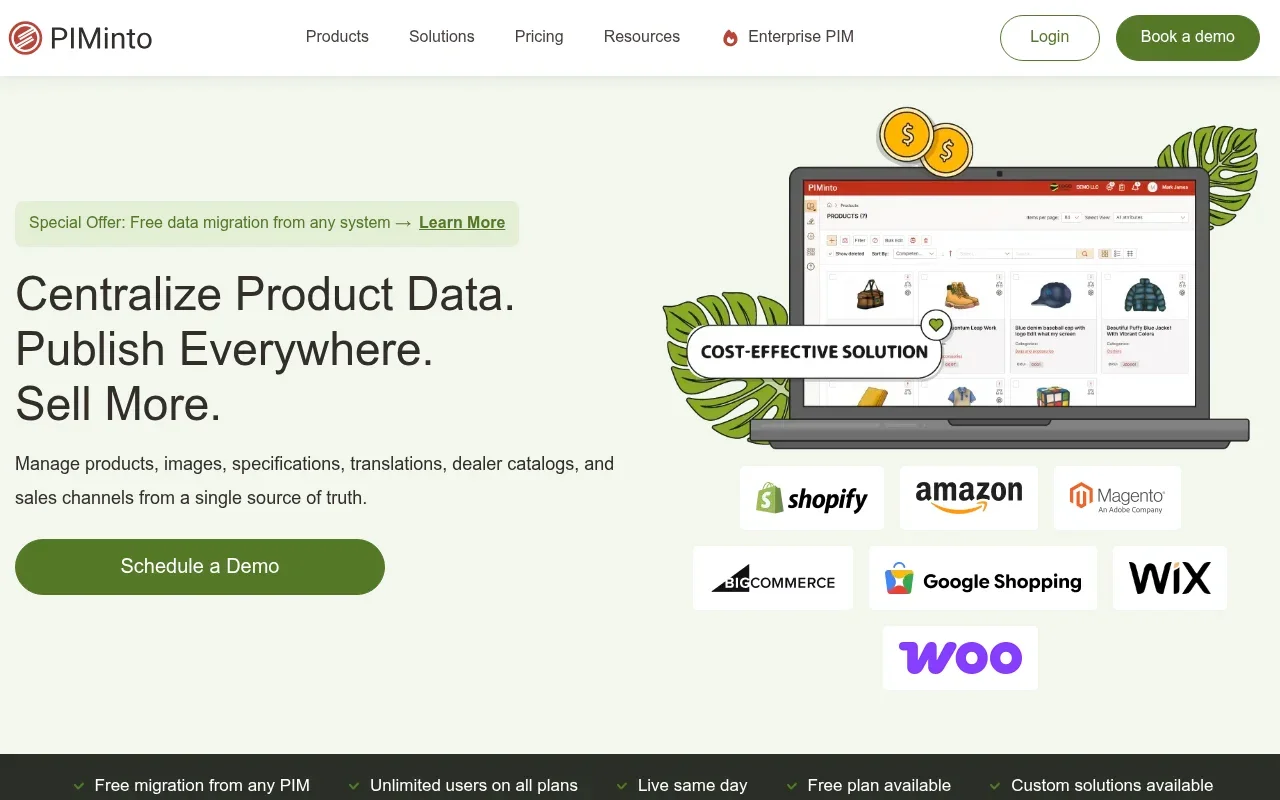
PIMinto serves growing e-commerce brands, multichannel retailers, and distributors that need PIM, DAM, AI-assisted enrichment, and commerce connectivity without enterprise pricing complexity, handling complex product relationships alongside built-in storefront connectors.
Plytix offers another path for mid-market teams focused on feeds and Shopify workflows, providing PIM, DAM, and AI capabilities for growing companies rather than global enterprises.

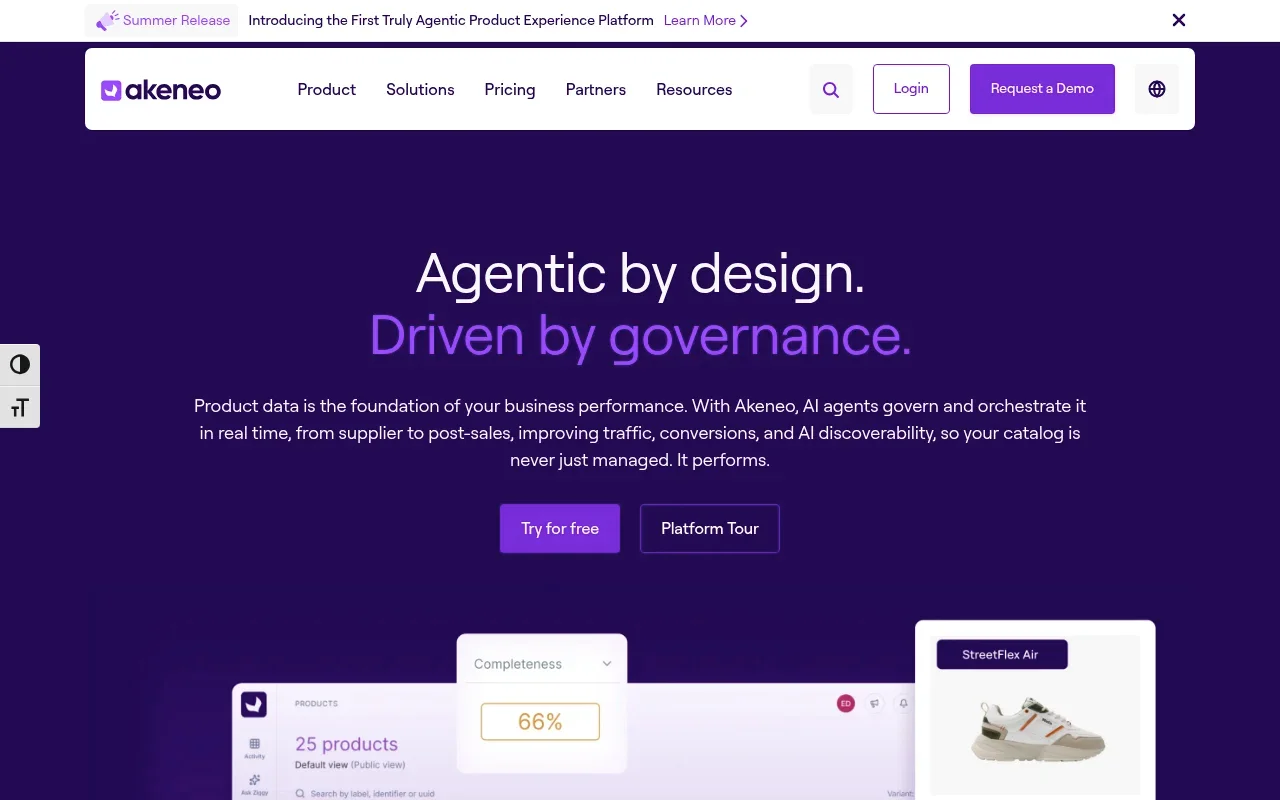
Akeneo fits larger organizations seeking mature product experience tools through extensive governance, deep localization, and a broad ecosystem of implementation partners for complex catalog architectures.
Salsify targets enterprise brands where syndication to major downstream retailers dominates the business model, mapping content to stringent retailer requirements to manage the digital shelf at scale.

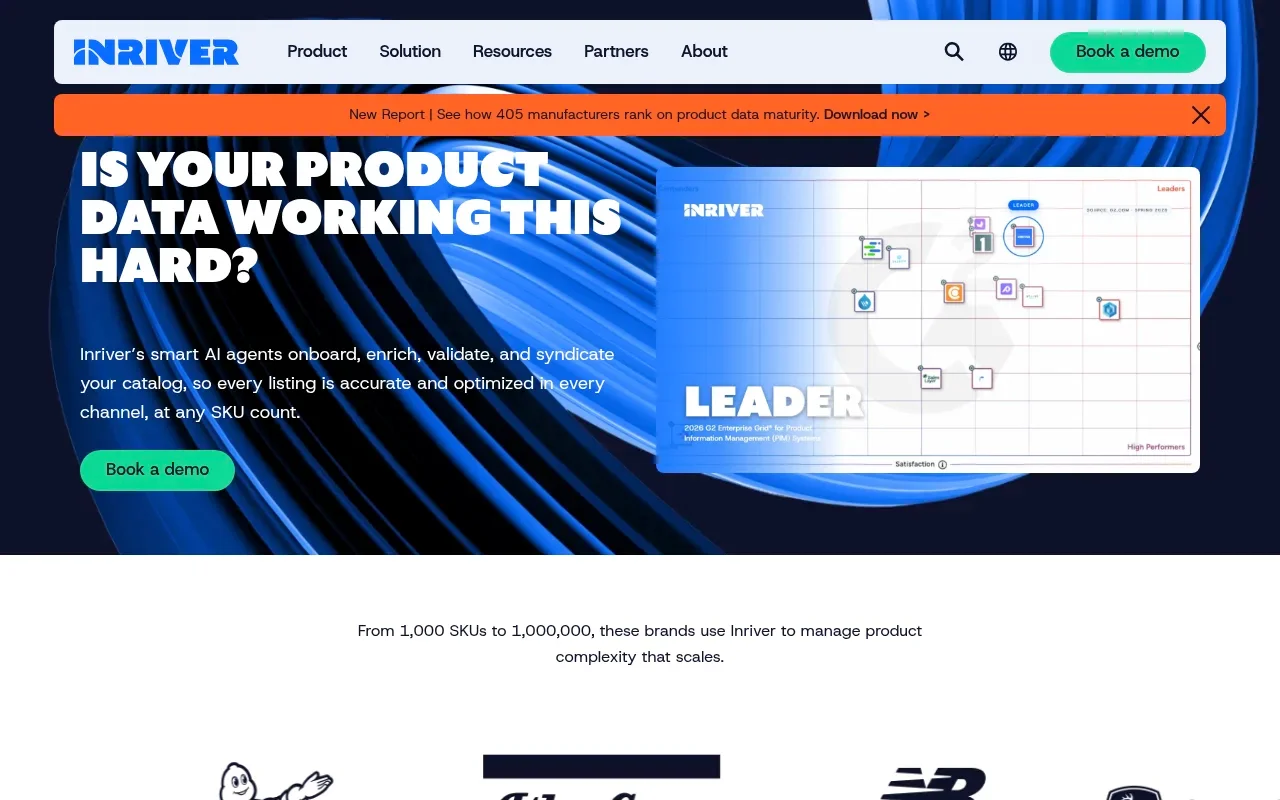
Inriver supports B2B manufacturers and brands that rely heavily on product relationships, syndication, and digital shelf analytics by providing a robust partner ecosystem for complex industrial catalogs.
Pimcore fits developer-led organizations, offering broad customization and flexible data modeling that requires internal engineering resources to configure, extend, and maintain the system over time.
Syndigo operates as an enterprise product-experience suite, combining PIM, core syndication, enhanced content creation, and analytics for global organizations managing massive distribution networks.
Filter your shortlist by these business profiles, and request custom demonstrations using a representative sample of your own catalog data rather than accepting generic feature overviews.
Evaluating PIMinto: Combined PIM And DAM Workflows
Because growing teams outpace their spreadsheets quickly, PIMinto replaces disconnected folders and supplier files with a centralized catalog that manages products, variants, and digital assets in one location. By combining PIM and DAM, the platform ensures technical documents, lifestyle images, and 3D files stay permanently associated with the correct parent products and child variants.
Role-based brand portals allow manufacturers and distributors to share approved content so dealers and partners access current specifications and images, eliminating the risk of publishing outdated attachments from an old email.
The platform provides operational safeguards for multi-channel publishing, using import logs, attribute validation, custom labels, and field-level rollback to protect the integrity of your data. PIMinto details a native Shopify PIM integration with bidirectional synchronization, alongside BigCommerce synchronization, Wix inbound and outbound sync, and Google Merchant Center feed validation warnings.
PIMinto publishes transparent, SKU-based pricing. As of August 21, 2026, the tiers include:
- Starter: $0 per month (1,000 SKUs, 1 GB storage, unlimited outputs)
- Essentials: $300 per month (10,000 SKUs, 30 GB storage, unlimited outputs, 1 brand portal)
- Premium: $600 per month (50,000 SKUs, 100 GB storage, unlimited outputs, 3 brand portals)
- Super: $950 per month (120,000 SKUs, 1.2 TB storage, unlimited outputs, 5 brand portals)
- Extreme: Custom pricing (1,000,000 SKUs listed, unlimited brand portals)
All plans include unlimited users, avoiding the per-seat paywalls that punish cross-functional adoption, while including onboarding and training with most migrations completed within one to two weeks.
Verify specific connector coverage, feed limits, and AI generation allowances during your evaluation, then use the 30-day trial to load real parent products, complex variants, and technical assets to test the output against a live storefront.
Calculating PIM Pricing, Migration Costs, And ROI
Comparing quotes requires calculating the total cost of ownership across a three-year horizon, building a reliable model that includes subscription fees, implementation labor, data migration, connector fees, AI credits, training, and ongoing technical support.
Pricing models vary widely depending on the vendor, with some charging by SKU volume while others bill based on user count, digital asset storage, API calls, outbound channels, or total company revenue. Quote-only enterprise plans often introduce separate fees for native connectors or advanced workflow modules. PIMinto's SKU-based tiers provide a transparent baseline, but you must ask every vendor whether DAM features, partner portals, and onboarding incur additional costs.
Migration and implementation remain distinct phases, as migration involves moving existing data from an ERP, spreadsheet, or legacy system into the new database. PIMinto's one-to-two-week timeline refers to this specific data transfer, whereas full implementation encompasses designing the canonical product model, mapping supplier feeds, configuring approval workflows, testing integrations, and training your staff.
Define return on investment before signing a contract; the 2025 Digital Commerce Benchmark Study noted that organizations using both PIM and DAM were 33% more likely to report ROI compared to those with disparate systems, often realizing those gains within two to three years.
Set baseline metrics today by tracking product-launch cycle time, channel feed rejection rates, asset-search time, partner-service requests, and content-related returns. Build your cost model against these specific operational improvements rather than relying on abstract efficiency claims.

Steps For Testing And Selecting Your PIM Software
A rigorous selection process exposes platform limitations before you commit, starting with an inventory of your SKUs, product families, variants, supported languages, channels, digital assets, and supplier feeds.
Assign definitive ownership for every data field so your ERP owns operational data like inventory counts, while the PIM owns enriched attributes, classifications, and marketing copy. The DAM controls file rights, the commerce platform handles transactional checkout data, and you must document any exceptions immediately.
Build a representative test set for vendor demonstrations that includes ordinary products, difficult variants, incomplete supplier records, technical specification sheets, replacement assets, and complex compatibility relationships.
Require every shortlisted platform to process this specific data so you can watch the system import, normalize, and enrich the records. Check the channel-specific completeness rules, run the approval workflow, and test outbound connections by pushing the data to a real destination like a staging storefront.
Question the AI workflows thoroughly by asking vendors what source data their AI models use, how generated changes are flagged for review, and how the system prevents unsupported claims from slipping into production. Calculate the three-year TCO based on the required add-ons discovered during the demo, and conduct reference checks with companies managing similar catalog complexity.
Before a full rollout, pilot one product family with strict thresholds for data completeness and feed errors. Train your data stewards on the new interface, monitor internal communications to confirm teams have stopped emailing spreadsheets, and proceed with the broader launch only when the pilot meets your predefined publishing criteria.
Common Questions About Product Information Management Software
What Is PIM And How Does It Differ From DAM Or ERP?
PIM serves as the central hub for structured product facts, attributes, variants, and channel-ready marketing content, whereas Digital Asset Management handles images, videos, and rich media files. ERP systems remain authoritative for operational and financial data like inventory and pricing, meaning a modern PIM must integrate with both to combine enriched descriptions, product photography, and stock counts for downstream publishing.
When Should You Replace Spreadsheets And What Does PIM Cost?
Evaluate PIM software when multiple teams edit the same catalog, updates repeat across multiple channels, partners need controlled data versions, or nobody can identify the definitive product record. Pricing scales based on SKUs, users, channels, and implementation services; PIMinto publishes plans ranging from a free tier up to $950 per month, while enterprise systems routinely cost tens of thousands of dollars annually and require custom quotes.
Can AI, Integrations, And PIM Improve Digital Commerce?
PIM supports consistent SEO and shopping-feed formatting to reduce the errors that cause marketplaces to reject your listings. Clean, centralized data mitigates purchase friction, as a 2025 global survey by Syndigo reported that 48% of US respondents abandoned a potential purchase because they lacked sufficient product information. AI accelerates this data cleanup by drafting descriptions and formatting attributes, provided human reviewers verify all technical and compliance-sensitive fields before publishing.
Replace your catalog spreadsheets with a single source of truth. Explore the best product information management software for growing teams and start a free trial at PIMinto.
Modified on: 2026-08-21
Blogs you might like
-
Best PIM Software for Shopify in 2026
Shopify handles products well until the catalog outgrows it. Variants pile up, supplier files arrive in different formats, a second store needs the same products with different content, and spreadsheets become the real system of record. That is the p...
-

Jewelry Product Catalog Software: Managing Product Data, Line Sheets and B2B Catalogs
One engagement ring design can come in three metals, four center-stone weights and twelve ring sizes. Add natural and lab-grown versions, a wholesale price for boutiques and a separate price list for Europe, and a single design turns into hundreds of...
-
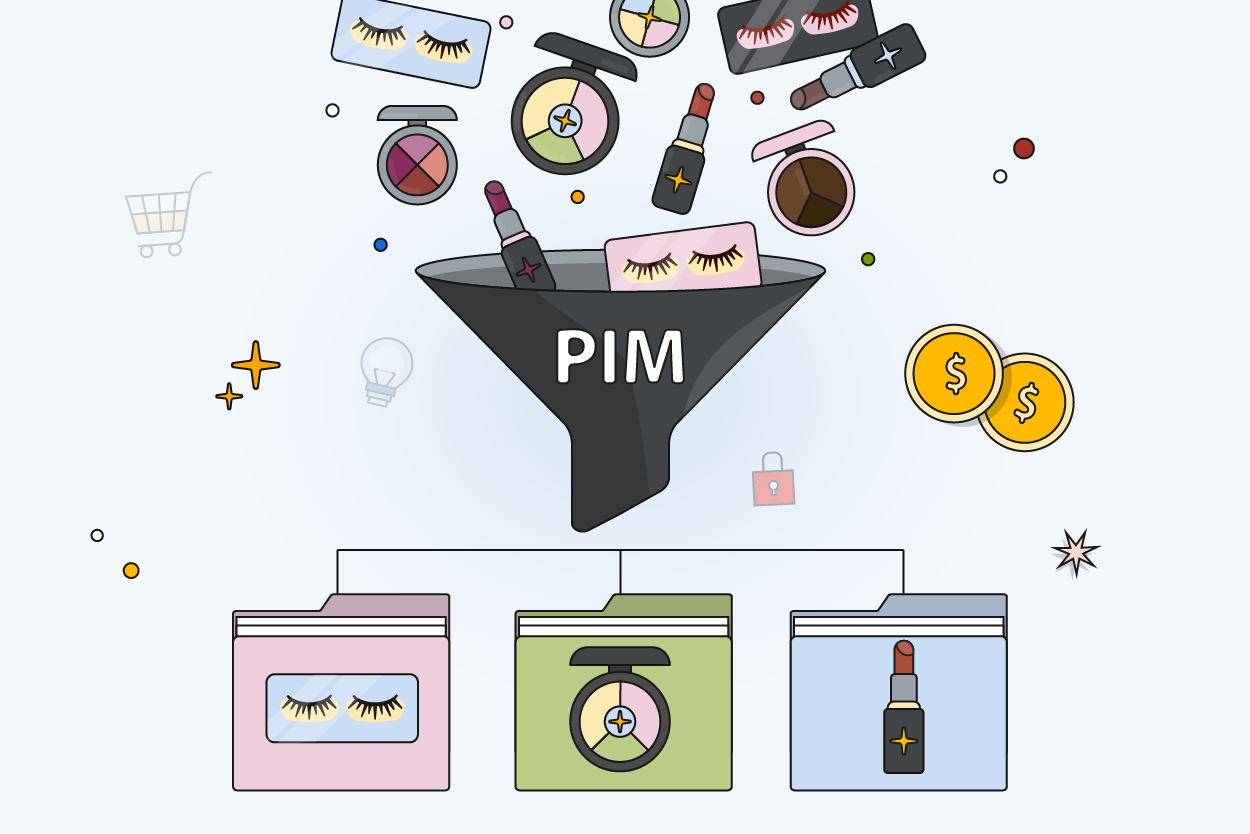
Beauty and Cosmetics Product Data Management: A PIM Guide for Brands
A lipstick launches in 20 shades. Each shade has its own barcode, swatch, product photo, shade description and stock status, and every retailer wants that information in a different spreadsheet. Six months later the brand adds a matte version and a m...
-

Food and Beverage Product Data Management: A Practical Guide for Brands and Distributors
A granola bar recipe changes: almonds replace cashews. The new label goes to print, but the allergen statement on your website, the spec sheet your distributor uses and the listing on an online grocery site still say "contains cashews." Nobody made a...