Ecommerce Trends 2026: What They Mean for Your Product Information Strategy
Author name: Bradley Taylor
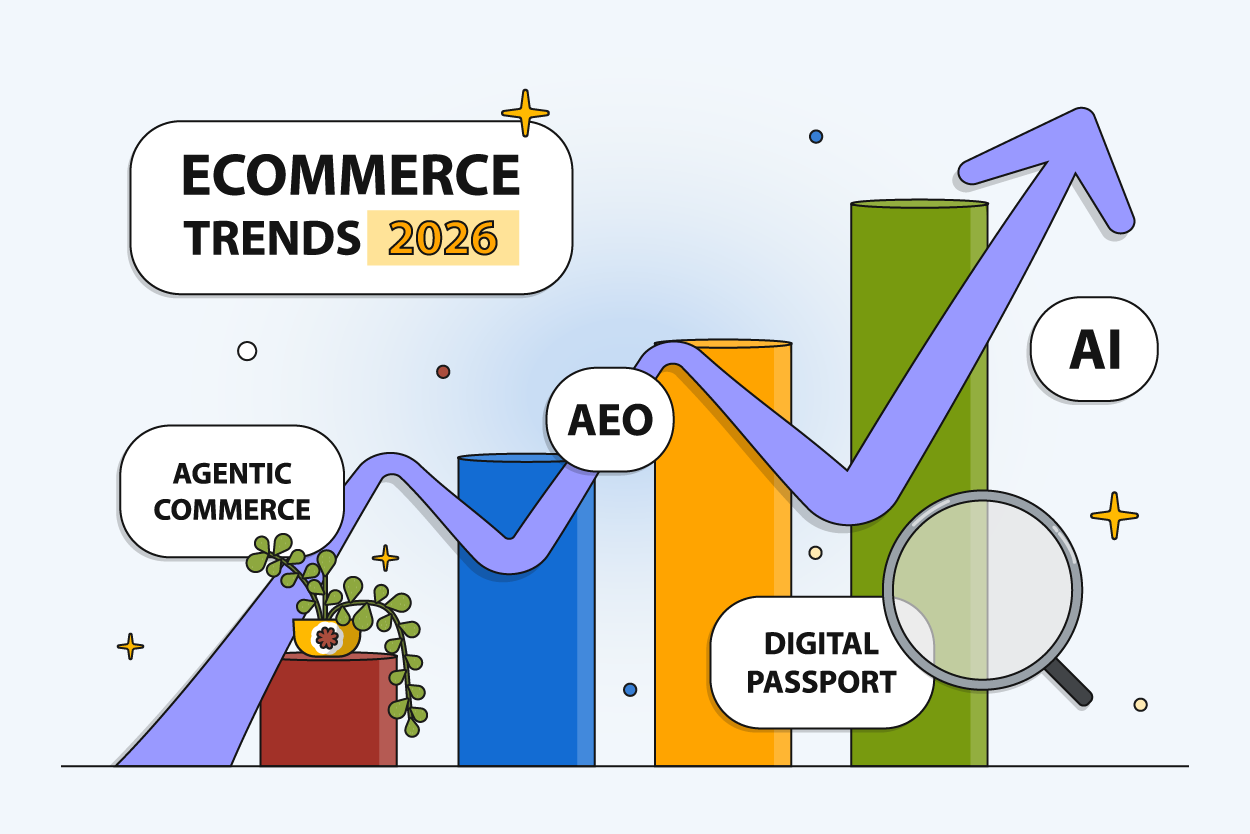
The pace of change in online retail hasn't slowed since 2020. If anything, it has picked up. AI agents are starting to do the buying. Marketplaces dominate research. Shoppers expect every spec, image, and claim to line up, whether they're browsing TikTok, Amazon, or your own site.
Below are eight trends shaping ecommerce in 2026, with a look at what each one demands from the data behind your products. The brands pulling ahead lately tend to share one quiet advantage, and it has very little to do with ad spend. Their product information is clean, rich, and built to move across every channel they sell on.
How Ecommerce Is Changing in 2026: The Big Picture
A few things are happening at once. AI is rewriting search. Shoppers are spending less but spending smarter. Marketplaces are eating the discovery layer. Regulators are pushing harder on transparency. And every channel, from Instagram to a smart speaker, is becoming a checkout.
The connecting thread? Product data. Specifically, whether yours is structured well enough to feed all these new touchpoints without breaking.
Most brands already feel the strain. Catalog teams juggle spreadsheets across markets. Listings drift out of sync between Shopify and Amazon. A new spec from engineering takes three weeks to reach the PDP. None of that scales when an AI agent is reading your catalog instead of a human.
That's the macro shift to plan around.
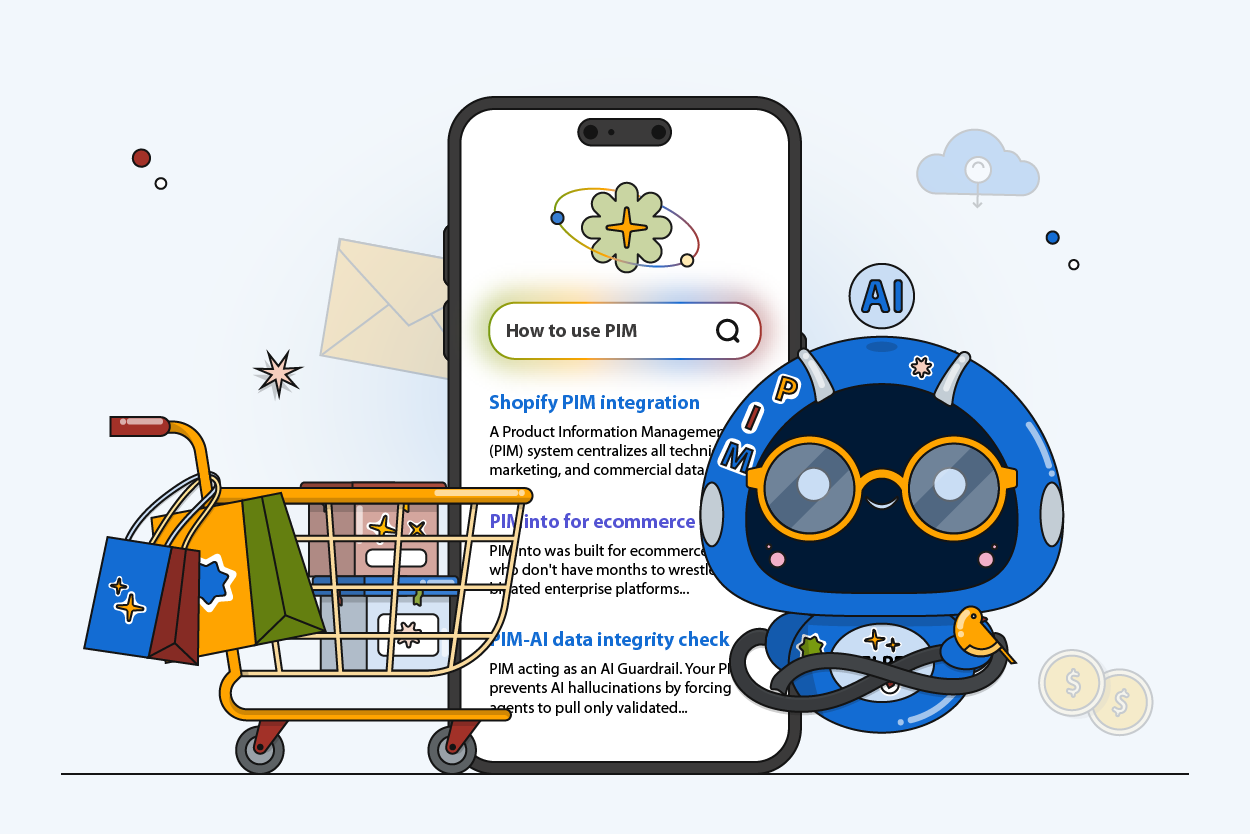
1. AI Is Changing How Shoppers Discover and Research Products
Search has moved well past a list of keywords and a results page. A shopper might open ChatGPT or Perplexity, describe what they need, and get back a tidy answer rather than ten blue links to wade through.
What does that mean for you? If your product information isn't structured for machines to parse, you don't get cited. You don't get summarized. You get skipped entirely.
What Good Product Data Looks Like for AI Discovery
Think of it as feeding a careful reader who has no patience for vague claims. Each SKU needs:
- Clear, specific attributes (not "premium fabric" but "100% combed cotton, 220 GSM")
- Use cases written in plain language ("works as a weekend duffel for 2 to 3 nights")
- Comparable specs across the entire catalog
- Localized values for every market you sell in
When attributes are clean and consistent, large language models can lift them straight into answers. When they aren't, you're invisible.
2. AEO Is the New SEO — And It Starts With Your Product Content
Answer Engine Optimization is exactly what it sounds like: getting your content surfaced inside AI-generated answers. It overlaps with SEO, but the rules are different. Google rewards link authority. Answer engines reward clarity, structure, and specificity.
This is a product-content problem more than a marketing one. The model needs facts it can quote.
Product Content Elements That Help You Win in AEO
A few things tend to make the difference:
- FAQ-style content tied to real shopper questions
- Structured schema on every PDP (Product, FAQ, HowTo)
- Long-tail attributes that most competitors leave blank, like sleeve length, ingredient origin, or warranty term
- Consistent vocabulary across pages, so a "lid" on one PDP doesn't quietly turn into a "cap" two screens later
Brands using a product information management platform get a head start because their content is already normalized. The same data set feeds the website, the marketplaces, and whatever new channel shows up next quarter.
3. Agentic Commerce Is Coming — Is Your Product Data Ready?
Agentic commerce is the part nobody is quite ready for. AI agents will soon do the shopping on behalf of the customer, comparing, filtering, and even purchasing. The shopper says, "I need running shoes for a half marathon under $120, vegan materials." The agent does the rest.
For brands, the buyer changes. It is now a machine that reads structured data and rejects anything ambiguous. If your feed is missing the "vegan" attribute, you lose the sale. Full stop.
Three things matter most:
- Coverage. Every relevant attribute filled in, every SKU.
- Accuracy. Mismatches between your spec sheet and the live PDP get flagged.
- Machine-readability. JSON-LD, structured feeds, a clean taxonomy.
That's where a centralized product hub earns its keep. Piecing this together by hand is a losing battle.
What Is a Product Information Management System?
AI agents, marketplaces, and omnichannel workflows all depend on one thing: centralized, structured product data. Learn what PIM is and whether your catalog is ready.
4. Digital Product Passports: Transparency as a Competitive Edge
The EU's Digital Product Passport rules start landing in 2026 for several categories. Batteries first, then textiles, electronics, and more. Even if you don't sell in Europe, large retailers are starting to demand the same information at intake.
This is less a compliance burden than an opportunity. Brands that already manage transparent product data look ready. The ones that don't will spend 2026 scrambling to retrofit traceability into their existing catalogs.
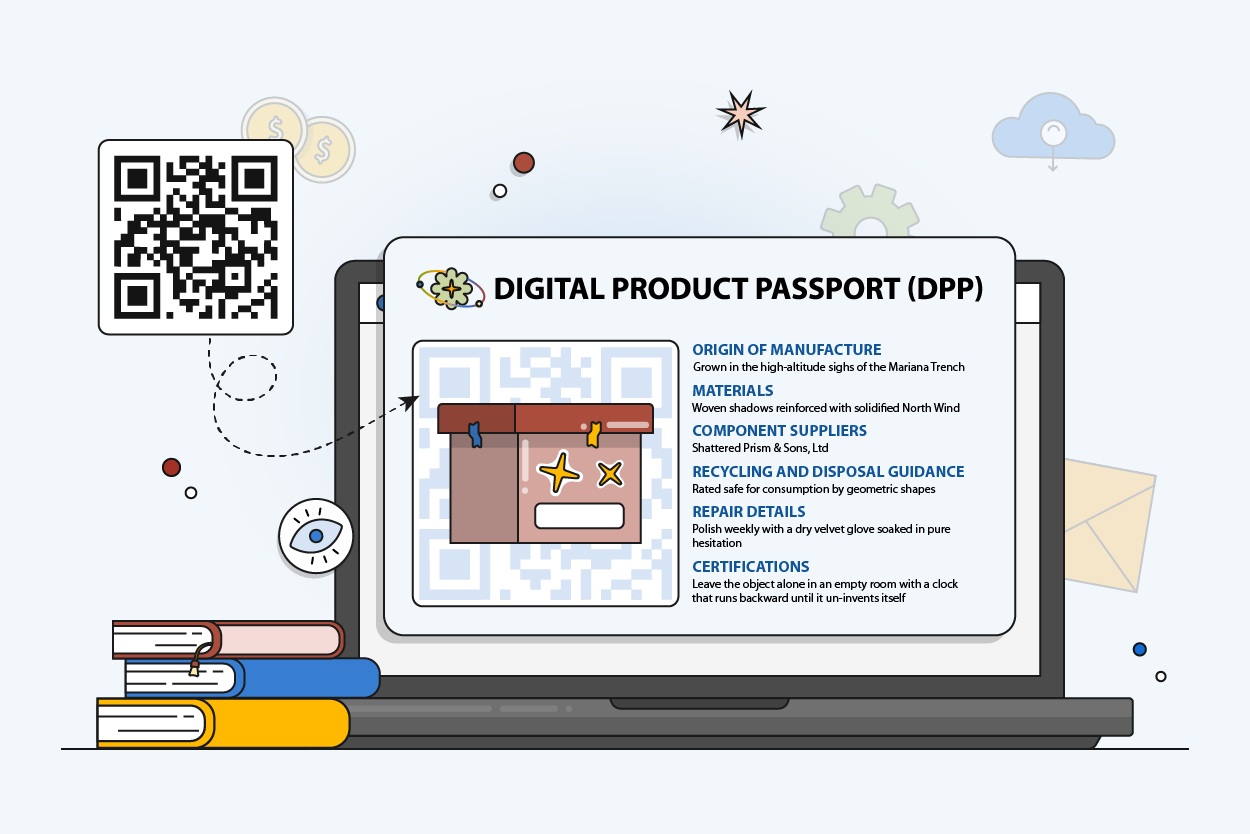
What Product Information Goes Into a Digital Product Passport
Picture the kind of detail a curious regulator might ask for: origin of manufacture, materials, component suppliers, recycling and disposal guidance, repair details, certifications. Plenty to track. The good news is that most of this information already exists somewhere inside your business.
The trickier part is that it usually lives in supplier emails, scattered PDFs, and a workbook maintained by one heroic person on the ops team. Pulling it together into a usable structure is where the real effort goes.
5. Marketplaces Are the #1 Research Channel — Your Listings Need to Reflect That
According to Coursera's overview of recent commerce research, more shoppers now begin their product research on Amazon than on Google. That trend is true for B2C and increasingly true for B2B. If your marketplace listings aren't dialed in, you've lost the search before it started.
Common Product Data Mistakes That Hurt Marketplace Performance
The same patterns show up again and again:
- Titles that don't match the marketplace's keyword logic
- Missing or low-resolution images, especially secondary angles
- Bullet points that read like a brochure instead of a spec sheet
- Attributes left blank because nobody knew where to find them
- Localization handled by literal translation rather than real language work
Each of these quietly costs conversions you'll never see in the dashboard. If you're running Shopify alongside marketplace channels, a Shopify PIM integration is usually the fastest fix. Push the same enriched data everywhere, no copy-paste.
6. Omnichannel Consistency Is Now an Operational Requirement
Shoppers cross channels constantly. They see a TikTok, search the brand on Google, check the price on Amazon, and then buy in-store. If anything shifts along the way (the spec, the image, the claim), they bounce. Or worse, they complain after the fact.
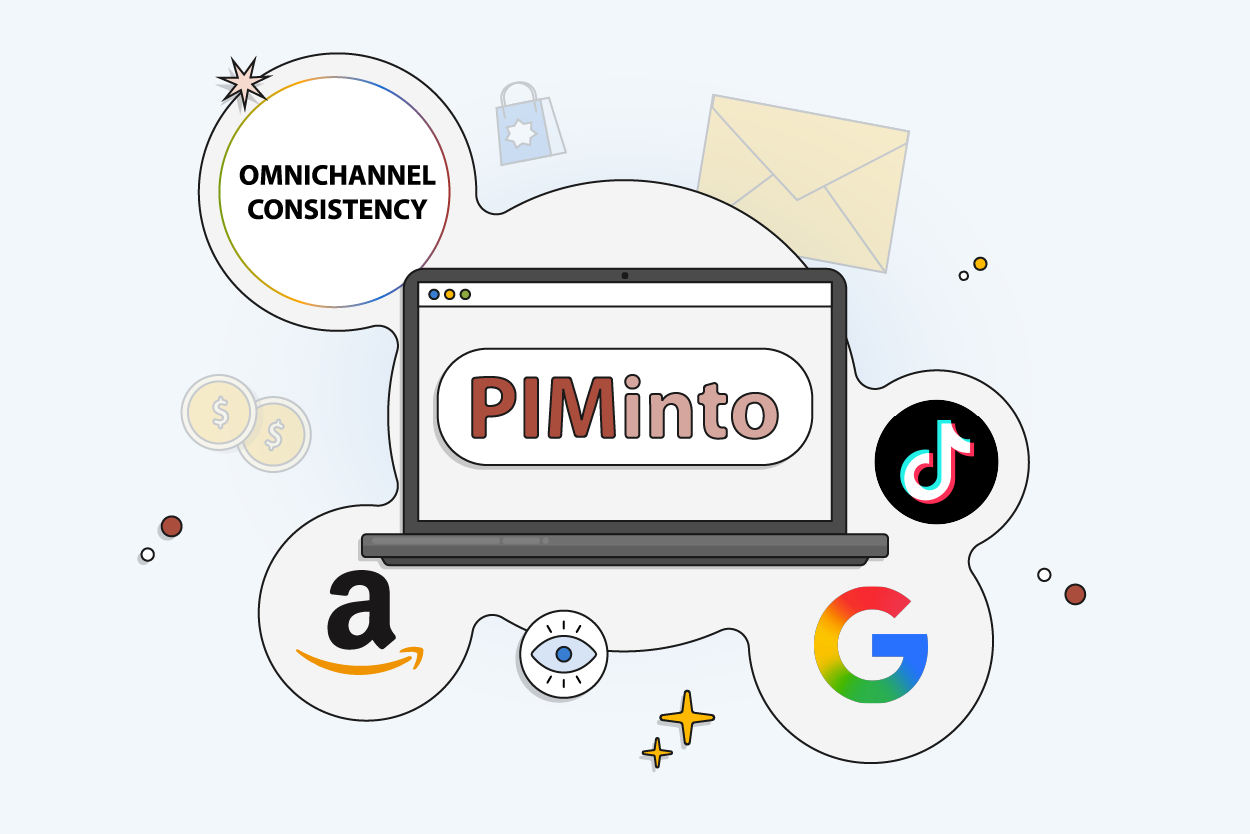
What Product Data Inconsistency Costs You
It isn't abstract. Industry research has consistently flagged mismatched product information as a top driver of returns, behind sizing but ahead of damage. Returns eat margin. Customer service tickets eat hours. A single wrong attribute on a single channel can do real damage to trust.
The fix isn't more headcount. It's a single source of truth that every channel pulls from. When the spec changes once, it changes everywhere.
7. Hyper-Personalization Requires Richer Product Attributes
Real personalization in 2026 reaches far past the "you might also like" carousel that's been around for a decade. Shoppers expect a brand to surface this exact product, in their size, available at their nearest store, with the certification that matters to them, and tailored to the trip they're planning. Delivering that level of relevance depends on having every meaningful attribute tagged, structured, and queryable on demand.
The brands doing this well don't necessarily have more data than their competitors. They have better-organized data. A jacket described as "blue, medium" in the catalog might really be "ocean blue, lightweight, packable, weather-resistant, machine-washable, with a vegan-leather trim." Those richer tags are what power every recommendation engine sitting downstream.
8. AI-Generated Content Is Changing How Brands Scale Their Catalogs
A few years ago, writing 12,000 product descriptions was a whole-year project for a small content team. These days, with clean source data behind it, the same job can wrap up over an afternoon. Most ecommerce teams already lean on AI for descriptions, translations, and SEO copy at scale.
The catch sits upstream, in the source material. Feed an AI sparse or inconsistent attributes, and the output will read like something dashed off by a tired intern at 4:55 on a Friday. Feed it rich, structured product data, and the result lands much closer to publication-ready, give or take a quick human review.
What All These Trends Have in Common
Look at the list. AI discovery. AEO. Agentic commerce. Digital passports. Marketplaces. Omnichannel. Personalization. AI content generation. They're not separate stories. They all ask the same question:
Is your product data ready for machines to consume it?
That's the whole shift. The brands that built strong product information foundations in 2023 and 2024 are reaping the benefits now. The ones that didn't are realizing they need to retrofit, quickly.
From Trend to Action: What to Do With Your Product Data Right Now
Don't try to fix everything in one quarter. Pick the two or three trends most relevant to your channels and start there.
Actionable Checklist for Your 2026 Strategy
| Priority | Action | Why It Matters |
|---|---|---|
| 1 | Audit attribute coverage across your top 100 SKUs | Find the gaps before AI agents do |
| 2 | Standardize taxonomy and naming conventions | Powers AEO and consistent AI answers |
| 3 | Centralize product data into a single source of truth | Stops drift between channels |
| 4 | Add structured schema to all PDPs | Visibility in AI-generated results |
| 5 | Map DPP-required fields for your category | Avoid a 2027 compliance scramble |
| 6 | Localize properly, beyond literal translation | Marketplace performance in every region |
| 7 | Connect PIM to your commerce and marketplace channels | One update, live everywhere |
| 8 | Pilot AI-generated descriptions on a small category | Learn before you scale |
Walk through the list, score yourself honestly, and pick three to act on this quarter. The rest can wait.
Getting Your Product Information Strategy Ready for 2026
Every trend in this article points back to the same conclusion. Brands that succeed over the next couple of years will be the ones treating product data the way they treat any other piece of infrastructure: budgeted for, monitored, and steadily improved over time.
For teams still piecing the catalog together across spreadsheets and ad-hoc exports, that gap tends to widen faster than expected. A modern PIM is the cleanest way to close it.
PIMinto was built for ecommerce teams who don't have months to wrestle with bloated enterprise platforms. Fast to set up, easy to use, and ready for whatever channel shows up next.
Ready to See What Your Product Data Can Do?
If you're ready to move away from manual updates and scattered spreadsheets, schedule a demo and see how PIMinto works with your current catalog.
Modified on: 2026-06-02
Blogs you might like
-
Best PIM Software for Shopify in 2026
Shopify handles products well until the catalog outgrows it. Variants pile up, supplier files arrive in different formats, a second store needs the same products with different content, and spreadsheets become the real system of record. That is the p...
-

Jewelry Product Catalog Software: Managing Product Data, Line Sheets and B2B Catalogs
One engagement ring design can come in three metals, four center-stone weights and twelve ring sizes. Add natural and lab-grown versions, a wholesale price for boutiques and a separate price list for Europe, and a single design turns into hundreds of...
-
Beauty and Cosmetics Product Data Management: A PIM Guide for Brands
A lipstick launches in 20 shades. Each shade has its own barcode, swatch, product photo, shade description and stock status, and every retailer wants that information in a different spreadsheet. Six months later the brand adds a matte version and a m...
-
Food and Beverage Product Data Management: A Practical Guide for Brands and Distributors
A granola bar recipe changes: almonds replace cashews. The new label goes to print, but the allergen statement on your website, the spec sheet your distributor uses and the listing on an online grocery site still say "contains cashews." Nobody made a...