The 2026 Guide to Managing Seasonal Product Catalogs
Author name: Mark James
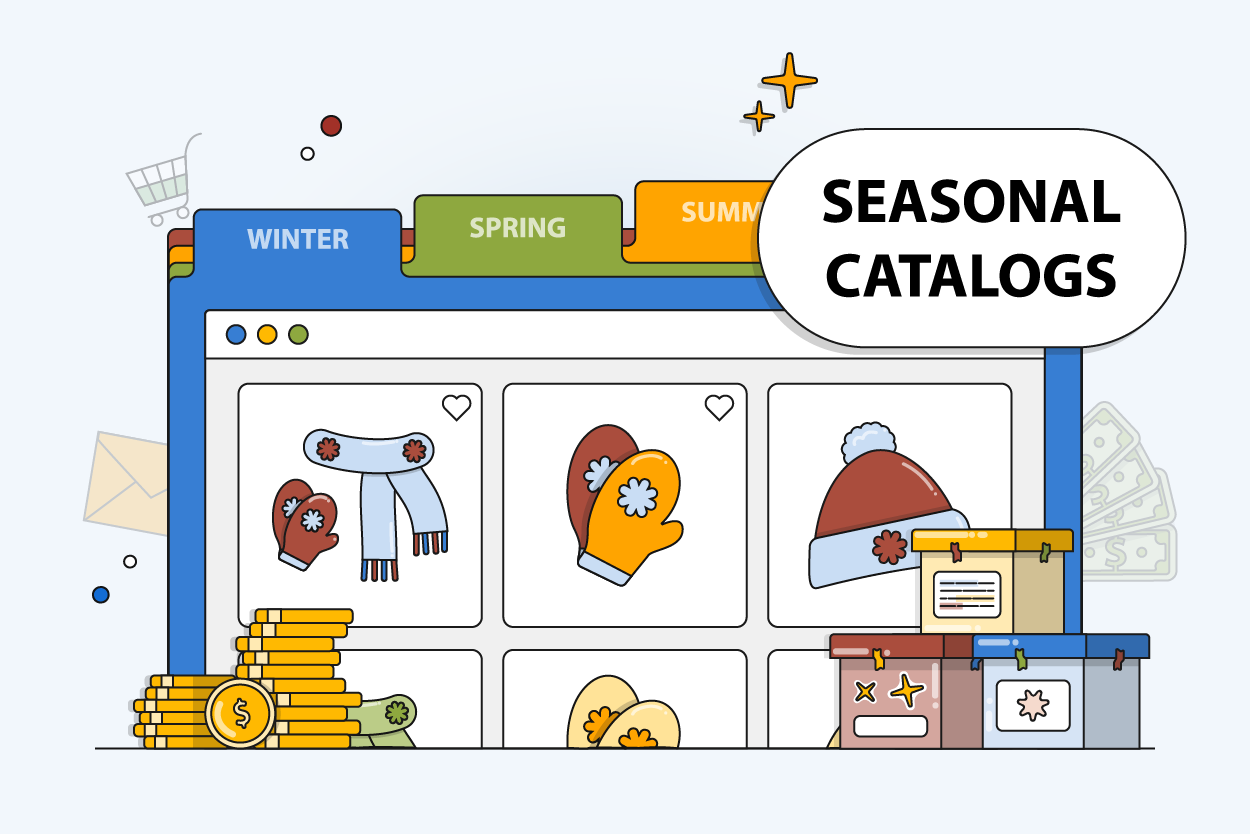
When a summer apparel launch approaches, your supplier might drop a raw spreadsheet containing three thousand new SKUs. You then have four weeks to standardize the data, write unique descriptions, crop lifestyle images, and push the listings to five different storefronts. Managing seasonal product catalogs demands velocity, but legacy workflows block that speed. Every manual touchpoint introduces a delay, pushing your time-to-market back by days. To launch campaigns faster and prevent costly inventory distortion, you must replace disconnected spreadsheets with a centralized, automated infrastructure.
Why Managing Seasonal Product Catalogs is Complex
The High Cost of Manual Bottlenecks
You face intense pressure to get products live the moment a seasonal embargo lifts. Meeting that deadline becomes impossible when you build product pages by hand. Moving data from a supplier PDF into a storefront backend requires downloading the specs, rewriting the copy to fit character limits, finding the matching media folder, and renaming the image files to match the exact SKU. This manual data entry scales poorly during a modest winter drop of two thousand variants, forcing your team to waste hundreds of hours on administrative labor. Despite the availability of automated tools, many retailers still rely on error-prone spreadsheets to manage product data, causing operational delays. PIMinto eliminates these bottlenecks by ingesting raw supplier feeds and formatting the data automatically, which turns a disorganized data dump into a structured catalog ready for immediate deployment.
Inventory Distortion and Lost Revenue
Slow data entry creates a ripple effect that damages your bottom line because inventory systems lag behind your actual warehouse stock. This delay causes you to sell items you do not have or hide items you need to move. A marketing campaign might drive thousands of visitors to a holiday landing page, but if the spreadsheet driving the storefront lacks the new seasonal SKUs, those visitors bounce.
This disconnect causes financial damage across the retail industry. Annual inventory distortion, driven by seasonal stockouts and overstocking, costs global businesses an estimated $1.77 trillion. To identify your own exposure, audit your time-to-market metrics for your last three seasonal drops. If moving a new SKU from the supplier feed to the live website takes longer than 48 hours, your data architecture is costing you sales.

Centralize PIM and DAM for Seasonal Speed
Unifying Rich Media with SKU Data
Seasonal promotions rely on heavy media assets to drive conversions, requiring lookbook videos, high-resolution lifestyle photography, and holiday packaging specs to sync with their corresponding products. Keeping text data in one system and visual assets on a separate local server guarantees mismatches on the digital shelf. A customer clicking on the red variant of a summer dress expects to see the red dress immediately, so if the system loads the blue image due to disconnected databases, the customer leaves.
Modern catalog architecture solves this disconnect by tightly converging Product Information Management with digital asset management. Maintaining a unified software environment links every seasonal variant directly to its correct high-resolution file automatically. When you build a new SKU in PIMinto, the dedicated DAM connects the exact hex-coded images to the specific product record. Consequently, the product data and the rich media travel together as a single package to every endpoint.
Distributing Assets via Brand Portals
If you operate as a B2B manufacturer or distributor, you face an extra hurdle when sharing seasonal catalogs with external retail partners. Sending large ZIP files via email or relying on unorganized FTP servers creates version control nightmares. A retail partner might download a ZIP file of product images to their local desktop and miss the updated sizing chart you email them two days later. They then publish outdated specs to their own retail channels, causing returns and brand damage.
Stop sending email attachments for seasonal catalog drops. Deploying built-in brand portals fixes this broken distribution model by establishing a single source of truth. PIMinto allows you to grant role-based portal access directly to your distributors, letting retail partners log in through a secure web interface to download only the approved seasonal assets they need. If you update a product dimension in the PIM, the portal reflects that change to ensure external partners never publish stale data.

Automating Seasonal Content with AI
Rapid Catalog Enrichment
Generative AI transitioned from a basic writing tool to a structural necessity for maintaining product data at scale. When managing seasonal product catalogs, writing unique descriptions for thousands of SKUs by hand guarantees costly delays. Your team cannot process three thousand seasonal variations in a single week without cutting corners. This volume forces them to copy and paste identical paragraphs across fifty different URLs, which degrades the customer experience and damages your search rankings.
Deploying an AI assistant to handle bulk processing removes this manual bottleneck entirely. PIMinto features an AI product description generator that functions as a core data assistant to standardize product attributes. By feeding messy supplier spreadsheets into the system, the AI generates and tags missing data automatically. If a European supplier lists a dimension as "L: 50cm", the software formats it to match your US storefront standard of "Length: 19.6 inches". Route your raw supplier feeds through this AI processing layer first so the system can flag missing attributes and standardize the taxonomy before a human reviewer ever touches the file.
AI-Driven Demand Forecasting
AI also stabilizes your physical inventory buffers by moving beyond static historical data. Looking at what sold last year to predict current sales fails when market trends shift. If a specific colorway goes viral on social media, historical models will not adjust your buffer stock until after you sell out, leaving you with empty shelves during a traffic spike.
Modern AI prediction models process real-time market shifts to adjust buffer limits dynamically. Replacing static historical models with advanced AI implementations reduces seasonal demand prediction errors by 20 to 50 percent while cutting seasonal product unavailability by up to 65 percent. This accuracy prevents lost sales from "out of stock" banners because the system predicts the surge and prompts reorders before the warehouse runs dry.

Leaving Spreadsheets Behind for Native APIs
The End of CSV Batch Processing
You must abandon slow CSV batch uploads for seasonal inventory because a master spreadsheet uploaded at midnight becomes outdated the second a customer buys an item. If a shopper buys the last winter coat on your main website, the CSV file feeding your secondary marketplaces still claims you have one in stock. A second customer buying that nonexistent coat two hours later forces you to cancel the order, issue a refund, and pay the merchant processing fee.
Stale data kills conversions, with 73 percent of shoppers abandoning a purchase when product data differs between touchpoints, a rate that fluctuates based on the retail category. Relying on scheduled batch updates guarantees your data will remain inaccurate for hours at a time.
Real-Time Multichannel Syndication
Real-time API connectors solve the synchronization problem by automating the bulk publish and unpublish workflows. This direct integration keeps multichannel pricing and product availability accurate down to the second. Consequently, the technology cycles seasonal catalogs in and out of storefronts at exact campaign launch times without requiring a developer to manually trigger the upload.
PIMinto utilizes native API connectors to push updated listings directly to major sales platforms. Standard Shopify PIM integration, along with connections to BigCommerce and Google Shopping, operates without requiring expensive third-party middleware. After mapping your fields once within the platform, approving the new seasonal collection prompts the APIs to push the SKUs, descriptions, pricing, and media to every active channel simultaneously. Check your current integration stack to see if your team manually formats separate CSV templates for WooCommerce and Amazon, and replace that broken workflow with a direct API feed.
Protecting SEO During Seasonal Drops
SEO-Safe Duplication Techniques
Repeating a successful base item for a new season risks damaging your site's search engine rankings if handled incorrectly. Creating a "Winter 2026" variant by copying the "Winter 2025" product page generates duplicate content. When search engines crawl the site, they flag identical descriptions across multiple URLs and penalize the entire domain. Preventing these penalties while managing seasonal product catalogs requires strict SEO safeguards during variant generation.
Implement canonical URLs to designate which page represents the master version for search engines. If you release a limited-edition holiday colorway of a core product, point the holiday variant's canonical tag back to the evergreen product page. By including <link rel="canonical" href="https://yoursite.com/core-product"> in the HTML header of the temporary variant, the temporary page captures the seasonal traffic and conversions while the core page retains the long-term SEO authority.
Managing Variant Lifecycles
When a season ends, never delete the URL outright. Deleting pages creates hard 404 errors that frustrate users clicking old links and degrade your search performance over time. Instead, unpublish the seasonal product from the front-end catalog so customers cannot add it to their carts, and implement a permanent 301 redirect.
Point the expired URL to the parent category page or the closest active alternative product, and update the core product content to reflect the new season rather than starting from scratch with a new URL structure. PIMinto allows you to manage these redirect rules and variant lifecycles directly at the SKU level. Setting the redirect path and the unpublish date inside the product record before the seasonal campaign launches automates the entire takedown process.
Scaling Operations for Multichannel Peaks
Overcoming Small Business Lag
A surge in seasonal traffic breaks outdated infrastructure. Research indicates that 43 percent of small businesses either do not track their inventory or rely on manual processes. This operational lag puts companies at risk during Black Friday rushes or summer apparel launches. When volume triples overnight, a manual spreadsheet system collapses, causing lost orders, mismatched shipping details, and a flooded customer service inbox.
Scaling your reach across new marketplaces requires a centralized system that handles thousands of data variations without slowing down. Understanding what product information management software does reveals that true scalability comes from establishing a single source of truth. Because your core data lives in one organized hub, you can launch a new sales channel by mapping a new API output rather than hiring three new data entry clerks.
Scaling Without Artificial Paywalls
Many legacy software platforms punish growth by enforcing artificial paywalls. Vendors charge steep fees per user seat or throttle the amount of data you can export to external channels. Consequently, hiring temporary staff for the holiday rush and activating new software licenses for those workers destroys your profit margin.
PIMinto eliminates these financial barriers for growing brands by providing free onboarding and data migration, allowing you to switch systems without an upfront capital expenditure. The transparent pricing model includes unlimited users and unlimited data outputs so your team can scale multichannel syndication. Pushing seasonal catalogs to extra channels like WooCommerce, Wix, or custom B2B storefronts occurs without hitting an export ceiling. Audit your current software contracts to identify hidden usage caps, and migrate to a transparent model before your next seasonal peak forces you to pay unexpected overage fees. Centralizing your data management ensures your operations scale when consumer demand spikes.
Stop letting spreadsheet bottlenecks delay your seasonal product launches. PIMinto provides unlimited users, built-in digital asset management, and native multichannel APIs to get your catalogs live faster. Visit Piminto.com to automate your product data today.
Modified on: 2026-08-03
Blogs you might like
-

Best PIM Software for Shopify in 2026
Shopify handles products well until the catalog outgrows it. Variants pile up, supplier files arrive in different formats, a second store needs the same products with different content, and spreadsheets become the real system of record. That is the p...
-

Jewelry Product Catalog Software: Managing Product Data, Line Sheets and B2B Catalogs
One engagement ring design can come in three metals, four center-stone weights and twelve ring sizes. Add natural and lab-grown versions, a wholesale price for boutiques and a separate price list for Europe, and a single design turns into hundreds of...
-
Beauty and Cosmetics Product Data Management: A PIM Guide for Brands
A lipstick launches in 20 shades. Each shade has its own barcode, swatch, product photo, shade description and stock status, and every retailer wants that information in a different spreadsheet. Six months later the brand adds a matte version and a m...
-

Food and Beverage Product Data Management: A Practical Guide for Brands and Distributors
A granola bar recipe changes: almonds replace cashews. The new label goes to print, but the allergen statement on your website, the spec sheet your distributor uses and the listing on an online grocery site still say "contains cashews." Nobody made a...