Choosing A Home Appliances PIM Solution In 2026
Author name: Mark James

Selling heavy appliances online requires far more than a basic product title and a lifestyle photograph. Because a single modern refrigerator carries color finishes, physical clearance dimensions, precise voltage specifications, plumbing hookup requirements, and a rotating list of compatible water filters, traditional spreadsheets buckle under this multidimensional weight. Enterprise Resource Planning (ERP) software securely stores the base manufacturing data, but fails at distributing high-resolution visual assets or rich marketing copy to digital storefronts. Deploying a dedicated home appliances PIM solution prevents these system bottlenecks and establishes a single repository for all product information. By centralizing this complex data within a platform like PIMinto, you prevent missing dimensions from reaching your customers and unify your technical specifications with your visual assets.
Why Your Tech Stack Needs A Home Appliances PIM Solution
Missing or disorganized product data directly causes shoppers to abandon their carts. An average 74% cart abandonment rate currently plagues e-commerce across major European and North American markets, a metric that varies by specific industry and audience. Buyers routinely exit checkout flows because they cannot confirm exact installation dimensions, leaving them uncertain if a machine will fit under their counters. Standard inventory tools lack the attribute fields required to solve this information gap.
While ERPs track inventory quantities and wholesale costs, they are not built to structure consumer-facing catalog hierarchies or format data for third-party marketplace algorithms. When your team attempts to use an ERP or a shared spreadsheet as a makeshift catalog manager, marketing data becomes siloed from engineering data. If you update a product description on Shopify while the revised technical manual remains buried in an engineering server, the customer ends up reading conflicting information.
Because direct-to-consumer expansion in the appliance sector forces manufacturers to bypass traditional retail and sell online, your infrastructure must handle direct public scrutiny. Upgrading your data distribution strategy requires a centralized hub capable of pushing synchronized updates to every channel simultaneously.
Action Step: Audit your current product data workflow. Map the journey of a single new appliance SKU from its creation in your ERP to its publication on your website, documenting every manual data entry point and file transfer along the way.

Criteria 1: Handling Complex Parent-Child Hierarchies
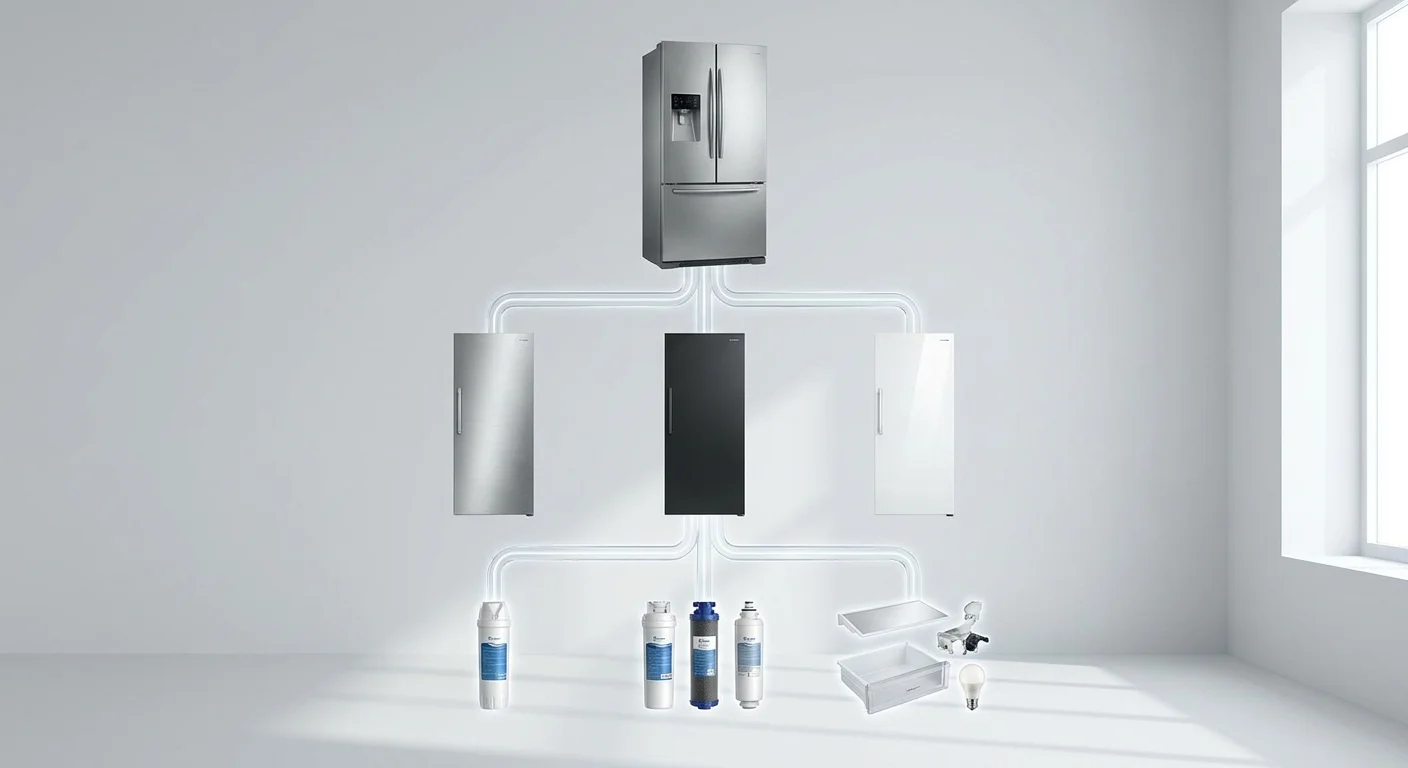
Appliance catalogs possess a specific structural depth that breaks basic e-commerce platforms. A manufacturer sells one base washing machine model available in multiple finishes, which shares replacement parts with three other distinct models, meaning your software must map these relationships natively.
Evaluate candidate platforms on their ability to build strict parent-child hierarchies. The parent SKU holds shared data like base dimensions, internal motor specifications, and warranty information, while child SKUs hold variant data such as a matte black finish, a specific GTIN, and localized pricing. By linking compatible replacement parts as related accessories to the parent SKU, you automate cross-selling recommendations across your entire digital presence.
When platforms lack this relational structure, merchants often resort to flat lists and duplicate the base dimensions across twenty variant rows in a spreadsheet. Updating the depth measurement on the stainless steel row while forgetting the slate gray row pushes conflicting dimensions to the live website. PIMinto prevents this error by utilizing a relational structure designed for complex product data management software, automatically cascading parent data updates down to every associated child variant.
Optimizing for a strict relational hierarchy introduces a specific trade-off by requiring a heavier initial data modeling phase before you can import your catalog. You must define your attribute taxonomy clearly upfront, deciding exactly which fields belong to parents and which belong to children, rather than dumping unstructured rows into a database.
Action Step: Test candidate platforms by asking the vendor to build a three-tier product during the demo. Have them create a parent refrigerator, branch it into three color finishes, and assign a specific replacement water filter to only two of those finishes.
Criteria 2: Managing Rich Media and Digital Assets
Technical accuracy only drives a purchase when paired with visual proof. Shoppers consider detailed product content a priority when deciding to buy, a preference that fluctuates depending on the product category. For a washing machine, this content includes high-resolution photography, 3D AR models, CAD schematics, and PDF installation guides.
Separating your text data from your file storage creates operational friction. If your images live in a cloud drive while your descriptions sit in a database, your team must manually match filenames to SKUs during every website update, causing broken images and mismatched manuals on live product pages.
Selecting a unified platform that includes dedicated digital asset management (DAM) eliminates this friction by linking media assets directly to the product record. Opening the SKU for a specific dishwasher displays the primary lifestyle images alongside the engineering PDFs. PIMinto combines these functions natively, allowing B2B manufacturers to instantly generate secure brand portals where retail partners can download the exact approved assets for any given model.
The primary trade-off of centralizing high-resolution assets into your catalog software is storage consumption. Hosting massive CAD files and uncompressed 4K video requires robust server architecture, and legacy enterprise software often monetizes this by charging aggressive overage fees for storage.
Action Step: Verify that your shortlisted solution features native DAM capabilities rather than relying on a third-party integration, and check their pricing tier for strict media storage limits.
Criteria 3: Meeting 2026 Digital Product Passport Compliance
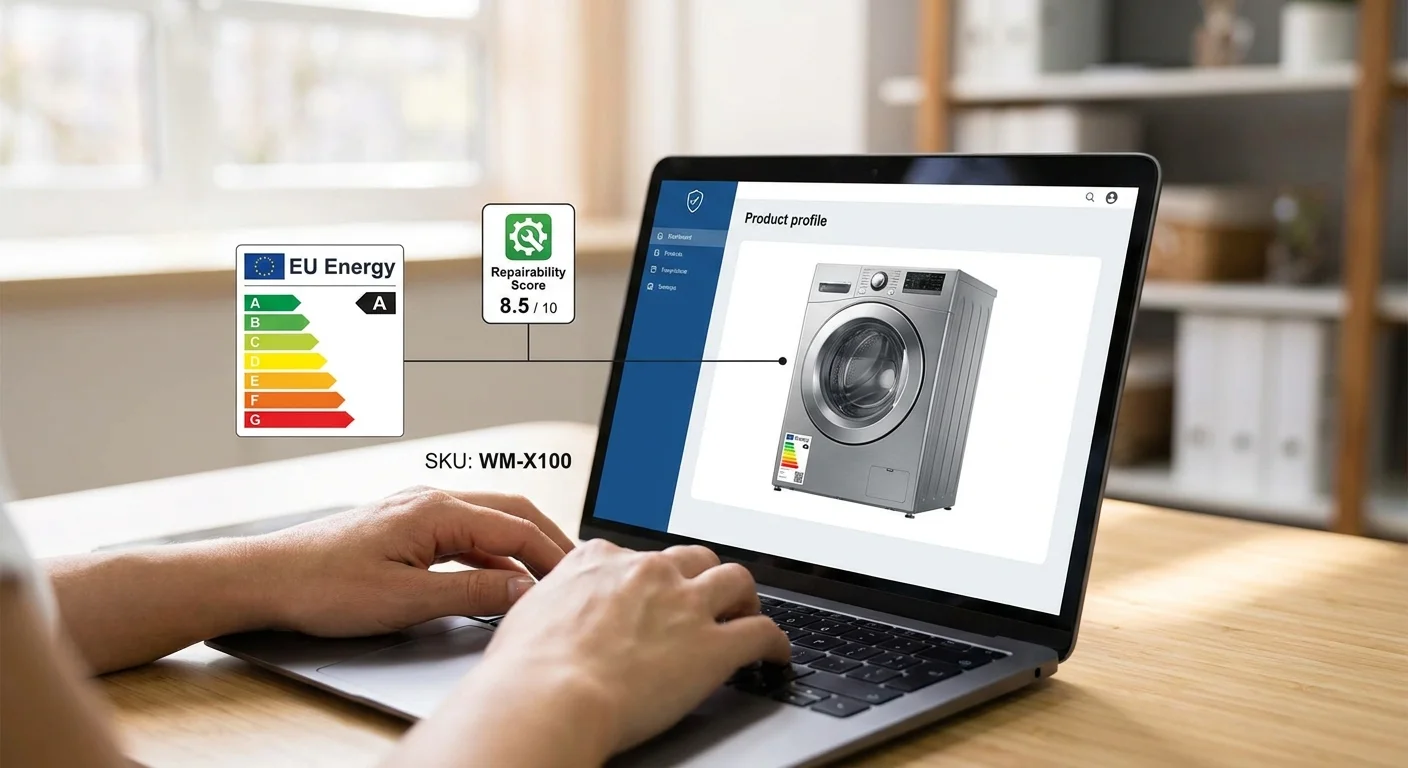
Regulatory demands are changing how merchants structure product data. Between 2026 and 2030, the European Union is rolling out strict Digital Product Passport (DPP) requirements that heavily target electronics and large appliances. These mandates force manufacturers and retailers to publicly track material composition, energy efficiency ratings, and component repairability scores.
Modern PIM systems are transitioning into compliance hubs to meet this standard, because standard e-commerce backends cannot securely host verifiable compliance certificates or map a repairability index to a dynamic QR code. Your chosen software must store these regulatory documents as specific, protected asset types tied directly to the relevant SKUs. When energy rating standards update, the platform must allow bulk modifications to certification fields without breaking the active product listings.
Prioritizing regulatory compliance requires implementing strict data governance rules. You must configure validation workflows that prevent a product from publishing if it lacks an approved energy label. Implementing these mandatory approval gates slows down your initial product onboarding speed, trading rapid publication for legal security.
Configure your platform to treat compliance documents as mandatory attributes. A SKU should fail validation and remain unpublished until the requisite safety and energy certificates are attached to the product record.
Action Step: Build a custom validation rule in your current or proposed system that flags any electronic SKU missing a recognized energy rating certificate before it reaches the syndication phase.
Criteria 4: Automating Syndication to Reduce Return Rates
Returns in the large appliance category destroy profit margins because reverse logistics for a refrigerator involve specialized freight scheduling, high damage risks, and massive restocking costs. Inaccurate syndication serves as the primary cause of these returns. If an old CSV file pushes a discontinued depth measurement to a retail partner's website, the customer receives a machine that does not fit in their kitchen.
Automating your data distribution prevents this costly scenario. While manual CSV uploads create a delayed, disconnected web of outdated information across your sales channels, native API connectors establish a continuous link between your central repository and your endpoints to push real-time updates for dimensional changes, stock availability, and modified manuals.
A dedicated home appliances PIM solution removes the reliance on expensive middleware. PIMinto provides a native Shopify PIM integration, alongside direct connectors for BigCommerce, WooCommerce, Wix, and Google Shopping, included as standard features. Updating the clearance requirement for a stove once prompts the API to syndicate that correction to every connected storefront and marketplace.
Transitioning to automated API syndication demands strict data formatting because marketplaces enforce rigid character limits and specific attribute naming conventions. If your central data exceeds a channel's character limit for bullet points, an API push will fail silently or reject the update, meaning you must map your central fields to each channel's specific requirements before activating the automated sync.
Action Step: Open your channel manager and replace your manual export schedule with a direct API connector for your primary storefront, mapping your top ten attributes to ensure the sync functions correctly.
Making the Final Decision: Transparency, AI, and Scalability
Evaluating the total cost of ownership separates scalable software from restrictive legacy platforms. Many enterprise vendors quote a low entry price but enforce artificial paywalls, charging extra for adding new users, exporting proprietary data, or activating baseline marketplace connectors.
Prioritize transparent pricing models that support rapid catalog expansion. Originally developed by Systems Online to solve identified B2B bottlenecks, PIMinto emphasizes rapid deployment by providing free onboarding and data migration. By including unlimited users and data outputs, the platform allows growing retailers to scale their omnichannel presence without facing unexpected penalties for their success.
Modern platforms also utilize machine learning to accelerate catalog enrichment. Using an AI product description generator transforms dry, formatted technical specifications into consumer-friendly marketing copy. The software reads a spreadsheet row containing voltage outputs, decibel ratings, and compressor types, then drafts an SEO-optimized paragraph highlighting the quiet operation and energy efficiency of the unit.
To match your current operational bottleneck to the correct feature priority, use this evaluation matrix:
| If your primary bottleneck is... | You must prioritize this capability... | Which requires... |
|---|---|---|
| High reverse logistics costs | Automated API syndication | Direct connectors mapping precise dimensions to all storefronts to prevent misfitting purchases. |
| Siloed marketing files | Unified PIM and DAM | Centralized storage where CAD files and lifestyle photos link natively to specific child SKUs. |
| Duplicated variant data | Parent-Child Hierarchies | Relational database mapping that links finishes and replacement parts to a single base model. |
| Regulatory exposure | Compliance tracking features | Mandatory validation gates that require EU Energy labels before publishing an electronic item. |
| Slow time-to-market | AI-driven enrichment | Tools that translate raw manufacturer specifications into formatted consumer descriptions. |
Choosing a robust home appliances PIM solution dictates how efficiently your business scales over the next decade. Do not settle for disconnected spreadsheets or modified ERPs that fracture your customer experience and inflate your return rates; instead, demand a platform built for deep catalog complexity, rich digital assets, and automated syndication.
Action Step: Schedule a technical demo with your shortlisted vendors, and require them to import a sample of your messiest appliance data to prove their hierarchy and syndication capabilities live.
Stop losing sales to fragmented appliance catalogs and disorganized technical assets. Centralize your data, enrich your listings with AI, and automate your multichannel distribution with PIMinto. Discover how unlimited users, native API connectors, and transparent pricing scale catalog operations by visiting PIMinto.
Modified on: 2026-07-31
Blogs you might like
-

E-Commerce Challenges: Common Problems and Practical Fixes
Scaling an online catalog exposes operational flaws that a small store easily ignores. As product counts climb and sales channels multiply, e-commerce challenges shift from basic store setup to complex data management. Keeping up with orders and fulf...

Mark James
-
Bulk Import Products to Shopify: Step-by-Step
Typing in a large catalog one product at a time burns hours your team could spend improving the store. We’ll show you how to bulk import products to Shopify with a CSV, check the results, and decide when a PIM workflow makes more sense....
Mark James
-

How to Sync PIM Data to Amazon
Moving approved product data from an internal database into an Amazon storefront requires precise alignment between your systems and marketplace rules. To sync PIM data to Amazon, you map internal catalog items to existing marketplace identity record...
Mark James
-

Plytix Alternatives: Compare PIM Platforms
Finding the right platform for your product catalog requires more than comparing feature checklists. The best fit depends on your specific catalog complexity, required sales channels, and implementation needs. When evaluating Plytix alternatives, you...
Mark James