How To Link DAM To eCommerce Platforms
Author name: Mark James
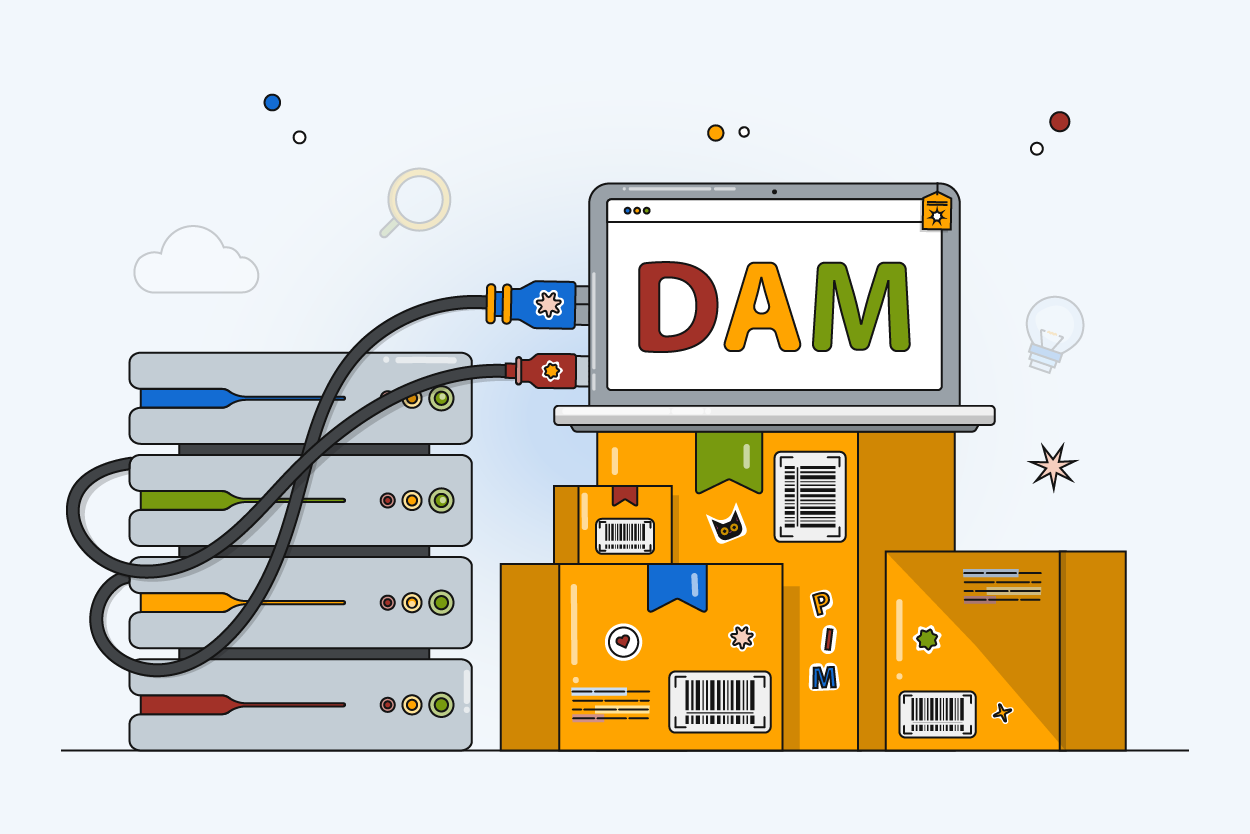
You update a product image in a cloud folder, and the old version still shows on your Shopify store. A partner requests a spec sheet, and your team spends twenty minutes digging through an unorganized shared drive to find the right PDF. You can fix these disconnects when you link DAM to ecommerce platform systems. This connection automates image updates across all sales channels the moment you upload a new file, ensuring customers always see accurate visual data.
The Cost of Disconnected Product Data and Missing Assets
The True Cost of Spreadsheet Errors
Manual data management drains resources before a product even reaches the storefront, as operations professionals spend 3.6 hours per week fixing spreadsheet errors. They track down mismatched SKUs, broken image URLs, and outdated pricing files.
Consider the daily mechanics of a disconnected workflow. A vendor emails a zipped folder of summer lifestyle shots, which a junior merchandiser unzips and uploads to a shared cloud drive. The merchandiser then copies the individual share URLs into a master CSV file. If they paste column D into column E by accident, a customer buying a blue tent sees images for a green sleeping bag.
When ecommerce operations scale past 10,000 SKUs, these manual processes break entirely. Mid-market retail and apparel companies lose potential revenue to poor product data, splitting this loss between failing on-site search functionality and inventory display inaccuracies. If your high-resolution images sit in a separate silo from your product data, the storefront cannot dynamically serve the correct assets to specific product variants.
The Revenue Drain of Fragmented Tech Stacks
Running isolated operational systems exacts a massive toll on profitability. Disconnected databases requiring manual exports and middleware to talk to your storefront create a "fragmentation tax" averaging $12.9 million annually for large enterprise organizations. You pay this tax every time an employee manually matches a TIFF file to an Excel row, or whenever a developer troubleshoots a broken integration plugin.
PIMinto eliminates this tax by natively bridging raw product data and rich digital assets. Centralizing your catalog data and media files into a single source of truth prevents data silos, meaning that when you update a core asset in PIMinto, that change propagates immediately to connected storefronts without intermediate file transfers or third-party synchronization apps.

Accelerating Conversions with High-Quality Visual Assets
Driving Purchasing Decisions with Crisp Imagery
Visuals dictate digital conversion rates because online buyers cannot physically inspect items. Product pages featuring high resolution and multiple viewing angles deliver higher engagement than those with limited photography, especially for detail-heavy categories like electronics or fashion. Analysts report that 67% of consumers rank product image quality as the primary factor influencing their online purchases.
Serving these assets requires a direct pipeline connecting the media repository to the front end. If you rely on manual uploads to your web host, updating a 500-item catalog with new seasonal photography takes weeks of administrative work. A linked DAM handles distribution instantly, ensuring crisp, detailed photos reach the product page as soon as they clear internal approval.
Mobile users on cellular networks abandon pages if massive original files choke their connection, while desktop users leave if the zoom function reveals pixelated images. A direct link between your DAM and your storefront resolves this conflict by serving adaptive, correctly sized formats based on the user's specific device request.
Boosting Engagement with 3D and AR Elements
Static imagery sets the baseline for a modern catalog, while interactive media drives top-tier performance. Integrating 360-degree product spinners increases the average time a user spends on a product page for complex hardware. Furthermore, adding virtual reality, 3D product visualizations, and AR shopping experiences spikes conversion rates by as much as 94% in furniture and apparel sectors.
These complex file types, like GLB or USDZ models, require robust storage and delivery mechanics. A standard ecommerce web server often struggles to manage and serve them efficiently without slowing down the rest of the site. A linked DAM automatically tracks which 3D model belongs to which specific SKU, delivering the interactive file via a content delivery network exactly when the browser requires it.
The creation process for these assets also benefits from a centralized system. You take raw CAD files from the manufacturing floor, upload them to the DAM, and associate them with the product record. Once processed into consumer-facing AR models, the system pushes the optimized versions directly to the storefront while retaining the original CAD files securely in the backend.
Managing Metadata and Tagging at Scale
AI-Driven Asset Tagging and Metadata
Uploading thousands of supplier images creates an immediate searchability problem, so modern systems deploy artificial intelligence to read image contents and generate relevant tags before a human ever touches the file. The AI recognizes object types, background colors, text overlays, and contextual settings, appending these details directly to the asset's metadata.
This automated tagging transforms a folder of cryptic filenames into a fully searchable database. Instead of manually typing "stainless steel," "kitchen," "appliance," and "silver" into four separate data fields, machine learning models process the visual data on upload. You search for "silver kitchen appliance lifestyle shot," and the DAM surfaces the exact match instantly.
PIMinto features a built-in AI PIM Assistant that executes this enrichment in bulk by processing incoming assets, mapping them to existing catalog entries, and tagging them automatically. Shifting this workload to an AI assistant reduces manual data entry and frees your merchandising team to focus on campaign strategy.
The Convergence of PIM and DAM Software
Treating product data and product media as separate entities creates unnecessary friction. Ecommerce leaders merge Product Information Management (PIM) and DAM software into unified systems to manage product images and videos centrally. Operating them in harmony ensures that every media file attaches directly to its corresponding product specifications, pricing, and variant logic.
This convergence enables intelligent, error-free syndication. When you link a unified system to your storefront, the API pushes the complete product package, including text, specifications, and optimized media, in a single payload. You stop worrying about whether the technical specs in the description align with the feature callouts shown in the product video because the system enforces consistency by housing both elements in the exact same record.

Configure Your DAM and Storefront Connection
Establish a Strict Metadata Schema First
A system integration operates only as reliably as the data feeding it. Before migrating files or activating an API connector, define a strict metadata schema where every asset carries the exact SKU of its associated product as a primary key. This identifier allows the ecommerce platform to map incoming media to the correct catalog entry without human intervention.
Follow a structured sequence to build this foundation:
- Audit your existing taxonomy to identify necessary file tags.
- Assign the primary product SKU as the mandatory anchor for all product-specific media.
- Define secondary tags for asset type (hero image, lifestyle, spec sheet).
- Build regional and channel compliance tags to control where specific assets publish.
If a specific lifestyle image carries usage rights exclusively for North America, the metadata must reflect that limitation. Strict tagging prevents restricted assets from publishing to international storefronts during an automated sync. Review your current catalog structure and map these data requirements before learning how to manage PDP assets at scale.
Automate Next-Gen Image Formatting for Speed
Feeding massive original master files directly to a storefront destroys page load speeds and damages search rankings. You must configure the integrated pipeline to convert high-resolution assets into lightweight formats tailored for web delivery. Maintain your uncompressed files in the DAM, but configure the system to output optimized versions to the storefront.
| Master Format | Web Delivery Format | Primary Benefit |
|---|---|---|
| TIFF / RAW | WebP | Reduces file size by up to 35% compared to JPEG while preserving quality. |
| PNG (Transparent) | AVIF | Handles transparency with superior compression for complex graphics. |
| MP4 (1080p) | HLS Stream | Adapts video quality dynamically based on the user's connection speed. |
Automating this conversion maintains your Largest Contentful Paint (LCP) under 2.5 seconds. Fast rendering protects desktop conversion rates, which average 3.5% across general retail, and prevents drop-off on mobile devices, where conversions lag at 2.1%. While these baseline figures fluctuate depending on the specific retail category, speed remains universally critical for conversion. The system handles the workload in the background, allowing photographers to upload 50MB master files without breaking the live website.
Prioritize Commerce Migration Sequencing
When overhauling your tech stack, your order of operations determines the risk level. Deploy and stabilize the core commerce data integration first by connecting the DAM to the storefront. Verify that images map to SKUs correctly, and confirm that the API updates records in real time.
Run a targeted test synchronization with a small batch of low-risk products, verifying the output on a staging server before pushing the integration to your production environment.
Once the visual and product data flow reliably between the central repository and the storefront, you can integrate legacy ERPs or ancillary back-office tools. Pushing multiple enterprise system migrations simultaneously introduces unacceptable risk to live revenue streams, so stabilize the customer-facing layer and ensure the storefront renders perfectly before rewiring backend financial or inventory management software.
Managing DAM Integration Costs and Distribution Workflows
Managing Base Costs and API Connectors
Buyers frequently hesitate when evaluating integration costs because they assume enterprise connectivity requires enterprise budgets. Legacy platforms often demand expensive third-party middleware to link DAM to ecommerce platform environments. This setup incurs ongoing subscription fees for the connector tool on top of the base DAM software, driving up the total cost of ownership.
Select software that builds the connections into the core product architecture. PIMinto includes native API connectors for major ecommerce systems directly in its standard subscriptions. You configure a Shopify PIM integration, or connect to Google Shopping, WooCommerce, and Wix, without purchasing external apps. Transparent pricing includes unlimited users and data outputs, allowing growing brands to scale their operations without hitting artificial paywalls as their SKU count increases.
Navigating B2B and DTC Distribution Capabilities
Distributors and manufacturers face different distribution requirements than direct-to-consumer (DTC) brands. B2B teams handle complex, multi-tiered pricing and require documentation that consumers ignore. A distributor might require access to CAD files, safety data sheets (SDS), and unwatermarked high-resolution TIFFs for their print catalogs. Your consumer storefront ignores these files, but external partners require them immediately.
Sending heavy ZIP files of product images to retail partners creates version control nightmares, as partners end up using outdated logos or discontinued product shots pulled from an old email attachment.
A linked DAM solves this through built-in brand portals. You configure secure, external-facing hubs where approved retail partners access the latest spec sheets and digital assets directly from your centralized system. Partners pull the accurate, current files they need to stock their shelves and populate their digital catalogs without requiring backend access to your core ecommerce database.
The data risk associated with migrating these operations drops when the software provider handles the implementation. PIMinto offers completely free onboarding and data migration, moving your organization out of spreadsheet chaos and into a modern, connected infrastructure that serves both DTC storefronts and B2B partners from a single source of truth.
Stop managing your product catalogs across dozens of disconnected spreadsheets and local folders. PIMinto provides a centralized PIM and DAM platform with native ecommerce connectors, unlimited users, and a built-in AI Assistant to automate your data enrichment. Visit PIMinto to centralize your assets and scale your multi-channel sales today.
Modified on: 2026-08-07
Blogs you might like
-

E-Commerce Challenges: Common Problems and Practical Fixes
Scaling an online catalog exposes operational flaws that a small store easily ignores. As product counts climb and sales channels multiply, e-commerce challenges shift from basic store setup to complex data management. Keeping up with orders and fulf...

Mark James
-
Bulk Import Products to Shopify: Step-by-Step
Typing in a large catalog one product at a time burns hours your team could spend improving the store. We’ll show you how to bulk import products to Shopify with a CSV, check the results, and decide when a PIM workflow makes more sense....
Mark James
-
How to Sync PIM Data to Amazon
Moving approved product data from an internal database into an Amazon storefront requires precise alignment between your systems and marketplace rules. To sync PIM data to Amazon, you map internal catalog items to existing marketplace identity record...
Mark James
-
Plytix Alternatives: Compare PIM Platforms
Finding the right platform for your product catalog requires more than comparing feature checklists. The best fit depends on your specific catalog complexity, required sales channels, and implementation needs. When evaluating Plytix alternatives, you...
Mark James