Best Product Description Generators for E‑Commerce (2026)
Author name: Mark James
Finding an AI‑powered product description generator that actually ships copy to Shopify, Amazon, or Google Shopping feels like chasing a unicorn. Most tools promise magic, but 84% still leave you with a manual upload step. Below are the eight‑plus solutions that break that pattern, plus a quick way to pick the right one for your catalog.
1. PIMInto (Our Top Pick) , All‑in‑One PIM with Built‑In Feeds
PIMInto is a cloud‑based product information management platform that also houses an AI description generator. It pulls product data from your catalog, writes SEO‑friendly copy, and pushes the finished text straight to Shopify, WooCommerce, Amazon, and more without a separate feed add‑on.
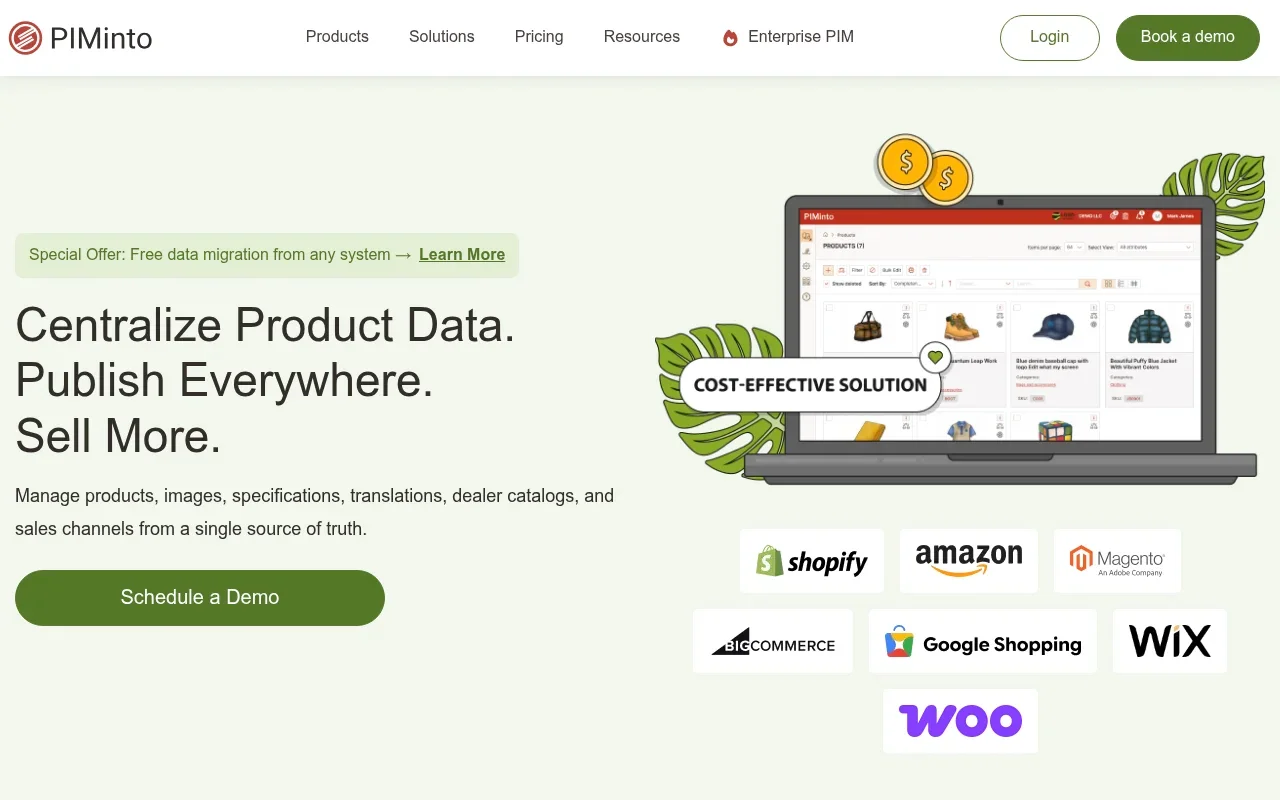
Who it’s best for: mid‑size brands that already juggle dozens of SKUs across multiple channels and need a single source of truth for product data.
The platform’s AI engine learns from your existing copy, so the output matches your brand tone from day one. Built‑in channel feeds mean you skip the tedious CSV export step that most competitors force you to do. Improve Product Descriptions with AI shows a typical workflow that cuts publishing time in half.
Because it’s a full PIM, you also get bulk attribute editing, image management, and version control , all under one roof. The only downside is that the learning curve can feel steep if your team has never used a PIM before.
2. Describely , AI Generator with Data Enrichment & Multiple Feeds
Describely pairs an AI writer with a data‑enrichment engine that pulls attribute values from CSV, Excel, or direct Shopify feeds. It then enriches missing fields , like material or care instructions , before generating copy.
The tool shines for merchants who already have clean product data but lack the time to write unique copy for each item. You can set brand‑voice rules, keyword buckets, and tone presets, then let the engine churn out hundreds of descriptions in a single batch.
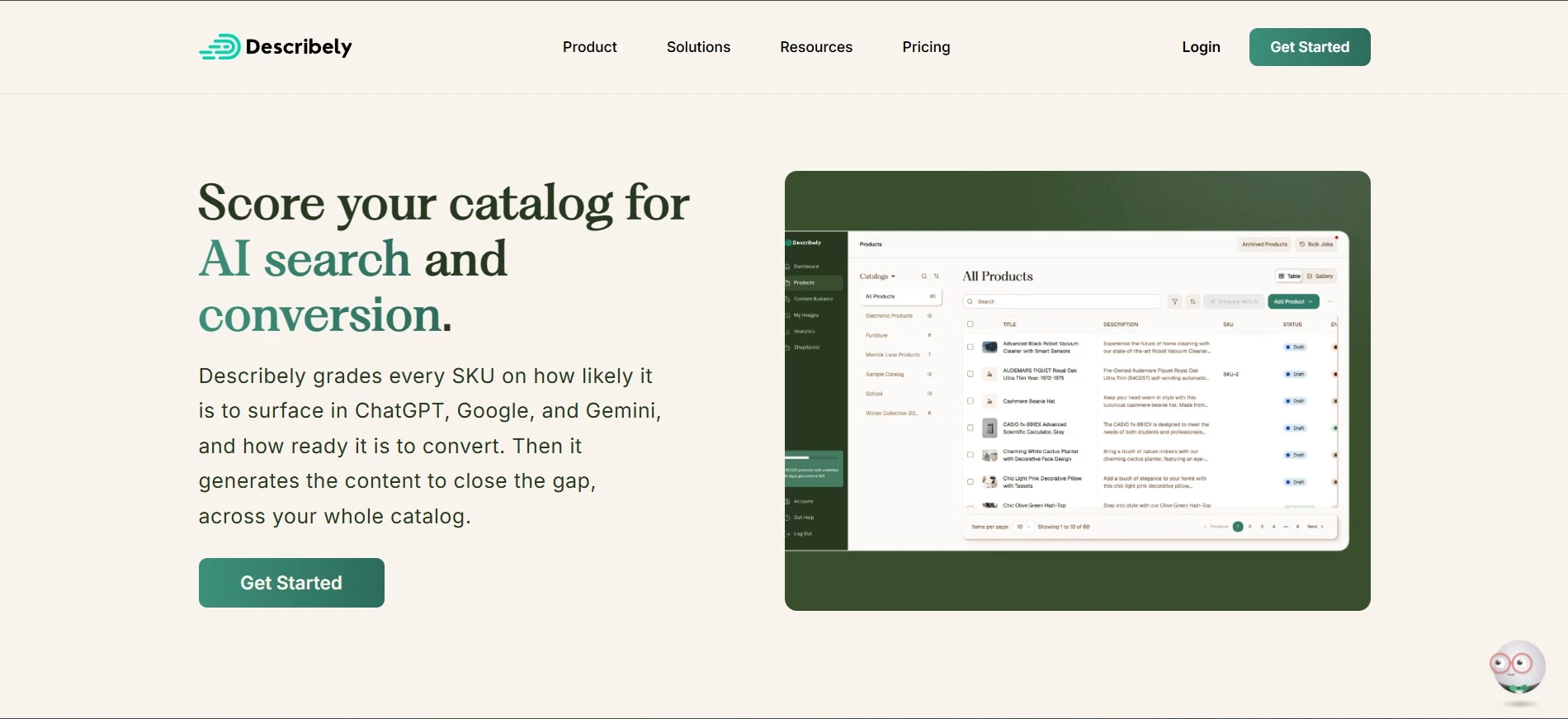
Describely also offers native feeds for Shopify, WooCommerce, Wix, Squarespace, and Akeneo, so you can push finished copy straight to the storefront. The caveat: bulk editing of generated text still requires a spreadsheet download, so you’ll need an extra step if you want to fine‑tune many SKUs.
3. Hypotenuse AI , Bulk Description Generation for Clean Data Sets
Hypotenuse AI specializes in turning a tidy CSV of product attributes into SEO‑rich copy at scale. Its bulk generator can process thousands of rows in minutes, then export the results back to your PIM or CMS.
Who it’s best for: teams that already maintain a clean data set and need a fast, no‑frills way to populate descriptions for large catalogs.
The platform lets you define keyword lists, brand‑voice snippets, and formatting rules up front. Once set, the AI respects those constraints across every generated line. It also offers a “crawl‑and‑enrich” feature that pulls missing specs from manufacturer datasheets, which helps close gaps before the copy is written.
Because it does not ship built‑in channel feeds, you’ll still need a PIM or manual upload step to get the copy onto Shopify or Amazon. That’s the trade‑off for its razor‑thin pricing and pure bulk power.
4. Jasper , Template‑Driven Descriptions with Brand‑Voice Training
Jasper provides a library of ready‑made description templates that you fill with product attributes. You can also train the AI on your existing copy so it mimics your brand voice.
Best for: marketing teams that need to produce not only product copy but also ad copy, email snippets, and blog intros from the same AI engine.
Jasper’s “Boss Mode” lets you write a prompt like “Write a 150‑word description for a waterproof hiking backpack, using a rugged tone,” and the model delivers instantly. The platform integrates with automation tools, allowing you to streamline the flow from spreadsheets to your storefront.
The downside is that Jasper does not include native channel feeds, so you’ll have to copy the output into your PIM or CMS manually. It also lacks bulk‑edit automation, making it less ideal for catalogs with more than a few hundred items.
AI Assistant Examples show how a similar prompt can be reused across different tools, giving you a quick cheat sheet for Jasper.
Comparison Table: Features, Feeds, Bulk Editing & Pricing
Below is a side‑by‑side view of the four tools we covered. The table focuses on the criteria that matter most when you’re scaling product copy.
Tool | AI Description Generator | Built‑In Channel Feeds | Bulk‑Edit Automation | Pricing (starting) |
|---|---|---|---|---|
PIMInto | Yes – integrated with PIM | Shopify, WooCommerce, Amazon, Google Shopping, others | Yes – spreadsheet bulk edit | — (contact sales) |
Describely | Yes – data enrichment | Shopify, WooCommerce, Wix, Squarespace, Akeneo, CSV/XLSX | Yes – bulk generation | — (tiered plans) |
Hypotenuse AI | Yes – batch generation | No | Yes – bulk CSV import/export | $19/mo |
Jasper | Yes – template driven | No | No | $39/mo |
For a deeper look at how PIMInto’s feed system works, see AI PIM Assistant. It illustrates the end‑to‑end flow from data capture to channel publishing.
FAQ
What is a product description generator?
A product description generator is AI software that takes product attributes, like name, features, and specs, and turns them into readable, SEO‑friendly copy. The first sentence answers the core question directly.
Can these tools write copy in multiple languages?
Yes, most of the generators support translation via built‑in AI models or integrations with services like OpenAI. You’ll still need to review for cultural nuance.
Do I need a PIM to use an AI description generator?
No, you can feed a CSV file straight into many generators, but a PIM removes the manual upload step and keeps your data consistent across channels.
Which tool handles bulk generation best?
Hypotenuse AI excels at bulk generation, processing thousands of rows in minutes, while Describely also offers bulk output with enrichment.
Is there a free tier I can test?
Some tools, like Jasper, offer a limited free trial, but most enterprise‑grade generators require a paid plan to unlock API access and bulk features.
Conclusion
For teams that want a true end‑to‑end solution, PIMInto is the clear front‑runner because it combines AI copy, built‑in feeds, and bulk editing in one platform. If you’re focused purely on bulk output and already have a PIM, Hypotenuse AI gives the fastest turnaround. Ready to end the copy bottleneck? Start your free trial of PIMInto today and see your catalog fill itself.
Modified on: 2026-07-29
Blogs you might like
-
Best PIM Software for Shopify in 2026
Shopify handles products well until the catalog outgrows it. Variants pile up, supplier files arrive in different formats, a second store needs the same products with different content, and spreadsheets become the real system of record. That is the p...
-

Jewelry Product Catalog Software: Managing Product Data, Line Sheets and B2B Catalogs
One engagement ring design can come in three metals, four center-stone weights and twelve ring sizes. Add natural and lab-grown versions, a wholesale price for boutiques and a separate price list for Europe, and a single design turns into hundreds of...
-
Beauty and Cosmetics Product Data Management: A PIM Guide for Brands
A lipstick launches in 20 shades. Each shade has its own barcode, swatch, product photo, shade description and stock status, and every retailer wants that information in a different spreadsheet. Six months later the brand adds a matte version and a m...
-
Food and Beverage Product Data Management: A Practical Guide for Brands and Distributors
A granola bar recipe changes: almonds replace cashews. The new label goes to print, but the allergen statement on your website, the spec sheet your distributor uses and the listing on an online grocery site still say "contains cashews." Nobody made a...