Best Product Experience Management Software
Author name: Mark James
Your product data is a mess… not because you're doing anything wrong. Managing thousands of SKUs across Shopify, Amazon, and Google Shopping while keeping descriptions accurate and on-brand is genuinely hard. The right product experience management software turns that chaos into a repeatable, scalable advantage. Here are the nine best PXM and PIM platforms right now, and who each one is actually for.
1. PIMInto — Best PIM-Native PXM with Built-In Channel Feeds
PIMInto is a cloud-based PIM platform built for e-commerce teams that need a single source of truth for product data, plus native channel distribution, without paying for add-ons. It's the top pick here, and the gap between PIMInto and the competition is real.
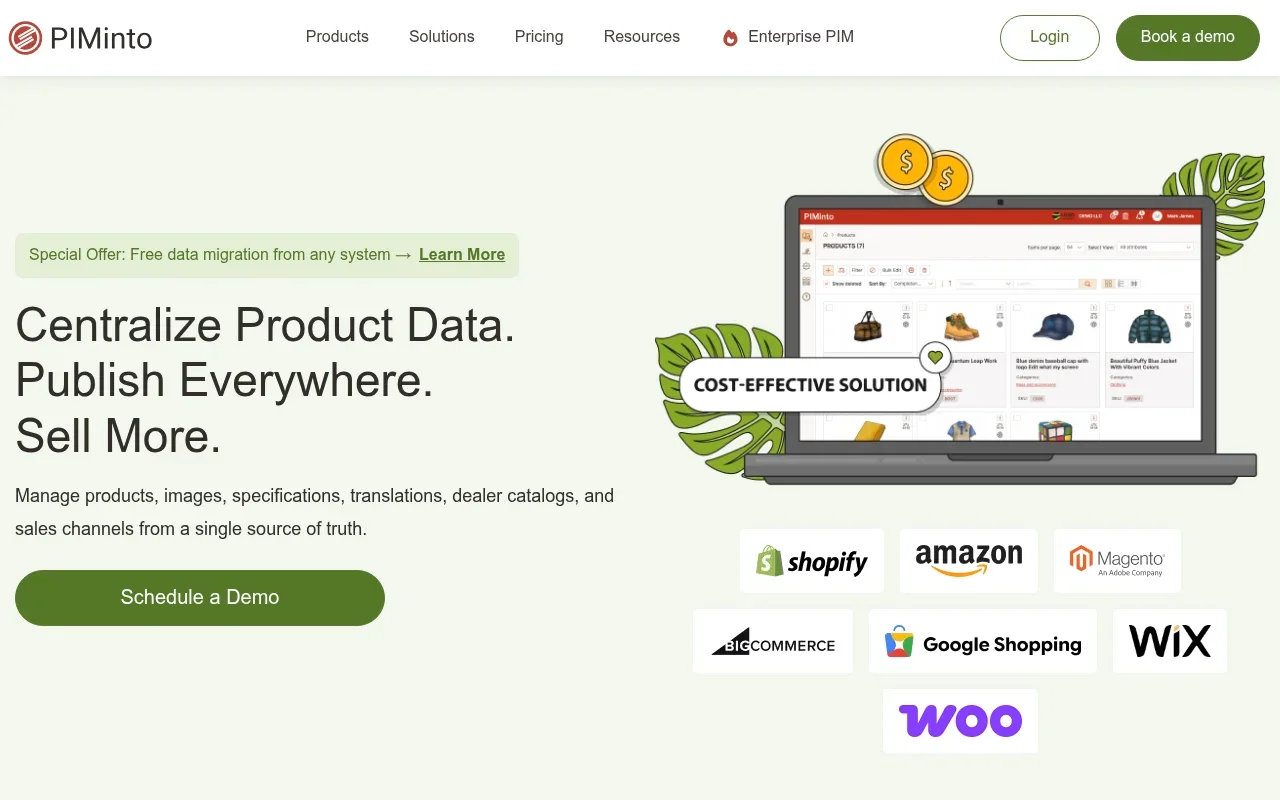
Most PIM tools make you buy a separate feed tool or a channel connector add-on to push data to Shopify or Google Shopping. PIMInto builds those feeds in natively. Your team can publish structured product data directly to Shopify, WooCommerce, Google Shopping, Amazon, and more from one place. No middleware. No extra monthly fee. That's a meaningful operational difference when you're managing hundreds or thousands of SKUs.
Beyond feeds, PIMInto gives you AI-generated descriptions and translations, bulk editing across mass product updates, real-time API sync, and role-based team permissions, You can start with a free plan with no credit-card required.
The AI layer is worth calling out separately. Many platforms use AI for analytics or sentiment tagging. PIMInto uses it for actual content creation: writing product descriptions, generating translations, and running bulk content edits across your catalog. That's content enrichment, not just data hygiene.
For teams comparing PXM strategy against PIM tools, our Product Experience Management (PXM) guide explains how PIM serves as the backbone for delivering channel-ready product experiences.
One honest limitation: PIMInto is best for teams that want a PIM-first approach with PXM features built in. If you need a standalone digital shelf analytics suite or a full DAM platform as your primary tool, you'd supplement PIMInto rather than replace it. But for the core job, managing and distributing product data at scale, it's the strongest value in this list.
Start on the free plan today at piminto.com and see how fast your team can get product data organized.
Key Takeaway: PIMInto is the only platform in this list that bundles built-in channel feeds, AI content generation, bulk editing, free onboarding, and real-time collaboration, no add-ons required.
2. Salsify — AI-Powered PXM for Enterprise Commerce
Salsify is a purpose-built PXM platform for large brands that need to publish product content across physical retail, digital storefronts, and what they call the "agentic shelf," where AI shopping assistants surface product results.

The platform has several AI layers worth knowing. Its AI-powered PXM capabilities support agentic commerce, and the workflow engine allows teams to run large-scale content automation without extra headcount. A unified intelligence layer gives both human users and AI agents shared context and product knowledge to operate from.
Salsify also handles multi-language translation inside a single review task, content variations for different personas or seasonal campaigns, and content extraction from packaging and spec sheets into structured text fields. Their syndication network connects directly to major retailers, so brands can publish with error-checking in real time. The system is designed to support brands competing on digital and AI-driven commerce channels as that landscape continues to evolve.
The caveat is cost and complexity. Salsify is built for enterprise teams with substantial catalogs and retailer networks. Smaller e-commerce operations often find the implementation overhead, and the pricing, sized for brands that have a dedicated product content team. If you're a mid-market retailer without a formal PXM program, you'll likely find PIMInto a faster, more cost-effective entry point.
3. Akeneo — Open-Source PIM with Enrichment Workflows
Akeneo is one of the most recognized names in PIM, and its open-source community edition is a real option for teams that want to self-host or build a custom implementation. The platform has over 500 enterprise customers and counts Staples, Fossil, and FabFitFun among its users.
What Akeneo does well is product enrichment workflows. Teams can assign enrichment tasks to specific contributors, track completeness scores per product, and enforce data quality rules before anything goes live. That workflow governance is useful when multiple departments, marketing, procurement, and suppliers, are all touching the same catalog.

Akeneo's marketplace integrations and channel syndication are strong, though some connectors require their paid Serenity tier. The open-source version gives you the core PIM engine, but many of the channel-specific features and advanced automation sit behind paid plans. PIM platforms like Akeneo emerged to solve the problem of inconsistent product data across siloed systems, and Akeneo's enrichment workflow model addresses exactly that.
For teams that want total control over their data architecture and have developer resources to implement it, Akeneo is a serious option. For teams that want to be live in days with built-in feeds and no server setup, PIMInto is the faster path.
4. Inriver — PIM Built for Omnichannel Syndication
Inriver targets mid-to-large manufacturers and distributors that sell across a complex mix of retailer portals, e-commerce sites, and print catalogs. Its client list includes global brands like New Balance and Cartier, and its strength is structured omnichannel content delivery.
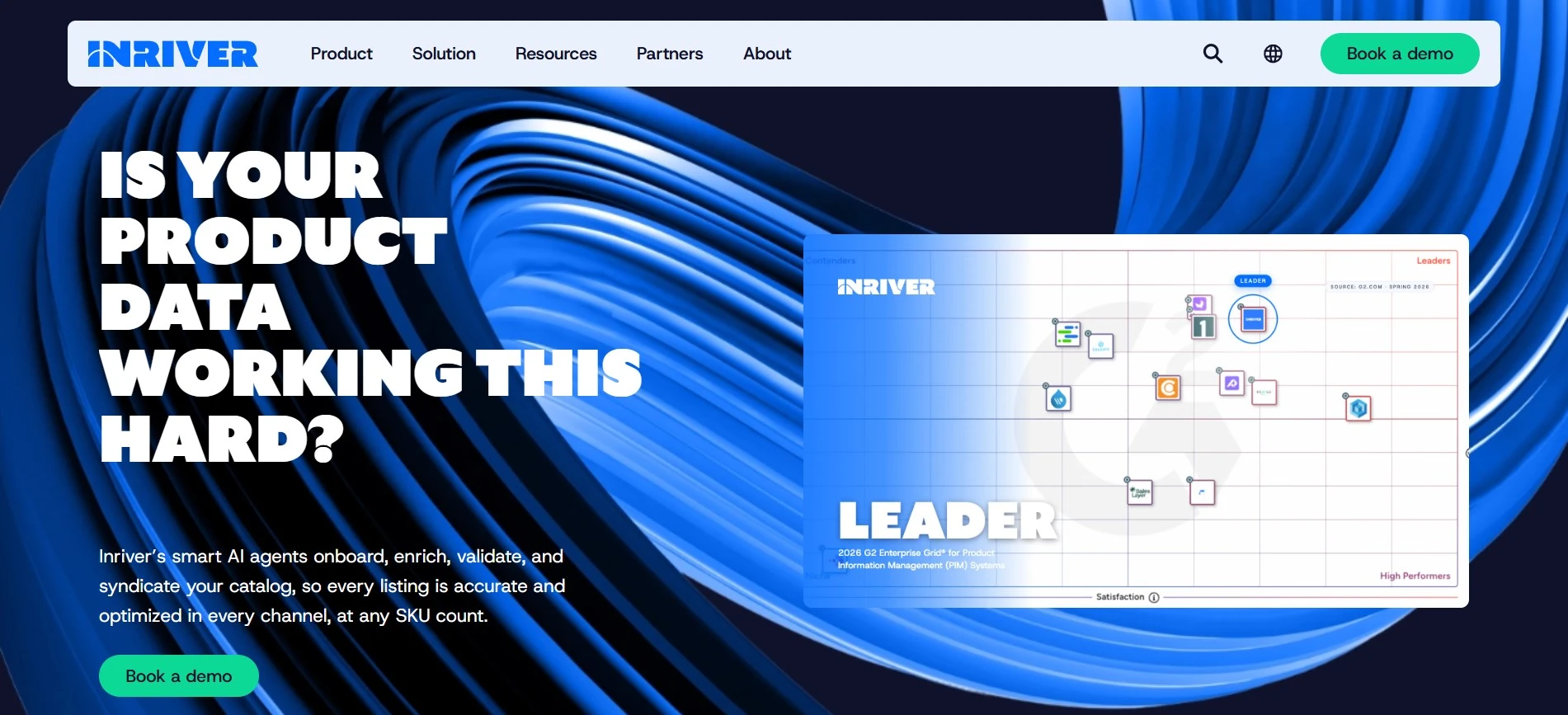
The platform's workflow and syndication capabilities let product teams build rules for how content adapts per channel. A product spec sheet for a B2B portal can be structured differently from the same product's consumer-facing listing, without duplicating the work. Inriver manages that transformation at scale.
Inriver does list some built-in channel feeds, but the research indicates that many integrations depend on add-on connectors rather than a single native feed layer. That's a meaningful operational distinction for teams counting on smooth direct-to-channel publishing without extra configuration. The platform is well-suited for manufacturers with dedicated product data teams. Smaller teams or those without a formal data governance structure may find the learning curve steep relative to the time-to-value.
For teams thinking through the top PIM software options by use case, Inriver fits best when omnichannel syndication complexity is the primary driver, not speed of setup.
5. Pimberly — Automation-First PIM for High-Volume Catalogs
Pimberly is built for distributors, manufacturers, and large retailers that move high volumes of SKUs and need automated validation before data ever reaches a sales channel. Its pitch is accuracy at scale: bulk data ingestion, automated validation rules, and supplier onboarding tools that reduce back-and-forth.
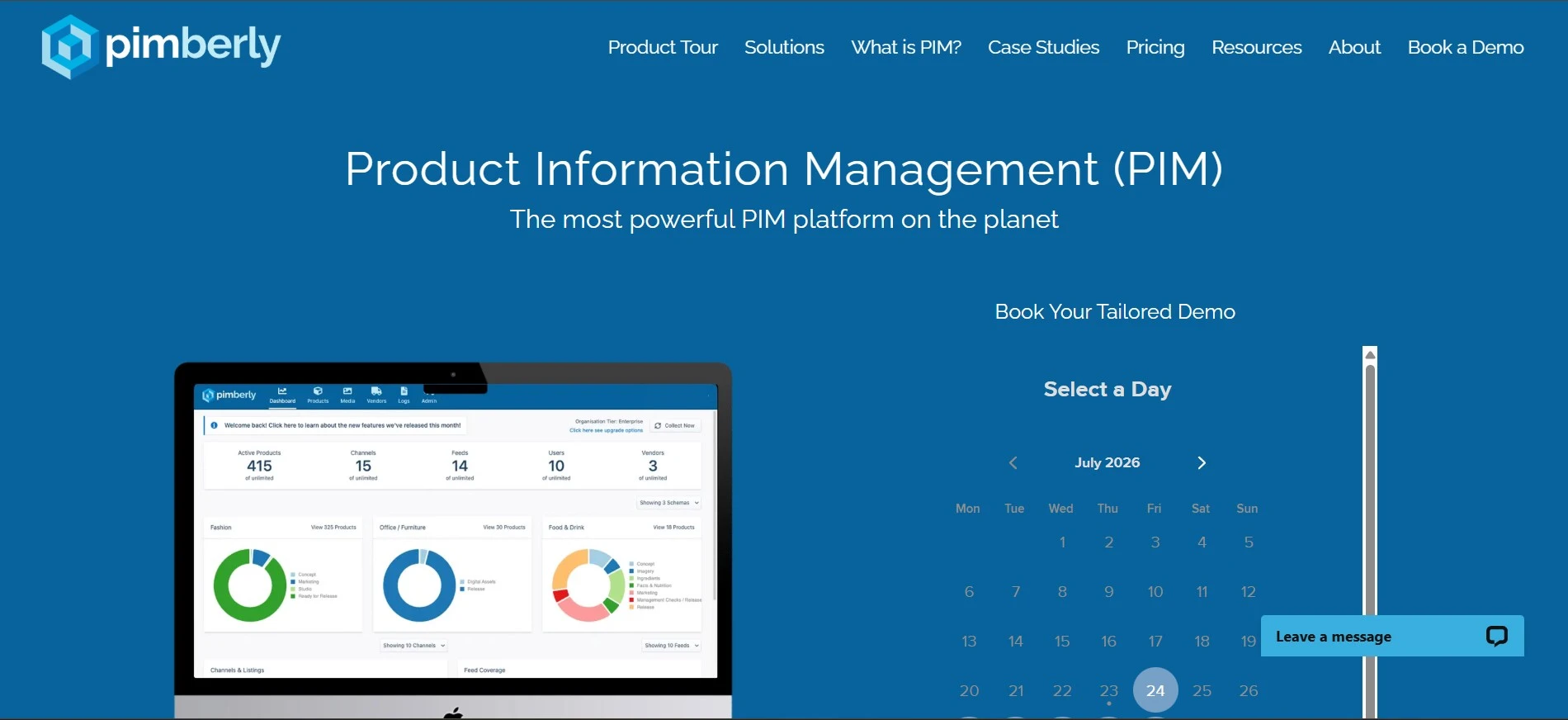
The platform is designed to eliminate errors that arise from product data managed in siloed systems and spreadsheets, and gives supply chain partners confidence that product attribute accuracy and branding are correct before anything ships downstream. That's particularly relevant for distributors who are responsible for data accuracy across a supplier's product range.
The automation-first approach means Pimberly works well when data quality processes need to run without constant human review. Automated validation catches bad data at ingestion rather than after publishing. That saves real time for teams processing hundreds of new SKUs per week from multiple suppliers.
Where Pimberly is less strong is in AI-generated content creation. It handles data validation and bulk processing well, but if your bottleneck is writing product descriptions or generating localized content, you'll want a platform with a richer AI content layer. The right comparison here depends on whether your primary problem is data accuracy or content enrichment.
6. Plytix — AI-Enhanced PIM for Small and Mid-Size Retailers
Plytix is designed for smaller brands and mid-size retailers that need a usable, affordable PIM without the implementation overhead of enterprise platforms. It has AI content capabilities built in and a product analytics layer that tracks how well your product data performs across channels.
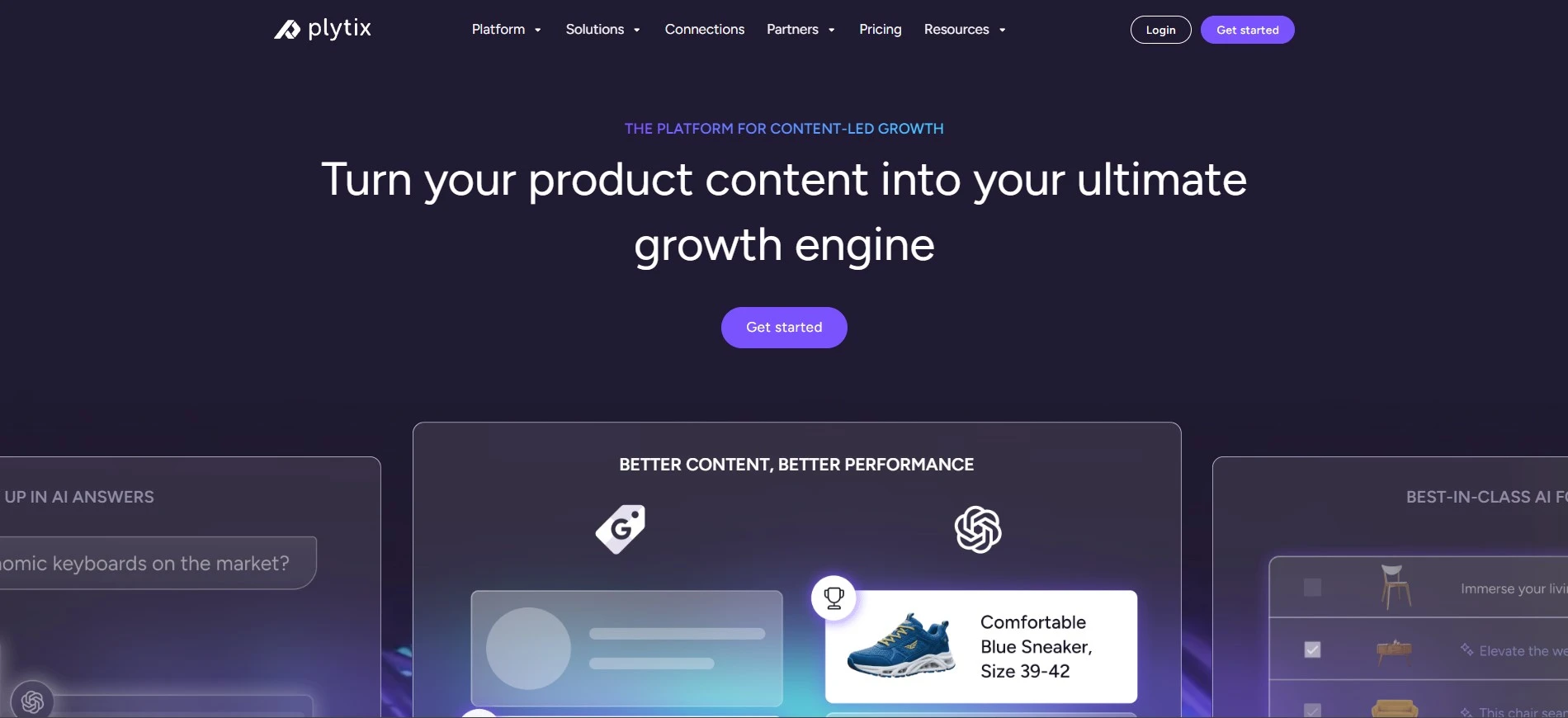
The analytics angle is what separates Plytix from most PIM tools in its price range. You can track product completeness, identify which products have missing attributes, and see which catalog items are most viewed across connected channels. That feedback loop helps small teams prioritize enrichment work rather than guessing.
Plytix's channel connectivity is solid for common e-commerce destinations, though native feed integrations are more limited compared to PIMInto's built-in feed set. Teams that need direct syndication to a wide range of channels may find they need additional connectors.
It's a good fit for a brand with a growing catalog that wants product analytics alongside data management. The pricing is transparent and the interface is approachable without a long onboarding process. For teams that are outgrowing spreadsheets and need a quick win, Plytix competes well at the entry level.
7. Brandquad — AI Descriptions and Validation for Brand Teams
Brandquad serves premium brand teams, its users include Dior and Estée Lauder, and its core value is supplier-driven data collection combined with AI-generated descriptions and validation workflows. Vendors can upload product data directly, streamlining data collection and reducing entry errors.

The AI layer handles description generation and translation, with validation rules that enforce data quality before content goes live. Brand teams can set completion thresholds, check content against style guidelines, and surface gaps through dashboards and reports. The platform also includes e-commerce analytics that help managers track sales performance and find growth opportunities by product.
Brandquad's positioning is explicitly around the brand-to-retailer relationship. If your workflow involves managing large numbers of supplier contributions and you need tight governance over how those products are described on shelf, Brandquad's validation model makes sense. The tradeoff is that it's less focused on direct consumer-facing channel syndication and more on the upstream data collection and enrichment process. Teams that need both supplier ingestion and full channel distribution in one tool may need to pair it with a dedicated syndication layer.
Building a brand identity that holds up across suppliers and retail channels is one part technology, one part strategy. If you're thinking through the broader branding strategy for scaling a product-driven brand, Brandquad fits into a larger brand governance system rather than serving as a standalone distribution engine.
8. Hypotenuse AI — AI-First Content Enrichment and Localization
Hypotenuse AI takes a different angle from most tools on this list. Its primary identity is an AI content platform, and its PXM capabilities come through content enrichment, image editing, and localization at catalog scale rather than through traditional PIM data management.
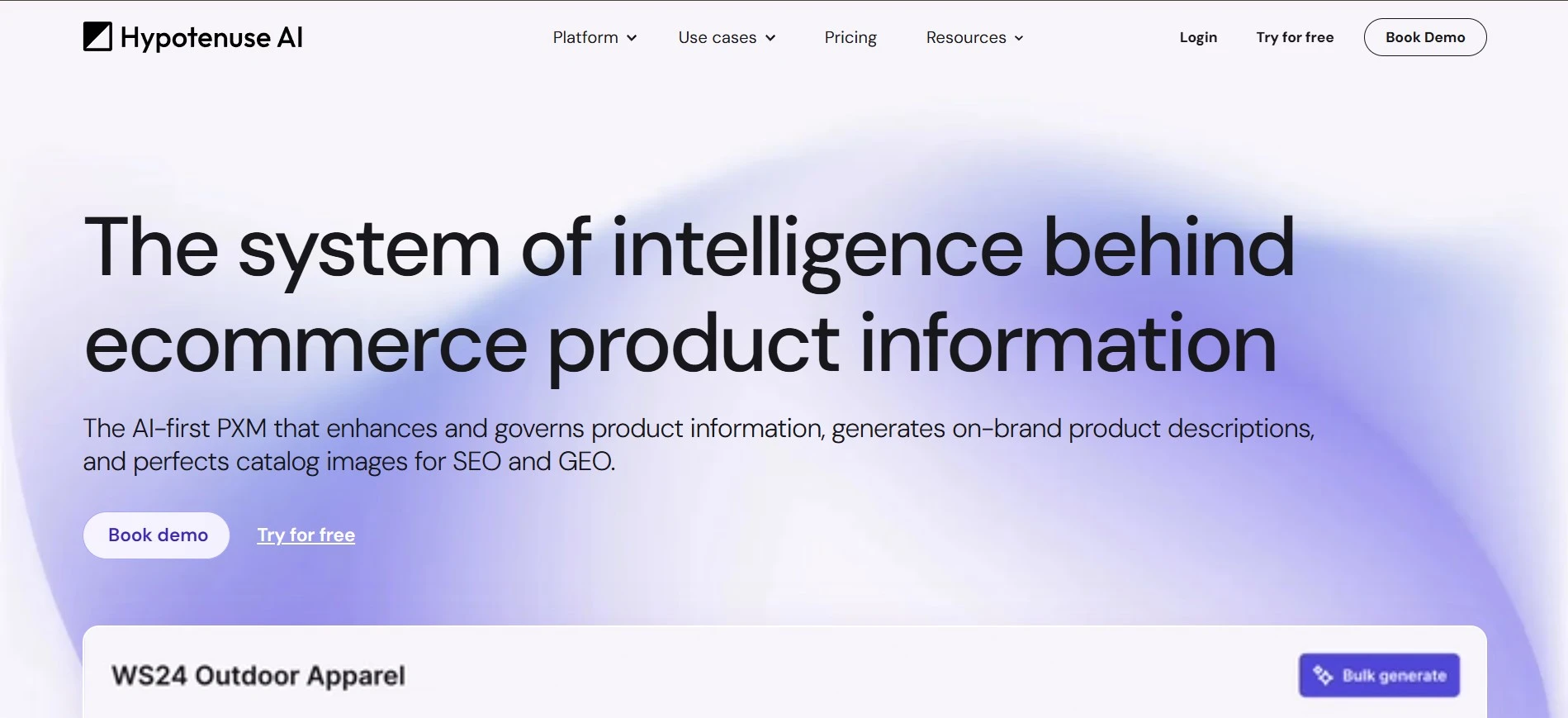
For e-commerce teams that already have a PIM or a data management system and need to generate large volumes of product descriptions, SEO-optimized copy, or translated content across multiple markets, Hypotenuse AI fills that gap well. It can process a full product catalog and generate unique descriptions per SKU rather than templated variations that all read the same.
The image editing capability is worth noting. Beyond text, Hypotenuse AI can edit and optimize product images at scale, which reduces the back-and-forth with a creative team for routine catalog updates. That matters when a seasonal refresh touches hundreds of products simultaneously.
The limitation is that Hypotenuse AI is not a full PIM system. It doesn't manage product data relationships, attribute hierarchies, or channel-specific data models in the way a PIM does. It works best as a content enrichment layer on top of an existing data infrastructure. Pairing it with a PIM like PIMInto that handles the data management and feed distribution gives you both the structural backbone and the AI content output.
9. Sales Layer PIM — AI and ML Automation for Product Data Teams
Sales Layer takes a data-quality-first approach to PIM, using AI and machine learning to automate product data optimization rather than relying on manual enrichment. Its catalog health score feature gives teams a real-time view of how complete and accurate their product data is across channels.
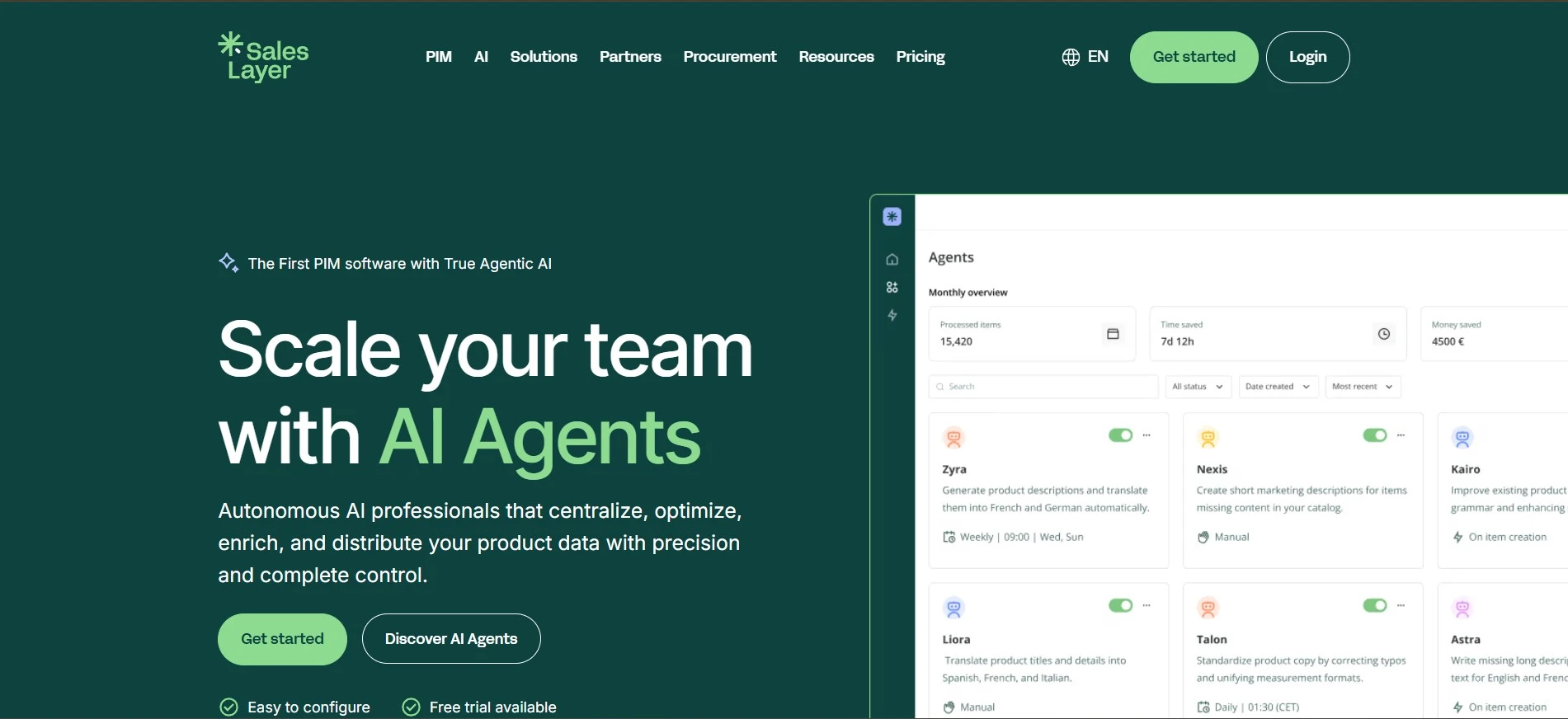
The ML automation identifies patterns in your catalog, flags missing attributes, and can suggest or auto-fill data gaps based on existing product information. For teams managing thousands of SKUs from multiple suppliers, that automated completeness check removes a significant QA burden from the product data team.
Sales Layer also positions itself at the intersection of PIM and PXM strategy. It draws a clear line between what PIM manages (the underlying data) and what PXM does (adapting that data per channel and customer context). The platform tries to bridge both in a single tool, though its PXM capabilities are more about structured data distribution than AI-driven content creation.
Pricing is not publicly disclosed on a per-plan basis, so you'll need to request a demo for current rates. It's generally aimed at mid-market to enterprise teams rather than small businesses. Sales Layer fits well when your priority is automated data quality enforcement across a complex supplier or product mix.
Pro Tip: Before committing to any PXM platform, map your three biggest daily bottlenecks: is it creating content, distributing to channels, or validating data quality? Your answer should directly determine which tool you prioritize in a trial.
Side-by-Side Comparison: Top PXM and PIM Platforms
Use this table to match each platform to the operational problem it solves best. The columns reflect the features that most teams ask about when choosing between these tools.
Platform | Best For | Built-In Channel Feeds | AI Content Generation | Bulk Editing | Free Tier |
|---|---|---|---|---|---|
| PIMInto | E-commerce teams needing PIM + native feeds + AI content | Yes (Shopify, WooCommerce, Google Shopping, Amazon, more) | Yes (descriptions, translations, bulk) | Yes | Yes (no credit card) |
Salsify | Enterprise brands managing digital and agentic shelf | Partial (retailer network) | Yes (AI-powered PXM and agentic commerce) | Yes | No |
Akeneo | Teams wanting open-source PIM with enrichment workflows | Partial (connectors vary by tier) | Limited | Yes | Community edition |
Inriver | Manufacturers with complex omnichannel syndication | Partial (some native, add-ons required) | Limited | Yes | No |
Pimberly | Distributors running high-volume automated validation | Limited | Limited | Yes (bulk ingestion) | No |
Plytix | Small to mid-size retailers needing PIM + analytics | Limited | Yes (AI content features) | Yes | Limited trial |
Brandquad | Premium brand teams with supplier workflows | Limited | Yes (descriptions, translations) | Yes | No |
Hypotenuse AI | Teams needing AI content enrichment on top of existing PIM | No (content layer only) | Yes (primary function) | Yes (content batch) | Trial available |
Sales Layer PIM | Mid-market teams prioritizing ML-driven data quality | Limited | Yes (ML automation) | Yes | No |
If you're still deciding between a full PIM system and a dedicated feed tool, our guide on product feed management software breaks down how those two categories differ and when you need both.
What to Look for in Product Experience Management Software
Buying a PXM or PIM platform is a commitment. Your team will build workflows around it, your channel connections will depend on it, and migrating away later costs real time. Here's what actually matters when you're evaluating options.
Native channel coverage. Check whether channel feeds are built in or require separate connectors. A PIM that needs a third-party feed tool for Shopify adds another vendor and another failure point. Our data found that only 18% of platforms offer native feeds as a standard feature.
AI that creates content, not just categories. Many tools use AI for sentiment analysis or data tagging. What most teams actually need is AI that writes product descriptions, generates translations, and runs bulk edits across a catalog. Those are different capabilities, so ask specifically during a demo.
Bulk editing for real scale. If your team is updating pricing, swapping attributes, or refreshing descriptions seasonally, you need to do that across thousands of SKUs at once. Only about 18% of platforms in our analysis explicitly support bulk editing as a core feature. Confirm it before signing.
Integration fit with your existing stack. Your PXM tool needs to connect to your e-commerce platform, your ERP or inventory system, and your DAM if you have one. Check the actual integration list, not just a marketing claim about "smooth connectivity."
Pricing transparency and scalability. Only 27% of platforms we reviewed disclose a starting price publicly. A tool that requires a demo call just to see pricing tiers typically means enterprise-only pricing. If your team is early stage or mid-market, a free tier like PIMInto's gives you real functionality to test before any budget conversation.
Understanding how PIM and PXM work together as a combined strategy, and where each one begins and ends, is covered in depth in our complete guide to product experience management. It's a useful read before you finalize a shortlist.
FAQ
What is product experience management software?
Product experience management software (PXM) helps businesses manage, enrich, and distribute product information across every sales channel in a consistent and personalized way. It goes beyond storing product data by adapting that data for each channel, whether that's a marketplace, a retailer website, or a social commerce feed. PXM platforms typically sit on top of or integrate with a PIM system, which provides the underlying single source of truth for product data.
What's the difference between PIM and PXM?
PIM (Product Information Management) handles the what: storing, organizing, and maintaining accurate product data centrally. PXM (Product Experience Management) handles the how: adapting that data to deliver engaging, channel-specific experiences to customers. Think of PIM as the data foundation and PXM as the strategy layer built on top of it. Modern platforms like PIMInto combine both in one tool, so you don't need separate systems for each function.
Do I need a separate feed tool if I use a PIM?
Not always. Most PIM platforms require you to add a separate product feed tool to push data to channels like Shopify, Google Shopping, or Amazon. That adds cost and complexity. PIMInto is different because it builds those channel feeds in natively, so your PIM is also your feed engine. If you use a PIM without native feeds, you'll likely need a supplementary feed management tool for direct channel distribution.
Which product experience management platform is best for small e-commerce teams?
PIMInto is the strongest option for small e-commerce teams. It's the only platform in this comparison that offers a free plan with no credit card required, built-in channel feeds, AI content generation, and bulk editing tools together. Plytix is a reasonable second choice if product analytics are your primary need. For teams that want to start immediately without a complex implementation, PIMInto's free tier is the lowest-friction entry point.
How does AI enrichment work in PXM software?
AI enrichment in PXM software can mean several different things. Some platforms use AI to tag and categorize existing content. Others, like PIMInto, use AI to actively generate product descriptions, translations, and bulk content updates. The most useful form for e-commerce teams is generative AI that writes new copy at catalog scale, since manual description writing is the biggest time drain for most product teams. Always confirm during a demo whether the AI creates content or just analyzes it.
Is open-source PIM a good option for managing product experiences?
Open-source PIM platforms like Akeneo's community edition give you flexibility and control over your data architecture, which is valuable if you have developer resources and specific customization needs. The tradeoff is implementation time and ongoing maintenance. Cloud-based tools like PIMInto get teams productive faster with no server setup, built-in AI features, and automatic updates, making them the better fit for most e-commerce teams that don't have dedicated backend developers.
Conclusion
If you're evaluating product experience management software and want the fastest path to organized data, native channel feeds, and AI-generated content without a large budget, PIMInto is the clear first choice. It covers more ground out of the box than any other tool on this list, and the free plan lets your team validate that before spending anything. Head to piminto.com and start your free account today.
Modified on: 2026-07-24
Blogs you might like
-

Jewelry Product Catalog Software: Managing Product Data, Line Sheets and B2B Catalogs
One engagement ring design can come in three metals, four center-stone weights and twelve ring sizes. Add natural and lab-grown versions, a wholesale price for boutiques and a separate price list for Europe, and a single design turns into hundreds of...
-
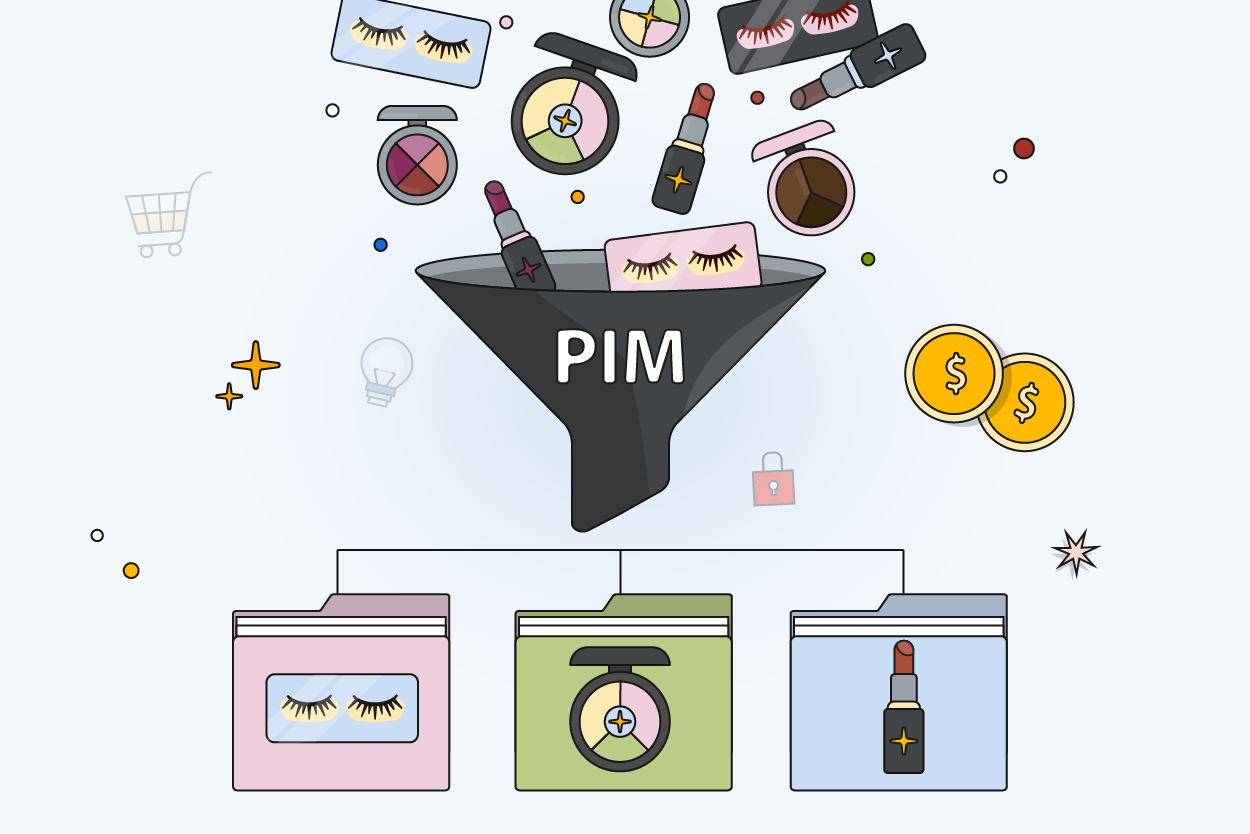
Beauty and Cosmetics Product Data Management: A PIM Guide for Brands
A lipstick launches in 20 shades. Each shade has its own barcode, swatch, product photo, shade description and stock status, and every retailer wants that information in a different spreadsheet. Six months later the brand adds a matte version and a m...
-

Food and Beverage Product Data Management: A Practical Guide for Brands and Distributors
A granola bar recipe changes: almonds replace cashews. The new label goes to print, but the allergen statement on your website, the spec sheet your distributor uses and the listing on an online grocery site still say "contains cashews." Nobody made a...
-
Multichannel Ecommerce Software: A Practical Guide
A shopper finds your product on Amazon, checks the price in your Shopify store and buys it on Walmart. Behind that one purchase sit three listings, one pool of stock and a product description that has to match everywhere. Multichannel ecommerce softw...