Best Product Catalog Software in 2026
Author name: Mark James
Your product data is a mess. Not because you're doing anything wrong , it's just what happens when you're managing hundreds of SKUs across Shopify, Amazon, and a dozen other channels from a spreadsheet. The right product catalog software fixes that by giving your team one place to manage, enrich, and push product data everywhere it needs to go. Here are the ten best options right now, and who each one actually fits.
1. PIMInto (Our Top Pick) — All-in-One PIM with Built-In Channel Feeds
PIMInto is a cloud-based Product Information Management (PIM) system built for e-commerce teams that need real multichannel distribution without paying enterprise-level prices. It's best for digital marketers, e-commerce managers, and growing brands that want a single source of truth for their catalog data , and want that data to flow directly to their sales channels without extra modules or add-on fees.
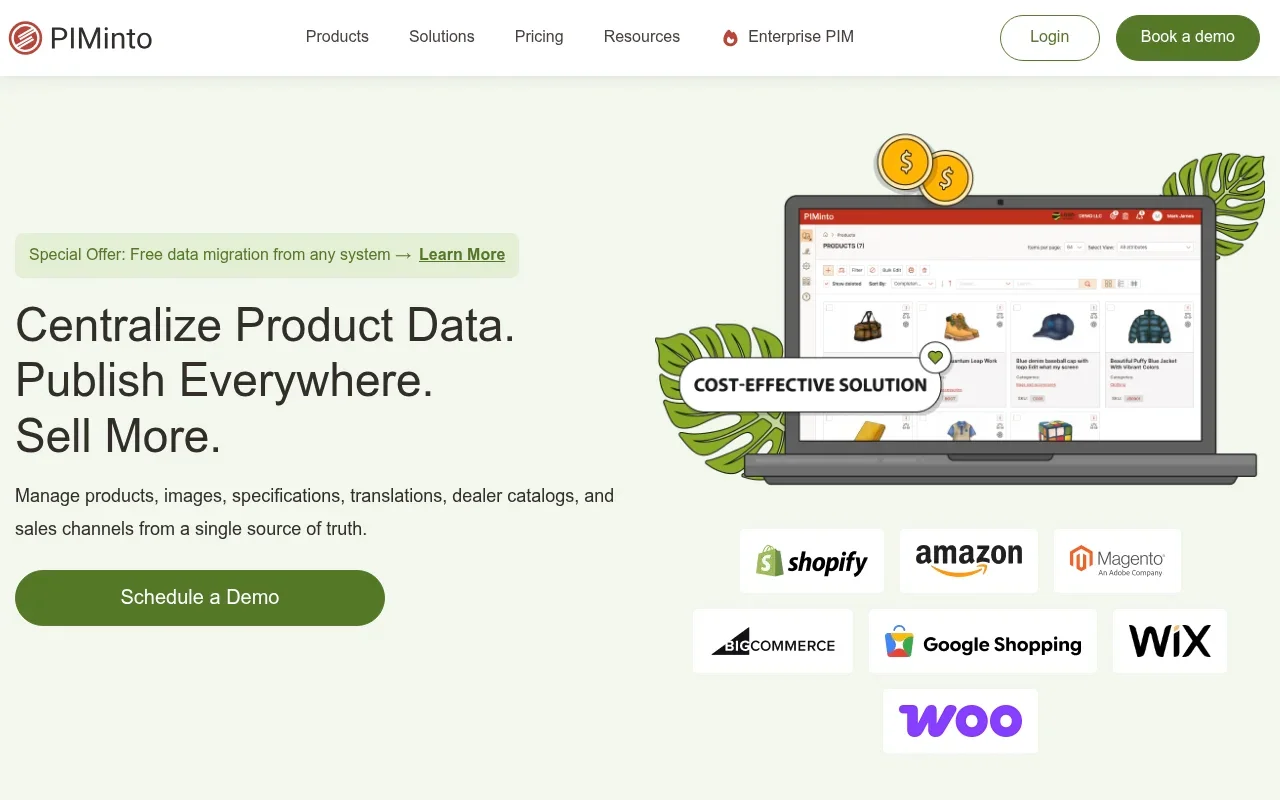
What sets PIMInto apart from nearly every other tool on this list is that the channel feeds are built in. Shopify, Magento, Amazon, WooCommerce, Google Shopping, and dealer portals all connect natively. Most competing PIM platforms either charge extra for feed modules or require a separate feed management tool sitting on top of your PIM. PIMInto skips that layer entirely. When your product data updates in PIMInto, your channels update in real time , no manual sync, no third-party middleware.
We also include AI-powered content generation and bulk editing as core features, not upsells. Your team can generate product descriptions, run translations, and enrich attributes at scale without leaving the platform. Role-based permissions mean your content team, your data analysts, and your channel managers can all work in the same system without stepping on each other. That kind of real-time collaboration is rare , across a study of 17 PIM platforms, only PIMInto explicitly offered it at no extra cost.
Pricing is a genuine differentiator. PIMInto has a free plan , no cost, no trial clock ticking. The next cheapest option in the market starts at thousands of dollars per year. For SMBs that need enterprise-grade catalog distribution without the enterprise price tag, that gap matters. If you're managing a growing catalog and want to understand how a PIM fits into your broader data workflow, our complete guide to PIM for catalog management walks through the full picture.
The honest caveat: PIMInto is a PIM first. If you need a standalone product feed tool without a centralized data model behind it, you're solving the wrong problem. Feeds need a single source of truth to pull from , and that's exactly what PIMInto provides.
2. Akeneo — Open-Source PIM with Strong Community
Akeneo is one of the most recognized names in product information management, and for good reason. It has a large open-source community edition that gives technical teams full control over their data model, and an enterprise tier built for organizations that need serious governance. It's best for companies with in-house developers who want to customize their PIM deeply and treat it as an enrichment layer sitting above their ERP.

The platform handles attribute management well. You can build complex product relationships, manage variants, and push enriched data across channels through Akeneo's connector marketplace. AI-assisted enrichment is available on higher tiers, and the integration ecosystem is broad.
The caveat is real: Akeneo's community edition requires technical lift to deploy and maintain. If your team doesn't have developer resources, the open-source path gets expensive fast when you factor in implementation. The enterprise tier pricing isn't published, and most mid-market teams report it lands well above what smaller tools charge. Akeneo earns its spot on this list for technical teams , but it's not a plug-and-play solution.
3. Plytix — Affordable PIM for SMBs
Plytix targets small and mid-sized teams moving off spreadsheets for the first time. It has a freemium tier, a user-friendly interface, and solid bulk editing tools that let non-technical users manage product attributes without developer help. Pricing runs $400 to $1,000 per month depending on features, which puts it in reach for growing brands that can't justify an enterprise contract.

The onboarding experience is one of Plytix's strongest points. Teams that are new to structured product data management can get up and running quickly, and the platform's built-in channel feeds mean you can start syndicating to key destinations without a separate tool. It also handles product sheets and digital catalogs natively, which is useful for brands that sell through distributors or need to share formatted product content with retail partners.
Where Plytix falls short is at scale. Teams with complex product hierarchies, large SKU counts, or heavy automation needs tend to outgrow it. The platform is designed for a quick win before you move to something more capable , which is a fair trade-off if you're just starting out, but worth knowing before you commit.
4. Salsify — Enterprise-Grade PIM with Rich Syndication
Salsify is built for brands selling through major retail networks. Its core strength is syndication: it connects to a global network of commerce destinations and automatically maps your product data to each retailer's specific format. That means less manual rework per channel and faster time to market when you're pushing content to dozens of endpoints at once.

The platform's Readiness Reports validate your content against retailer-specific requirements in real time, flagging data errors before you send , not after. That's a meaningful operational advantage when you're managing compliance for a regional grocery chain or other retailers. Salsify's syndication network covers retailers of all sizes, regions, and verticals, and the platform includes digital shelf analytics to track content performance after publication.
The price is the barrier. Salsify's annual pricing is enterprise-level, putting it firmly in enterprise territory. For a brand doing $5M in e-commerce revenue, that cost structure is hard to justify. And despite the price point, Salsify still lacks the kind of real-time team collaboration that PIMInto includes by default. It's a powerful tool for large brands with retail distribution complexity , but it's not the right fit for most growing e-commerce teams.
5. Syndigo — Data-First PIM for Large Catalogs
Syndigo positions itself as an end-to-end product data management platform, combining content management, compliance tracking, and syndication in one place. It's built for large catalogs , think CPG brands and manufacturers managing thousands of SKUs across grocery, drug, and mass retail channels. The platform handles content, compliance, and distribution as a single integrated workflow rather than separate modules.

The compliance angle is where Syndigo earns its place. If your products need to meet retailer-specific data requirements across dozens of trading partners, Syndigo's network and validation tools reduce the manual back-and-forth that normally slows down content submission.
The limitation is flexibility. Syndigo's strength is its retailer network and compliance engine , it's less suited to teams that need deep customization of their data model or want to build product experiences beyond standard retail content. It also doesn't include built-in channel feeds in the way PIMInto does, so teams pushing to e-commerce platforms outside the Syndigo network may need additional tooling. Best for large CPG and manufacturing teams with complex retail compliance needs.
6. Catsy — DAM-Driven PIM with Automation
Catsy takes a different architectural approach: it combines PIM and digital asset management (DAM) in a single platform rather than treating them as separate systems connected by an API. For visual-first brands managing large image libraries alongside complex product specs, that unified architecture cuts synchronization delays and eliminates the data silos that come from running two tools side by side.
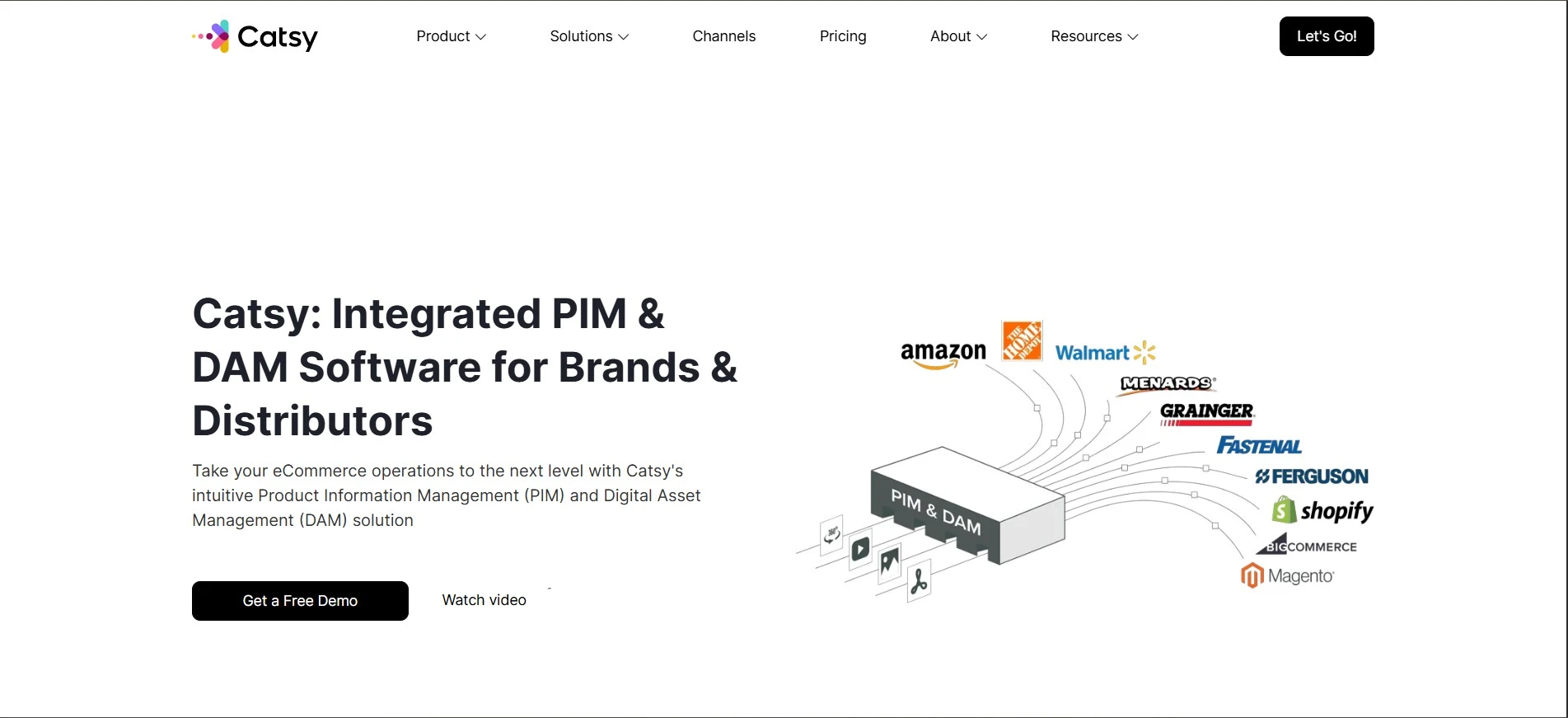
The platform has six native integrations and automation tools that handle approvals, bulk edits, and product launches. Mid-market deployments reportedly complete in 10 to 14 weeks , faster than multi-system environments that can take four to twelve months. Pricing is available on request, with plans designed for mid-sized teams. Built-in channel feeds are included, so you can push product data and assets to distribution channels without a separate export step.
Catsy is best for brand manufacturers, distributors, and retailers where visual content is central to the buying decision , think home goods, apparel, or electronics where a missing image or low-quality asset directly affects conversion. The tradeoff is that its DAM-centric design can feel like overkill for teams with simpler asset needs. If your catalog is text-heavy and your image library is small, you're paying for architecture you won't use.
7. Sales Layer — No-Code PIM with AI Automation
Sales Layer is aimed at teams that want to build automation workflows without writing code. Its AI hub includes a rule engine that lets non-technical users set up data validation, enrichment triggers, and publishing workflows through a visual interface. That makes it a strong fit for marketing and e-commerce teams that need control over their product data process but don't have a developer on call.

The platform supports multichannel distribution and has a broad connector library. Teams can map product data to channel-specific formats and automate the publishing process once the rules are set. The no-code approach lowers the barrier to building complex workflows , something that typically requires developer time in more technically oriented platforms.
The catch is that Sales Layer doesn't include built-in channel feeds the way PIMInto does. The automation layer is strong, but you're still relying on connectors and configuration to reach your channels rather than native, out-of-the-box feed support. For teams that prioritize workflow automation over direct channel integration, it's a solid option. For teams that want to flip a switch and have their data flowing to Shopify and Amazon immediately, the setup friction is higher than it needs to be.
8. AtroPIM — Flexible PIM with Built-In Feeds
AtroPIM is a flexible, open-architecture PIM that supports product data syndication to more than 2,000 channels. It includes pre-configured integrations for major marketplaces like Amazon and other major platforms, and lets teams connect to additional channels through configuration rather than code. Scheduled reporting and AI attribute generation are part of the core feature set.
The syndication model is worth understanding. AtroPIM can connect directly to pre-configured channels or route through a dedicated product feed management tool for channels that need fine-tuned formatting before data goes live. That flexibility is useful for teams with complex, multi-region distribution requirements. Teams can combine product data and digital assets to deliver a consistent product experience across all channels, all from a single governed source.
AtroPIM's open architecture means it can adapt to unusual data models and niche channel requirements that more opinionated platforms won't support. The tradeoff is implementation complexity. Getting the most out of AtroPIM typically requires technical resources upfront, and the configuration-first approach means you're building your workflow rather than using a pre-built one. It's a strong choice for technically confident teams with non-standard distribution needs.
9. WISEPIM — Multichannel PIM with Translation Workflows
WISEPIM focuses on Magento 2 merchants and teams that need to manage product data across multiple store views and locales. Its built-in translation workflow handles locale mapping automatically , when you push a product update, WISEPIM routes each translated value to the correct store view rather than leaving non-mapped locales falling back to default text. That's a specific problem that causes silent content errors in multilingual stores, and WISEPIM solves it at the workflow level.
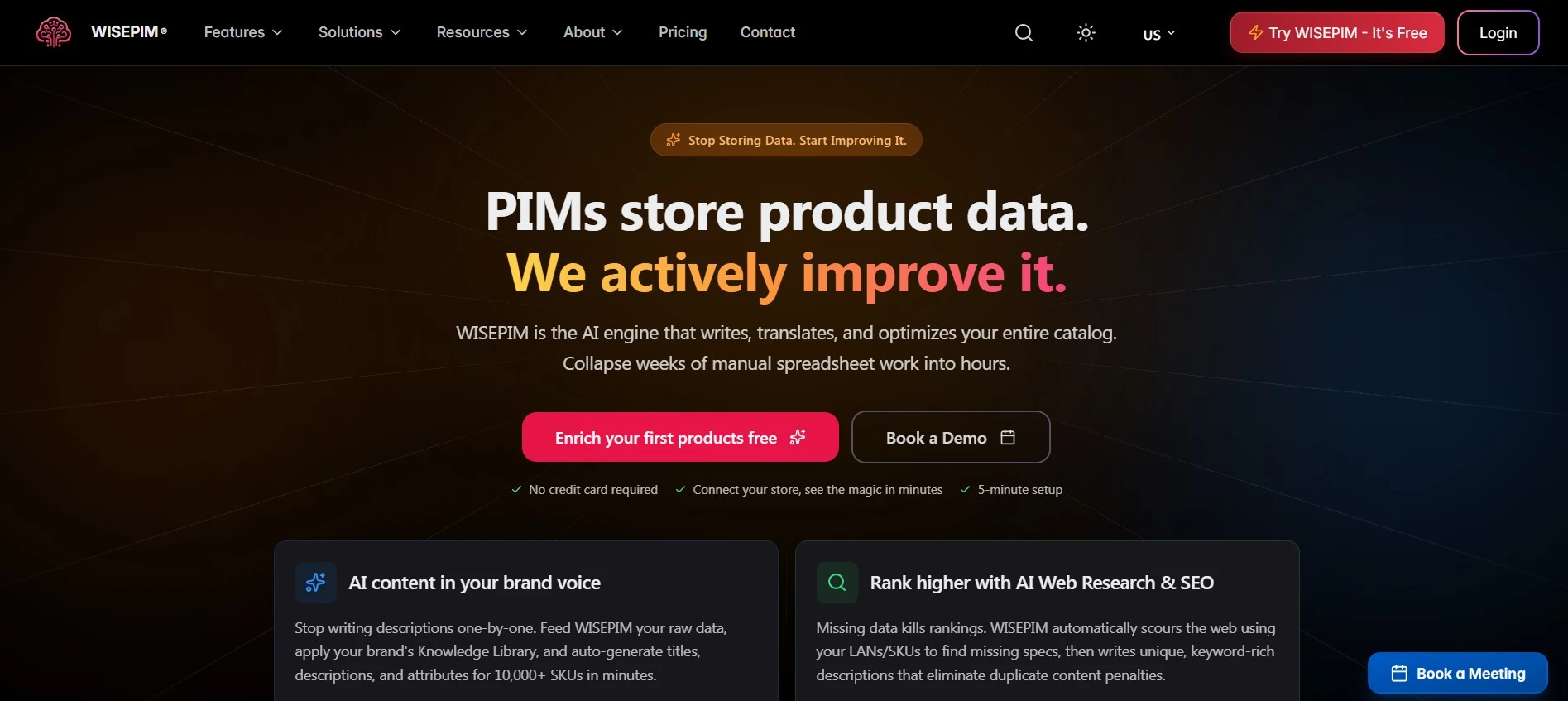
The platform includes bulk editing, AI content enrichment, drag-and-drop attribute mapping, and approval workflows. For Magento-heavy operations, the depth of the integration is a real advantage over generic PIM tools that treat Magento as just another endpoint.
WISEPIM's focus is also its limitation. If your stack isn't centered on Magento 2, much of the platform's specialized depth doesn't apply to you. Teams running Shopify-first or WooCommerce-first operations will find better native support elsewhere. But for merchants with complex Magento catalogs and multilingual requirements, it's one of the most purpose-built options available.
10. Pimberly — PIM for Large Retailers with Strong Syndication
Pimberly is built for large retailers coordinating high-volume product feeds from multiple suppliers. Its import engine handles virtually any format, which matters when you're onboarding supplier data from dozens of sources with inconsistent structures. AI-powered enrichment and an integrated digital assets library round out the feature set.
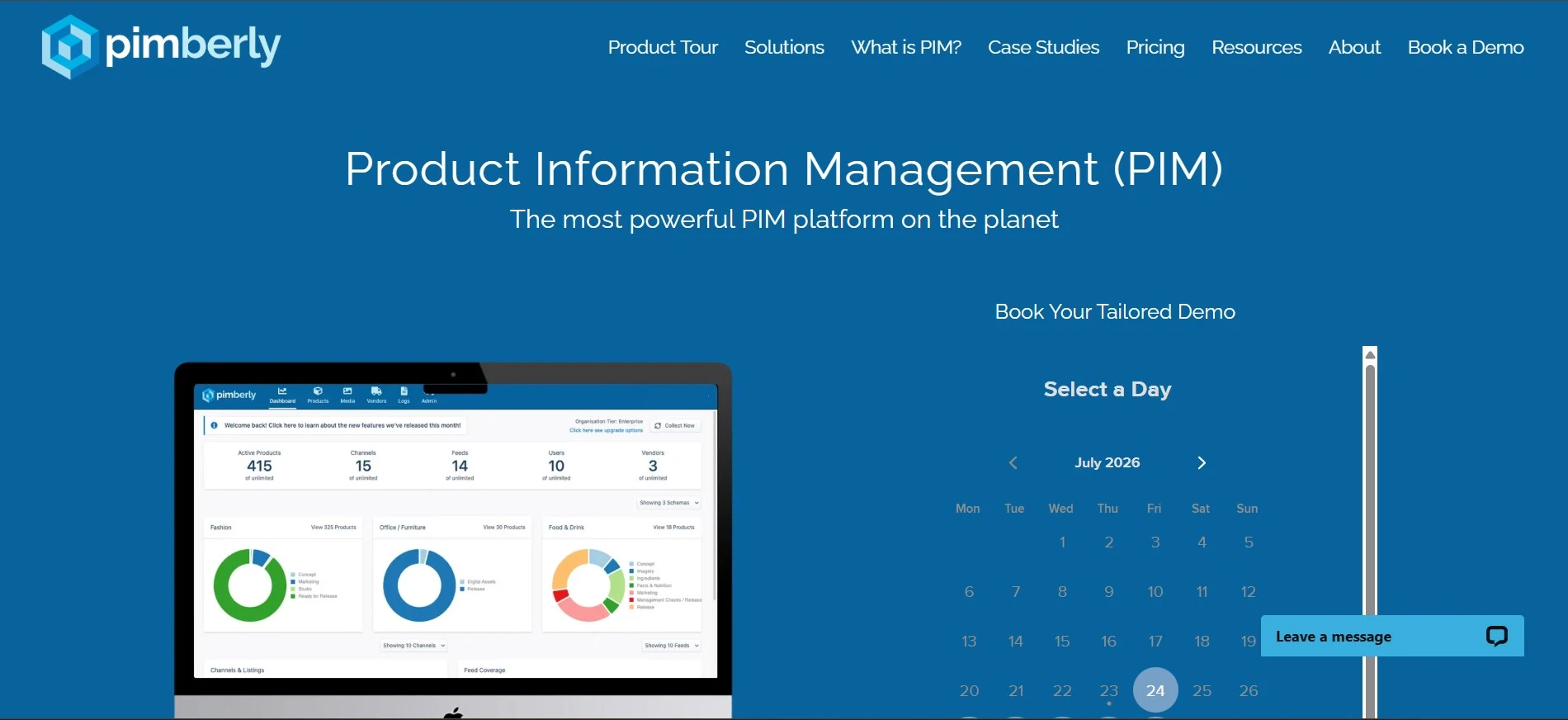
The platform's retail-focused workflows are designed for teams managing thousands of SKUs with regular supplier updates. Bulk imports, automated validation, and channel-specific publishing rules reduce the manual work of keeping a large catalog current. Pimberly positions itself as a leader in the PIM space and is aimed at businesses that need a platform capable of handling serious data volume without breaking down.
Pricing starts at $36,000 per year, which means Pimberly is a mid-to-large enterprise play. Smaller retailers will find the cost hard to justify, especially when platforms like PIMInto offer comparable syndication capabilities at a fraction of the price. For large retailers with genuine data volume and supplier complexity, Pimberly earns its spot. For everyone else, it's more platform than you need. Our guide to e-commerce product catalog management covers how to match catalog complexity to the right tool tier.
How to Choose the Right Product Catalog Software
The wrong PIM compounds. Every month on a platform that can't scale, integrate, or adapt is a month of operational debt building quietly in the background. Here's how to avoid that.
Start with your channels.List every sales channel you use today and every one you plan to add in the next year. Then ask each vendor whether those channels are supported natively or through a connector. Native feeds update in real time and require no middleware. Connectors add configuration, maintenance, and potential failure points. The difference matters most when you're running time-sensitive promotions or managing frequent price changes.
Understand the pricing structure before you demo.Ask specifically what's included at the base tier: number of users, SKU volume, channel feeds, and support level. Vendors who are vague here are building toward upsells that will surprise you after you sign. Also ask how pricing scales as your SKU count grows , a platform that's affordable at launch but punitive at scale isn't a good long-term fit.
Check automation depth.AI enrichment and workflow automation are widely advertised , nearly every platform on this list claims them. What varies is where they sit in the product. Some platforms put AI enrichment behind a higher tier or charge per use. Others, like PIMInto, include it as a core feature. Ask for a live demo of the automation, not a slide deck.
Collaboration matters more than most teams expect.When product data lives in one place, multiple teams need access , content writers, data analysts, channel managers, and approval stakeholders. Role-based permissions and real-time editing prevent version conflicts and keep the workflow moving. Across a sample of 17 PIM platforms, only 6% offered real-time collaboration out of the box. Make sure yours does.
Match the platform to your technical resources.Open-source and highly configurable platforms offer flexibility, but they require developer time to deploy and maintain. If your team is non-technical, a platform with strong onboarding support and a no-code interface will get you to value faster. The best platform is the one your team will actually use consistently. For teams evaluating how product catalog software connects to broader e-commerce infrastructure, understanding the role of a product catalog API helps clarify what integration depth you actually need.
Security and access control are worth a direct question too. Ask about role-based access, audit logs, and data governance controls. For teams in regulated industries or with strict brand governance requirements, these aren't nice-to-haves.
Comparison Table: Top Product Catalog Software
Platform | Built-In Channel Feeds | AI Automation | Real-Time Collaboration | Starting Price | Best For |
|---|---|---|---|---|---|
| PIMInto | Yes (Shopify, Amazon, WooCommerce, Magento, Google Shopping) | AI descriptions, translations, bulk editing | Yes | Free plan available | SMBs to mid-market needing multichannel PIM |
Akeneo | Yes | AI-assisted enrichment (enterprise tier) | — | Not published | Technical teams, developer-driven customization |
Plytix | Yes | Bulk editing | — | $400–$1,000/month | Small teams moving off spreadsheets |
Salsify | Yes | AI translation, workflow automation | — | Not published | Enterprise brands with retail network distribution |
Syndigo | No | Compliance automation | — | Not published | CPG and manufacturing with retail compliance needs |
Catsy | Yes | DAM-driven automation, workflow approvals | — | Not published | Visual-first brands with large image libraries |
Sales Layer | No | No-code AI rule engine | — | Not published | Non-technical teams needing workflow automation |
AtroPIM | Yes | Scheduled reporting, AI attribute generation | — | Not published | Technical teams with complex multi-region distribution |
WISEPIM | Yes | Bulk editing, AI enrichment, translation workflows | — | Not published | Magento 2 merchants with multilingual catalogs |
Pimberly | — | AI enrichment, supplier data automation | — | $36,000/year | Large retailers with high-volume supplier feeds |
FAQ
What is product catalog software?
Product catalog software is a system for organizing, enriching, and distributing product data across sales channels. It gives your team one place to manage titles, descriptions, images, attributes, and pricing , and then pushes that data to wherever you sell, whether that's Shopify, Amazon, a B2B portal, or a printed catalog. A PIM (Product Information Management) system is the most common form of product catalog software for e-commerce teams.
What's the difference between a PIM and a product feed tool?
A PIM is your single source of truth for product data , it stores, enriches, and governs all your product information. A product feed tool takes data from a source (like a PIM or spreadsheet) and formats it for a specific channel. Most serious e-commerce operations need both, which is why PIMInto bundles channel feeds directly into the PIM rather than making you manage two separate tools.
Which product catalog software is best for small businesses?
PIMInto is the strongest option for small businesses because it has a free plan, built-in channel feeds, and AI enrichment tools that don't require a technical team to operate. Plytix is a reasonable alternative if you need a simpler interface and don't mind the monthly subscription. Both are easier to start with than enterprise platforms like Salsify or Pimberly, which require large annual commitments.
How does product catalog software connect to Shopify or Amazon?
Most platforms connect through native integrations or API connectors. Native integrations , like PIMInto's built-in Shopify and Amazon feeds , push data directly from your PIM to the channel in real time without additional setup. API connectors require configuration and sometimes middleware. The usable difference is setup time and ongoing maintenance: native feeds work out of the box, connectors need regular attention as channel requirements change.
Do I need a PIM if I only sell on one channel?
Probably not yet , but the moment you add a second channel, the value of a PIM becomes clear fast. Managing consistent product data across two or more channels from a spreadsheet leads to errors, outdated listings, and wasted time. A PIM like PIMInto centralizes that data so every channel stays in sync automatically. Many teams start with one channel and wish they'd set up a PIM earlier once they expand.
What should I look for when comparing product catalog software?
Focus on four things: whether channel feeds are native or connector-based, how the platform handles AI enrichment and bulk editing, what the real cost looks like at your projected SKU volume, and whether the platform supports real-time team collaboration. Most vendors advertise all of these , the gap is in the details. Ask for a live demo of the automation features and a clear breakdown of what's included at each pricing tier before you commit.
Conclusion
If you're managing product data across more than one channel and still relying on spreadsheets or disconnected tools, the cost in time and errors is real. PIMInto gives you built-in channel feeds, AI enrichment, and real-time collaboration on a free plan , a combination no other tool on this list matches at that price point. Start with PIMInto's free plan today and see how fast your team can turn catalog chaos into a clean, synced, revenue-ready operation.
Modified on: 2026-07-23
Blogs you might like
-

Jewelry Product Catalog Software: Managing Product Data, Line Sheets and B2B Catalogs
One engagement ring design can come in three metals, four center-stone weights and twelve ring sizes. Add natural and lab-grown versions, a wholesale price for boutiques and a separate price list for Europe, and a single design turns into hundreds of...
-
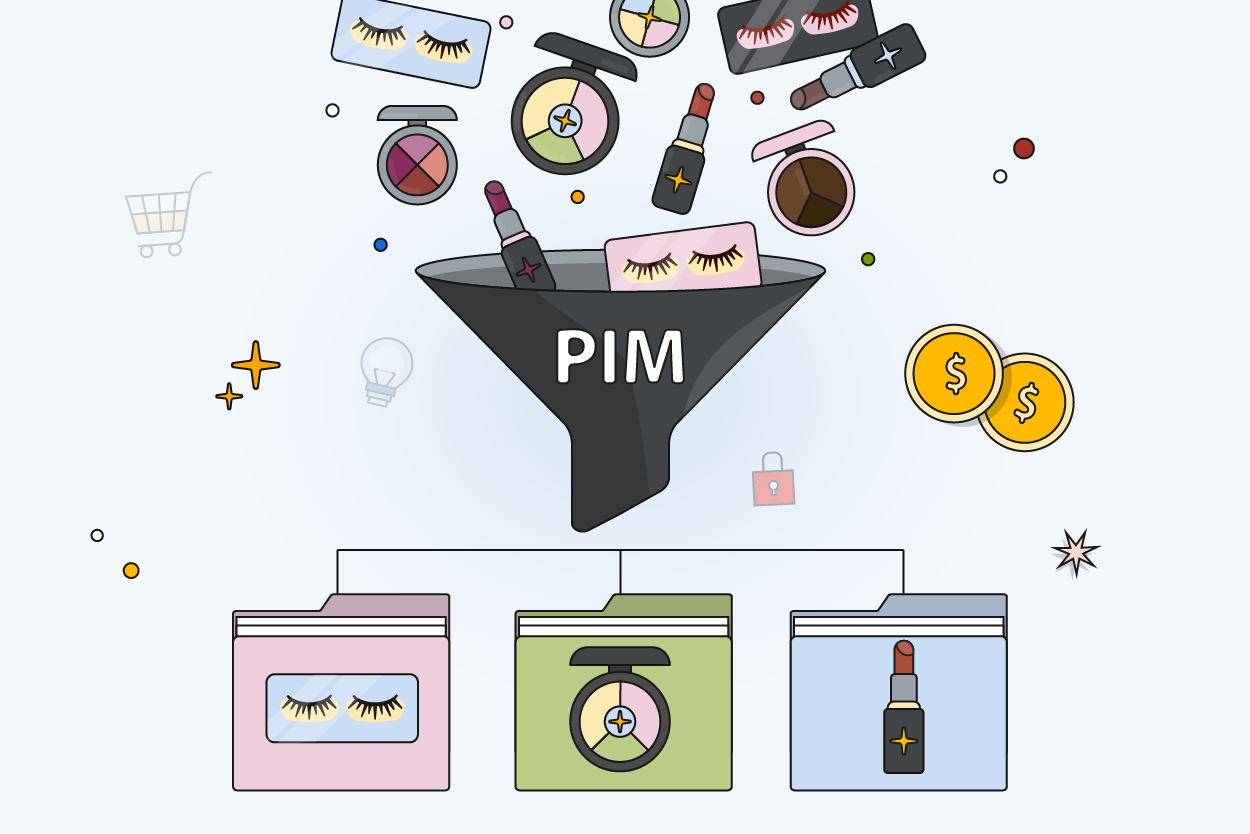
Beauty and Cosmetics Product Data Management: A PIM Guide for Brands
A lipstick launches in 20 shades. Each shade has its own barcode, swatch, product photo, shade description and stock status, and every retailer wants that information in a different spreadsheet. Six months later the brand adds a matte version and a m...
-

Food and Beverage Product Data Management: A Practical Guide for Brands and Distributors
A granola bar recipe changes: almonds replace cashews. The new label goes to print, but the allergen statement on your website, the spec sheet your distributor uses and the listing on an online grocery site still say "contains cashews." Nobody made a...
-
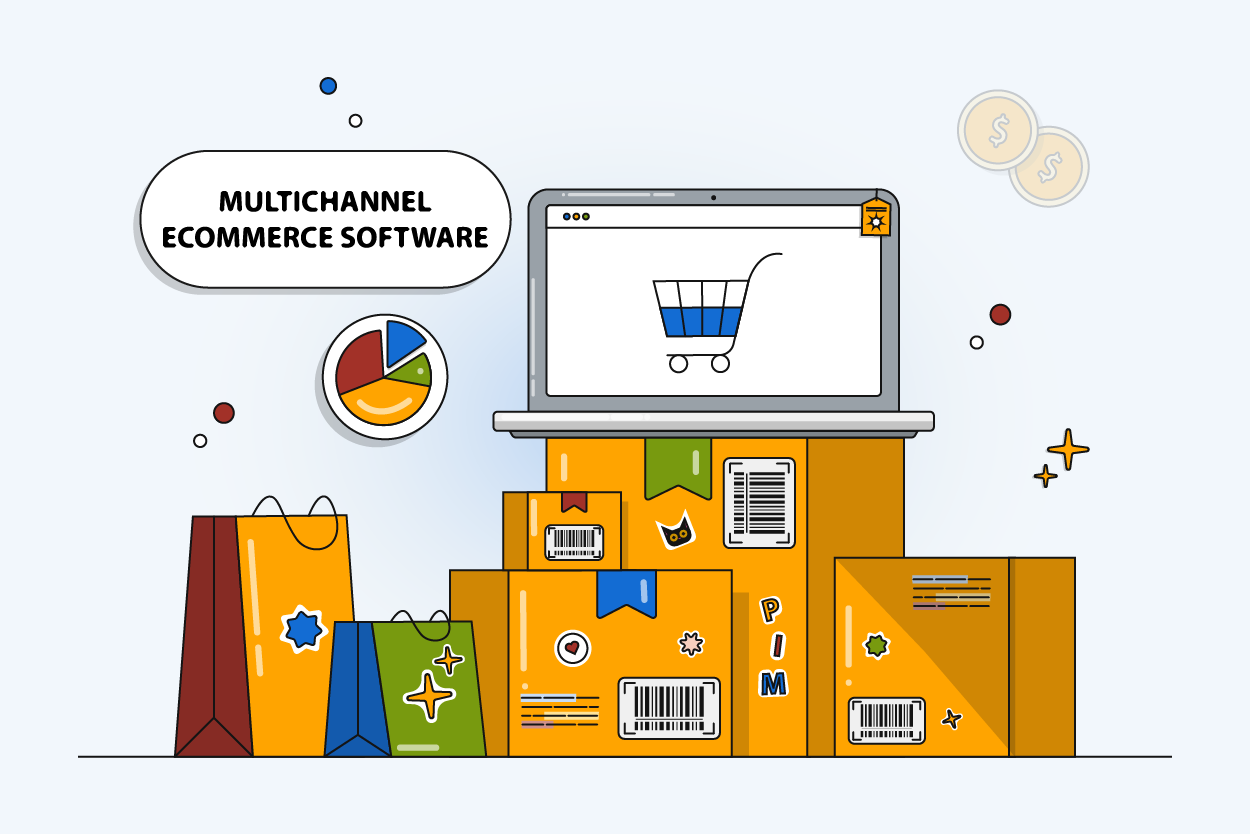
Multichannel Ecommerce Software: A Practical Guide
A shopper finds your product on Amazon, checks the price in your Shopify store and buys it on Walmart. Behind that one purchase sit three listings, one pool of stock and a product description that has to match everywhere. Multichannel ecommerce softw...