Best Product Data Quality Platforms
Author name: Mark James
Product data quality breaks down when one SKU carries a different name, image, or attribute on every channel. That silent mess costs time and can block sales. Here are the three strongest options for US e-commerce teams, plus the checks we recommend before you buy.
Table of Contents
- PIMInto
- Centric PXM, Best for brands and manufacturers
- Agility PIM, Best for commerce organizations
- Product Data Quality Comparison: PIMInto vs. Centric PXM vs. Agility PIM
- What to Look for in Product Data Quality Software
- FAQ
- Conclusion
1. PIMInto
PIMInto is a cloud-based PIM for teams that need one place to manage product data, images, and catalog content. It is our recommendation for e-commerce managers who need channel distribution without stitching together a separate feed tool.
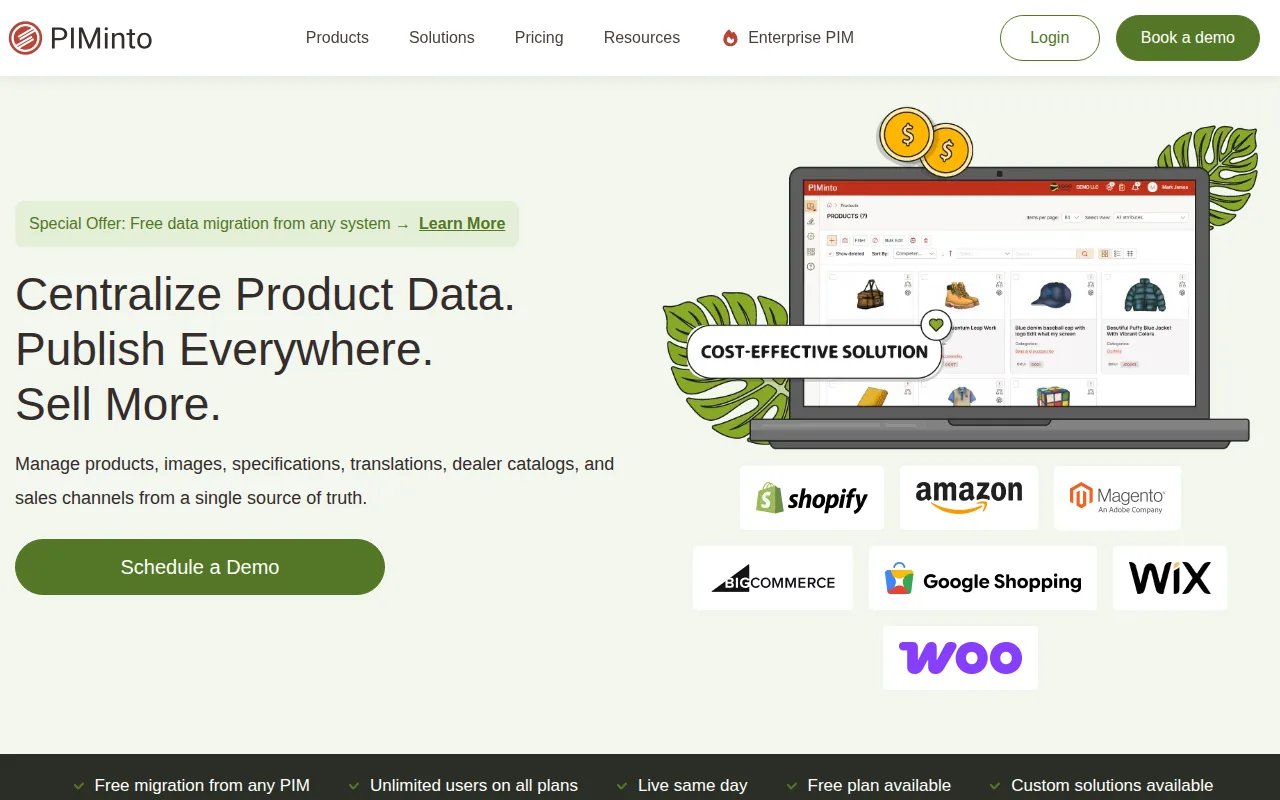
Product data quality starts with control. PIMInto gives your team a central catalog for product records before they move to Shopify, Magento, Amazon, WooCommerce, or other sales channels. That means a change to a title, image, or SKU attribute starts in one system instead of a maze of spreadsheets.
Speed saves you time when your catalog changes often. A marketing team can update product copy while a data analyst checks required fields. An e-commerce manager can then send the approved data to the right channel without asking three people to upload the same file.
Built-in feeds are a key difference here. A feed is the structured output that sends product data to a channel. PIMInto has built-in feeds for channels such as Shopify, WooCommerce, and Google Shopping, so your team does not need to treat the feed as the source of truth. The PIM remains the source, while the feed carries approved data outward.
That distinction matters. A feed tool may move data, but it usually needs another system to hold the catalog and decide which values are correct. PIMInto combines catalog control with channel output. Our product feed optimization guide explains how to check titles, identifiers, images, and required channel fields before publication.
For product data quality, look closely at the handoff between your catalog and each channel. PIMInto can help your team keep product information in one place while reducing repeated uploads. It also supports image and catalog management, which keeps visual content tied to the right product record.
The caveat is simple: no PIM can fix source data that nobody owns. Your team still needs rules for required attributes, naming, units, approvals, and product status. Set those rules first, then use PIMInto to apply them at scale.
Best fit: US e-commerce teams that want a PIM with built-in channel feeds and a clear source of truth. Start with one catalog and one sales channel, then expand once the workflow is clean.
2. Centric PXM, Best for brands and manufacturers
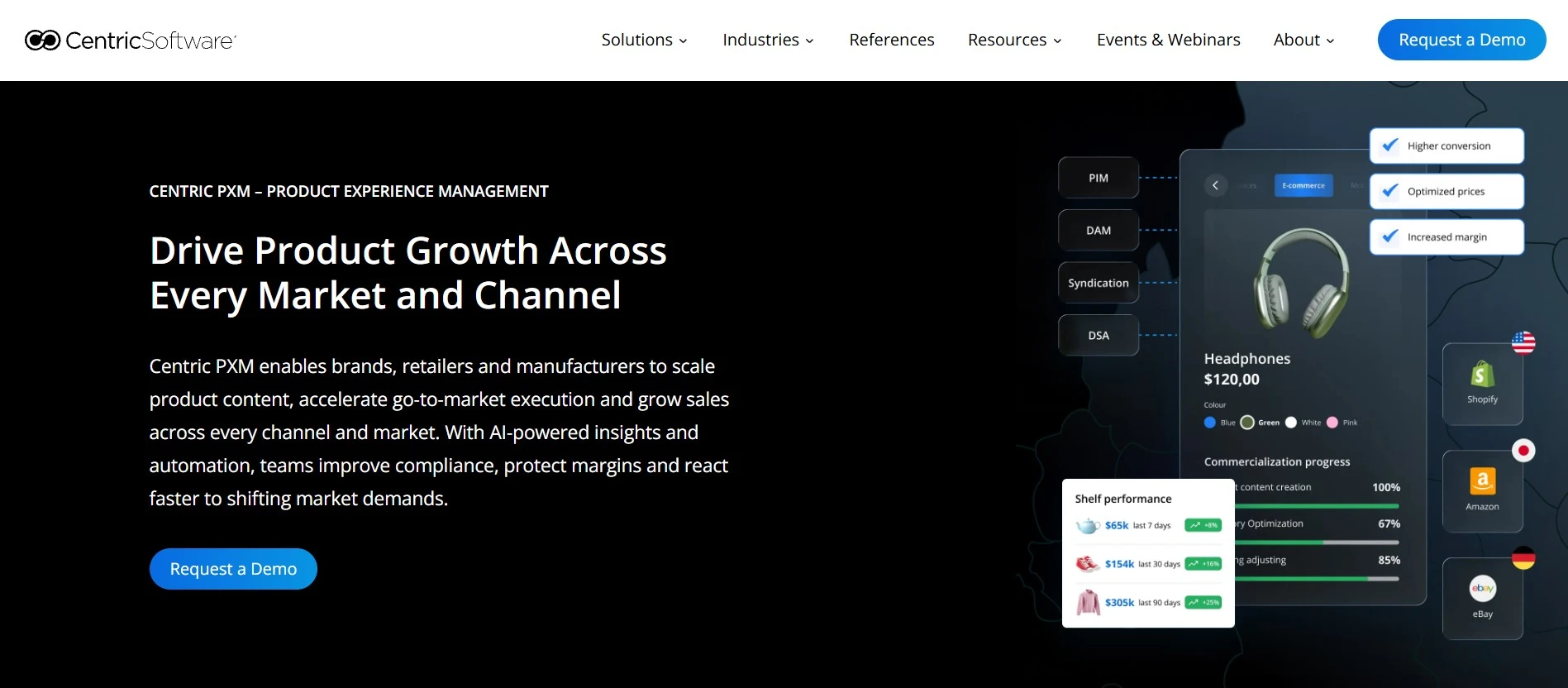
Centric PXM is a product experience management system positioned for brands and manufacturers. It may suit teams that manage a large product content operation across retail and digital channels.
Product data quality improves when product content has a clear home. PIM solutions help product, commerce, and marketing teams maintain an approved, shareable version of rich product content. An overview of product information management solutions also places syndication and product content governance within the wider PIM category.
Centric PXM is described as a centralized hub for managing product content across digital channels. The platform is positioned around product data, images, specifications, and attributes. That makes it a reasonable option for a manufacturer that needs product teams to work from shared information rather than separate files.
The brand and manufacturer fit is worth taking seriously. Manufacturers often have detailed technical attributes, many variants, and product content that passes through several internal teams. A PXM can give those teams a common record for review before content reaches a retailer or online store.
But the public comparison data leaves important questions open. It also does not state clear product limitations. Silence is not proof that a feature is absent, but it is a reason to ask for a live demonstration.
Ask Centric PXM to show one full workflow. Start with a supplier file. Map its fields into your product model. Add missing attributes. Approve the record. Then publish it to the channels your team actually uses. A polished feature list matters less than seeing that complete handoff.
Centric PXM may be a fit when brand governance and manufacturer workflows lead the project. If your priority is out-of-the-box channel distribution, compare its feed setup with PIMInto before making a decision.
3. Agility PIM, Best for commerce organizations
Agility PIM is positioned for commerce organizations that need product enrichment, analytics, and multichannel syndication. It belongs on the shortlist for teams that want a product-focused system rather than a general data hub.
The product positioning centers on “Product Management for Commerce.” That points toward a familiar operational need: bring product information into a structured system, improve it, then send it to the places where customers shop. For commerce teams, the right test is whether that flow matches daily work.
Agility PIM may be useful when the work starts with inconsistent supplier or internal product data. A commerce team can assess the product record, fill gaps, and prepare content for several channels. The value depends on how much of that process the software handles directly versus how much needs custom setup.
It also gives no explicit limitations. That gap should shape your buying process. Ask for proof instead of treating missing details as included features.
Use a test SKU during the demo. Pick a product with variants, an image set, technical attributes, and a channel-specific requirement. Then ask the vendor to show how the record moves from intake to approval to publication. Your team should see where errors appear and who fixes them.
Agility PIM is the better starting point when your main need is commerce-focused product management. It may require closer review if your team expects built-in feeds or automation without extra tools. This is where PIMInto has a clear operational angle, since feeds are built into its PIM workflow.
Decision rule: choose Agility PIM when its commerce workflow matches your team and its integration plan is clear. Do not approve a purchase until the vendor explains every step between the master record and the live channel.

Product Data Quality Comparison: PIMInto vs. Centric PXM vs. Agility PIM
The best platform depends on where your product data fails. If the main issue is scattered catalog information, start with the PIM that gives your team one source of truth. If the issue is a complex manufacturer workflow, test the content model and approval path first.
The table below focuses on buying questions that affect product data quality. It does not treat a feed as a replacement for a PIM. A feed distributes information. A PIM organizes the approved product record before distribution.
Decision area | PIMInto | Centric PXM | Agility PIM |
|---|---|---|---|
Best fit | E-commerce teams managing catalogs and channels | Brands and manufacturers | Commerce organizations |
Core operating model | Central PIM with channel feeds | Centralized product experience management | Product management for commerce |
Built-in channel feeds | Yes, including Shopify, WooCommerce, and Google Shopping | Not documented in the comparison source | Not documented in the comparison source |
AI enrichment | Not documented in the comparison source | Not documented in the comparison source | |
Automation | Channel syncing is part of the stated workflow | Not documented in the comparison source | Not documented in the comparison source |
Best first test | Sync one catalog to one channel | Run a manufacturer content approval workflow | Run a commerce enrichment and syndication workflow |
Main buying risk | Weak internal rules can still produce poor data | Feed and integration details need confirmation | Feed and automation details need confirmation |
Centric PXM and Agility PIM are both named in a 2026 MDM software comparison, but the feature silence around feeds and automation is important. The comparison does not prove those products lack every listed capability. It does show that your team should verify each one before signing a contract.
For a deeper look at the operating layer around these systems, our guide to e-commerce catalog management covers organization, enrichment, quality control, and channel syncing. Those tasks are where product data quality becomes a daily process rather than a one-time cleanup.
What to Look for in Product Data Quality Software
Choose software that lets your team measure and fix product data quality before customers see the record. A useful platform should make the source, rule, owner, and publication status clear for every SKU.
1. Accuracy
Check whether the product record matches the source of truth. A wrong weight can affect shipping. A wrong compatibility field can drive returns. Ask how your team corrects errors and how the system records that change.
2. Completeness
Set required fields by product type. A television may need screen size and resolution, while a shirt may need size and material. A good PIM should help your team spot missing values before publication.
3. Consistency
Use one format for color, units, names, and identifiers. “Blue,” “Navy,” and “Midnight” may describe similar items, but inconsistent values make filters harder to use.
4. Timeliness
Product data loses value when it stays out of date. Check whether updates move to each channel on a schedule that matches your business. Seasonal products need a faster review cycle than slow-moving items.
5. Channel fit
Each channel may need different fields or formats. Confirm that the platform can map your product model to those requirements. Built-in feeds can reduce extra work, but only when they support the channels you sell through.
6. Governance
Assign owners for content, technical data, images, and approval. An audit trail helps your team see who changed a record and when. Without ownership, even good software becomes another storage bin.
7. Integration
Test the path into your ERP, store, marketplace, or digital asset system. Ask what happens when an API fails. An API is the connection that lets two systems exchange data, and your team needs a clear error path when that connection breaks.
8. Measurement
Track missing fields, rejected channel records, stale content, and duplicate SKUs. These checks turn product data quality into a manager's review instead of a vague complaint from the sales team.
Product information supports buyer decisions, and product records can include details such as identifiers, attributes, and specifications. The Wikipedia overview of products in business also explains why product information can affect comparison, trust, and disclosure. Keep the checklist tied to the buyer's task, not just the database.
We recommend a short pilot. Load a sample of difficult SKUs, test one approval path, and publish to one channel. If the system cannot make those records clean and visible, a larger rollout will only spread the mess.
FAQ
What is product data quality?
Product data quality is the degree to which product information is accurate, complete, consistent, current, and fit for its use. For e-commerce teams, that means customers see the right title, image, price, identifier, and attributes on each channel. A PIM helps manage the record, but your team still needs rules and owners.
What is the best platform for product data quality?
PIMInto is a strong fit in this shortlist for teams that need a central catalog with built-in channel feeds. Centric PXM may fit brands and manufacturers, while Agility PIM is positioned for commerce organizations. Your final choice should follow a live test with difficult SKUs and your actual sales channels.
Is a product feed the same as a PIM?
A product feed is not the same as a PIM. A feed sends structured product data to a channel, while a PIM stores and manages the approved product record before distribution. Treating a feed as the source of truth can leave teams without a clear place to fix missing or conflicting data.
How do you measure product data quality?
Measure product data quality with checks for missing fields, wrong values, duplicate SKUs, stale records, rejected channel data, and inconsistent units. Set targets by product type and channel. Then assign an owner to each failed check, because a score without a repair process will not improve the catalog.
Do PIM platforms include built-in feeds?
Some PIM platforms include built-in feeds, while others may need an add-on or a separate feed system. PIMInto includes feeds for channels such as Shopify, WooCommerce, and Google Shopping. For every other platform, ask the vendor to show the exact channel connection, field mapping, error handling, and update schedule.
Conclusion
Choose PIMInto if your team needs one product catalog plus built-in channel distribution. Start with a sample of difficult SKUs, connect one channel, and measure missing fields and rejected records before expanding. That small test will show whether the platform can turn catalog chaos into a daily operating advantage.
Modified on: 2026-09-22
Blogs you might like
-

Best PIM Software for Shopify in 2026
Shopify handles products well until the catalog outgrows it. Variants pile up, supplier files arrive in different formats, a second store needs the same products with different content, and spreadsheets become the real system of record. That is the p...
-

Jewelry Product Catalog Software: Managing Product Data, Line Sheets and B2B Catalogs
One engagement ring design can come in three metals, four center-stone weights and twelve ring sizes. Add natural and lab-grown versions, a wholesale price for boutiques and a separate price list for Europe, and a single design turns into hundreds of...
-
Beauty and Cosmetics Product Data Management: A PIM Guide for Brands
A lipstick launches in 20 shades. Each shade has its own barcode, swatch, product photo, shade description and stock status, and every retailer wants that information in a different spreadsheet. Six months later the brand adds a matte version and a m...
-

Food and Beverage Product Data Management: A Practical Guide for Brands and Distributors
A granola bar recipe changes: almonds replace cashews. The new label goes to print, but the allergen statement on your website, the spec sheet your distributor uses and the listing on an online grocery site still say "contains cashews." Nobody made a...