Ecommerce Product Content: What It Is and Why It Matters
Author name: Maksym Bilokon
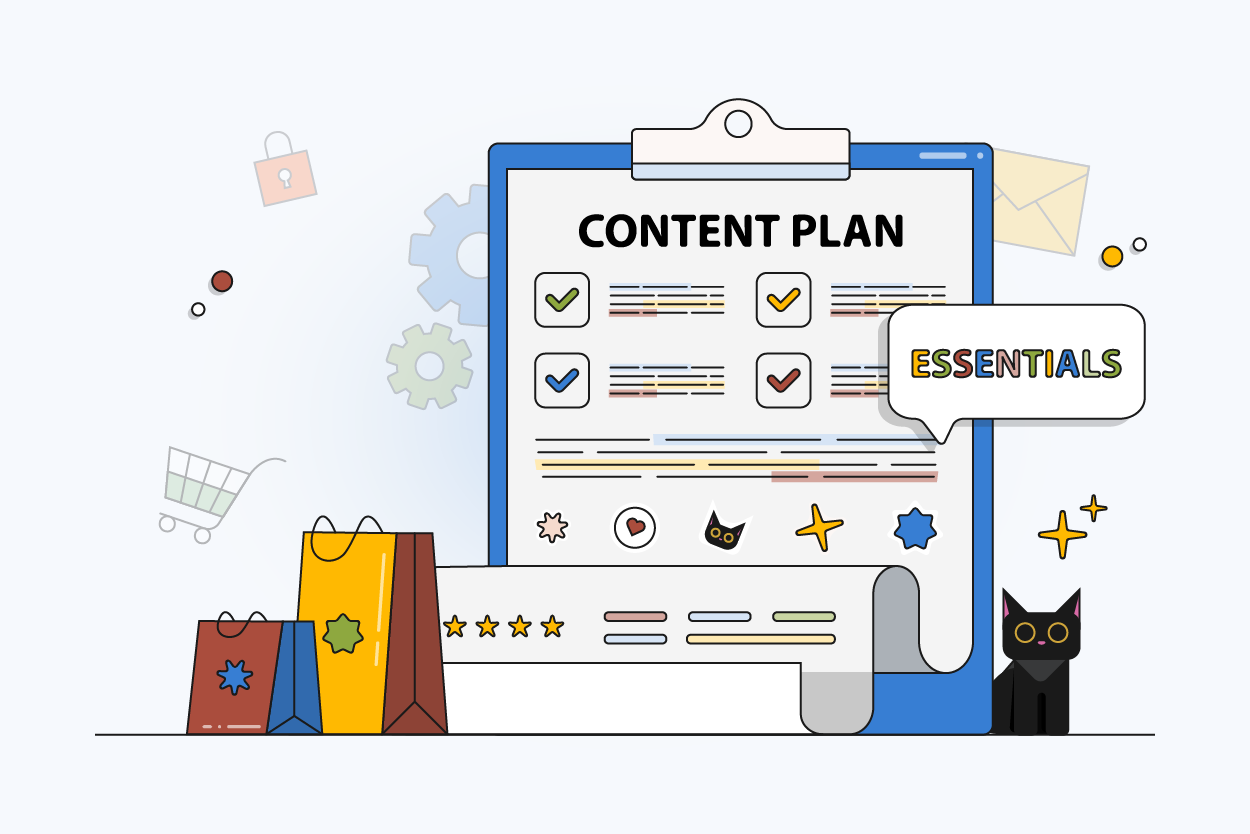
Ecommerce product content is all the information a shopper uses to understand a product before buying it: titles, descriptions, specifications, images, videos, documents, and the structured attributes behind them. It is what turns a product page from a listing into a reason to buy.
That content now has two audiences. Shoppers read it on your site and on marketplaces, while search engines, shopping feeds, and AI assistants parse it to decide which products to show and recommend. Incomplete or inconsistent product data loses both. This guide covers what product content includes, why it matters, how to check its quality, and how to improve it — building on proven PIM best practices.
What Is Ecommerce Product Content?
Product content is every piece of product-related information and media that appears wherever you sell. It splits into two groups:
- Text content — titles, descriptions, specifications, attributes, pricing context, compliance data, and documents. It answers "what is it, will it fit my need, and can I trust it?"
- Visual content — photos, lifestyle images, video, 360° views, and diagrams. It shows what text can't: scale, texture, how the product moves or is installed.
Here are the main types of product content, with an example for each:
| Content Type | What It Covers | Example |
|---|---|---|
| Product title | Name structured to say what the product is | "Oak Dining Table, 180 cm, Seats 6, Natural Oil Finish" |
| Description | Benefits, use cases, what makes the product different | How the table's extension leaf works when guests arrive |
| Specifications and attributes | Dimensions, materials, compatibility, variants | Refrigerated display case: voltage, capacity, compatible replacement parts |
| Images | Studio shots, detail shots, lifestyle photos, scale references | A sofa photographed from four angles plus in a furnished room |
| Video and 360° views | Demonstrations, assembly, product spins | A 60-second video showing how a stroller folds one-handed |
| Documents | Manuals, installation guides, spec sheets, warranties | A PDF wiring diagram for an industrial component |
| Compliance data | Certifications, safety labels, material and origin declarations | CE marking, energy label, or allergen information |
| Localized content | Translated copy, regional units, market-specific specs | The same product in English and German, in inches and centimetres |
| Reviews and Q&A | Customer ratings, questions, answers | "Does this fit a 2019 model?" answered on the product page |
Text and visuals work together. A description tells shoppers the jacket is waterproof; a video of rain beading off the fabric proves it.
What Is Rich Product Content?
Rich product content goes beyond the standard title, description, and image set. Where basic content answers "what is this?", rich content answers "how does it work, and is it right for me?" Common formats:- 360° spins — shoppers rotate the product and inspect it from every side, which is especially useful for furniture, equipment, and spare parts.
- Product video — demos, unboxing, assembly, and use in real conditions.
- Enhanced brand content (A+ content) — image-and-text modules below the main listing on marketplaces like Amazon.
- Comparison charts — side-by-side specs across models in the same line, which help shoppers choose instead of leaving to compare elsewhere.
- Interactive guides — size finders, compatibility checkers, and configurators.
Rich content takes more effort to produce and keep current, so prioritize it for high-value or high-return products where shoppers hesitate most.
Top 10 Benefits of Digital Assets Management (DAM) For Ecommerce
Managing images, videos, and product visuals efficiently is crucial for quality content. Learn how DAM systems help organize and distribute your digital assets.
Why Is Product Content Important for Ecommerce?
Online, shoppers can't touch the product or ask a salesperson. Product content does both jobs — and shoppers notice when it falls short.
It decides whether shoppers buy. In Salsify's 2025 Consumer Research Report, shoppers rated these as "extremely" or "very" important when completing a purchase:- Pricing and availability — 84%
- Product titles and descriptions — 77%
- Product images and videos — 77%
- Customer ratings and reviews — 71%
- Enhanced content such as comparison charts — 54%
Top 8 Benefits of Using PIM for ECommerce
Discover how PIM solutions streamline product content management, improve data quality, and accelerate time-to-market for your eCommerce business.
What Complete Ecommerce Product Content Includes
Use this checklist to judge whether a product page is complete. Not every item applies to every category, but gaps in the first six are usually the costliest.
- A descriptive title with product type, key attribute, and variant
- A description that explains benefits and use cases, not just features
- Full specifications: dimensions, weight, materials, compatibility
- Current pricing and availability, consistent across every channel
- Variant information: size, color, configuration, each with its own images
- At least several images: main shot, detail shots, scale or lifestyle context
- Video or 360° view for complex or high-value products
- Documents: manuals, installation guides, spec sheets, warranty terms
- Compliance and certification data required in your markets
- Shipping, delivery, and return information
- Customer reviews and answered questions
- Localized content for each market you sell in
How to Check Your Product Content Quality
Good product content is informative, interesting, and relevant to the shopper. To turn that into something you can measure, take your ten best-selling products and ask five questions:
- Can a shopper decide without contacting you? If support keeps getting the same pre-sale questions ("does it fit…?", "what's it made of?"), that information is missing from the page.
- Is the information identical on every channel? Compare your site, Amazon listing, and Google Shopping feed. Different prices, specs, or titles for the same SKU erode trust.
- Is it structured or buried in prose? Attributes like size, material, and voltage should live in fields that power filters, feeds, and comparisons — not only inside a paragraph.
- Does each channel get content in its required format? Marketplaces reject or suppress listings with missing mandatory attributes, wrong image sizes, or overlong titles.
- Who fixes errors, and how fast? If a spec change takes days to reach every channel, or shoppers find mistakes before your team does, the problem is the process, not the copy.
How to Improve Ecommerce Product Content
1. Audit Your Current Content
Start with data, not rewriting. Export your catalog and score each product against the checklist above. Sort by revenue or traffic: fixing gaps on your top sellers pays off first. Pull the most frequent pre-sale questions from support tickets and reviews — each one points to missing content.
2. Create Content Templates by Category
A dining table and a jacket need different information. Define required fields per category — dimensions and assembly for furniture, fabric composition and care for apparel, compatibility and certifications for spare parts. Templates give writers a clear standard and make gaps visible before a product goes live.
3. Enrich Descriptions and Attributes
Fill missing attributes first, then improve copy. Write descriptions around the shopper's problem: what the product helps them do, in which situation, and why this option over the alternatives. Standardize values too — "Navy", "Navy Blue", and "navy" look the same to a merchandiser but break filters and feeds.
4. Upgrade Visual Content
Replace low-resolution or single-angle images. Add detail shots of materials and connectors, lifestyle shots that show scale, and video or 360° spins where shoppers hesitate or returns are high. Name and tag assets consistently so each one stays linked to the right SKU.
5. Adapt Content for Each Channel
Your website, Amazon, Google Shopping, and B2B portals each have their own title lengths, image rules, and mandatory attributes. Keep one master record and generate channel versions from it, rather than editing each channel by hand — that is how inconsistencies creep in.
6. Measure and Iterate
Track conversion rate, return rate and return reasons, marketplace listing errors, and time-to-market for new products. Compare products before and after enrichment. Repeat the audit every quarter, because specs, prices, and channel requirements keep changing.
When You Need a PIM to Manage Product Content
Not every business needs a PIM. If you sell a few hundred products on one storefront and one person owns the data, your ecommerce platform's admin (Shopify, WooCommerce, and similar) is usually enough.
A PIM starts paying off when:
- Product data arrives from several sources — suppliers, ERP, spreadsheets — in different formats
- You sell on multiple channels or marketplaces with different content requirements
- You serve several markets or languages
- Multiple teams edit and approve product data
- A single change has to be made in several places to show up everywhere
If your catalog is growing across channels, see how product information management for ecommerce keeps your content complete and consistent.
Ready to Streamline Your Product Content Management?
Discover how PIMinto centralizes, organizes, and distributes your product data across all channels — making quality content management effortless.
Frequently Asked Questions About Ecommerce Product Content
Ecommerce product content is all the information and media that describe a product where it is sold online: titles, descriptions, specifications, images, videos, documents, and structured attributes. It helps shoppers decide and helps search engines, marketplaces, and AI assistants understand and show the product.
Shoppers can't physically inspect products online, so they rely on product content to decide. According to Salsify's 2025 research, 77% of shoppers consider titles and descriptions very important, and over half have abandoned a purchase because of inconsistent or poorly written product information.
Standard product content covers the basics: title, description, specs, and images. Rich product content adds formats that show how the product works or compares — 360° views, video, A+ content modules, comparison charts, and interactive guides.
Check completeness against a category template, consistency across channels, and business results: conversion rate, return rate and reasons, marketplace listing errors, and the volume of pre-sale questions to support.
Not always. A small catalog on one storefront can be managed in your ecommerce platform's admin. A PIM becomes worthwhile when data comes from multiple sources, you sell on several channels or in several languages, or multiple teams maintain the same products.
Modified on: 2026-09-25
Blogs you might like
-
Best PIM Software for Shopify in 2026
Shopify handles products well until the catalog outgrows it. Variants pile up, supplier files arrive in different formats, a second store needs the same products with different content, and spreadsheets become the real system of record. That is the p...
-
Jewelry Product Catalog Software: Managing Product Data, Line Sheets and B2B Catalogs
One engagement ring design can come in three metals, four center-stone weights and twelve ring sizes. Add natural and lab-grown versions, a wholesale price for boutiques and a separate price list for Europe, and a single design turns into hundreds of...
-
Beauty and Cosmetics Product Data Management: A PIM Guide for Brands
A lipstick launches in 20 shades. Each shade has its own barcode, swatch, product photo, shade description and stock status, and every retailer wants that information in a different spreadsheet. Six months later the brand adds a matte version and a m...
-
Food and Beverage Product Data Management: A Practical Guide for Brands and Distributors
A granola bar recipe changes: almonds replace cashews. The new label goes to print, but the allergen statement on your website, the spec sheet your distributor uses and the listing on an online grocery site still say "contains cashews." Nobody made a...