What is Product Information Management (PIM)?
Discover how Product Information Management (PIM) can transform your data workflow and drive business efficiency.

How Does PIM Work?
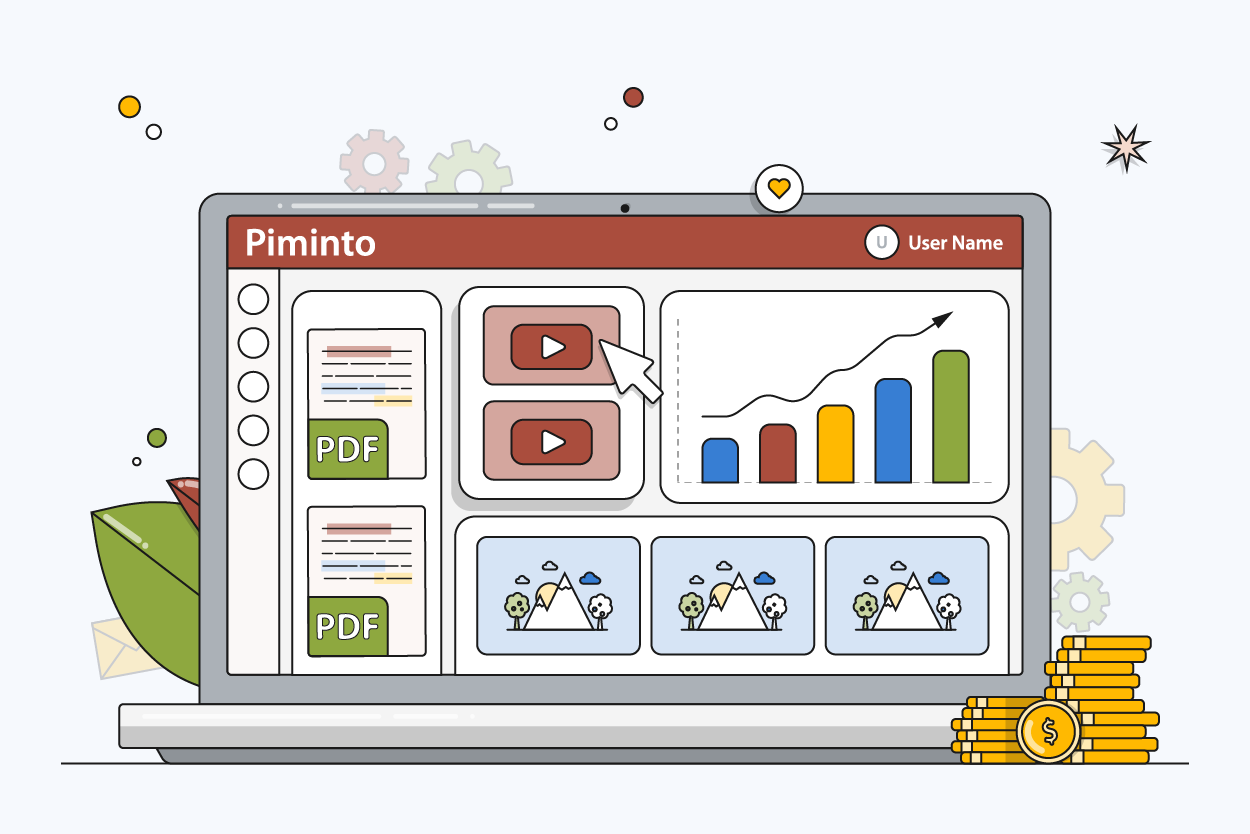
In simple terms, PIM works by managing data. With product information management, you can gather, centralize, enrich, and distribute data related to the products that you sell. This functionality supports any type of information, from banners and reviews to pricing and product descriptions.PIMinto lets you effectively track and process the following data:
- Basic data: Universal product codes, article numbers, titles, etc.
- Assets: Images and video files that help clients understand what exactly they are buying.
- Technical information: Product’s size, color, length, volume, material, etc.
- Marketing information: Major keywords, descriptions, Google categories, etc.
- Sales information: Store pricing data, latest reviews, and testimonials that can be used for promotion.
- Localized information: Information tailored to the region you operate in. It could be regional currency system data.
- Design information: Information about how the product is displayed and how it fits with your business's branding.
- Taxonomy: Variations of the catalogs, connections between them, and core categories for the company’s structure.
- SaaS PIM: Software is created and maintained by a third-party provider (like PIMinto), which means you can’t change the code. Such software requires a license or subscription payment to use. However, it saves you from needing a development team.
- Open-source PIM: In contrast to SaaS PIM software, you have full access to the code. So, you can add new features and change any existing options.
PIM vs ERP vs MDM: Which System Do You Need?
Many businesses struggle to understand the difference between PIM, ERP, and MDM systems. Get clarity on which solution fits your needs.

What does PIM Stand For?
Product information management (PIM) is generally a subcategory of master data management (MDM). It offers great scalability and can be integrated with any legacy software through flexible APIs, making it the go-to solution.| Aspect | Definition |
|---|---|
| Definition | Centralized management of product data for accuracy and consistency across channels. |
| Purpose | To ensure accurate, consistent, and up-to-date product information across multiple platforms. |
| Key features | Centralized Database, Data Quality Management, Multi-Channel Publishing, Digital Asset Management, Workflow Management, Integration Capabilities, Localization and Translation |
| Benefits | Improved Data Accuracy, Enhanced Efficiency, Better Customer Experience, Faster Time-to-Market, Increased Sales, Compliance and Risk Management |
What Is the Function of PIM?
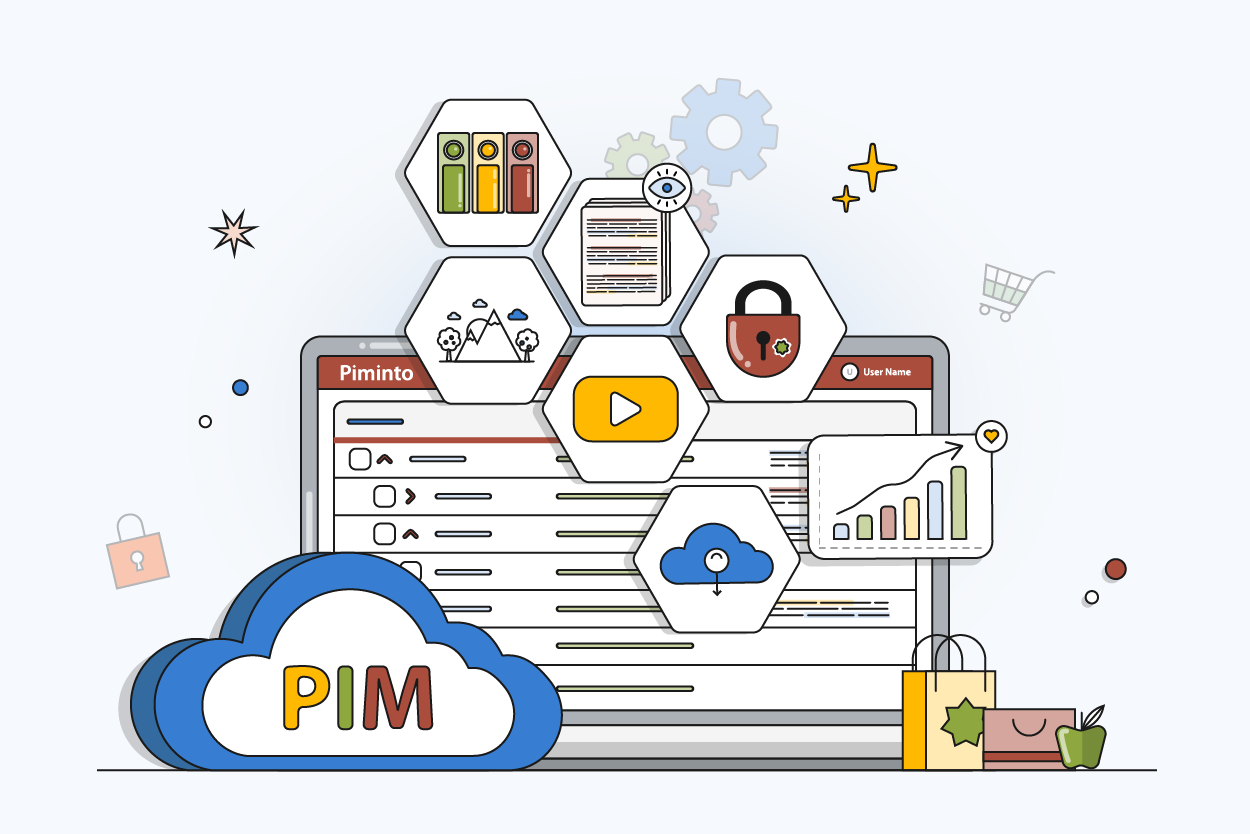
As a database application, PIMinto’s PIM has these core functions:

Data Collection
Import, map, and transform through the selected channel.

Consolidate and Rationalize Data
Organize and simplify product information for consistency across all platforms.

Enrich Descriptions
Add clear, engaging product details to boost appeal and accuracy.
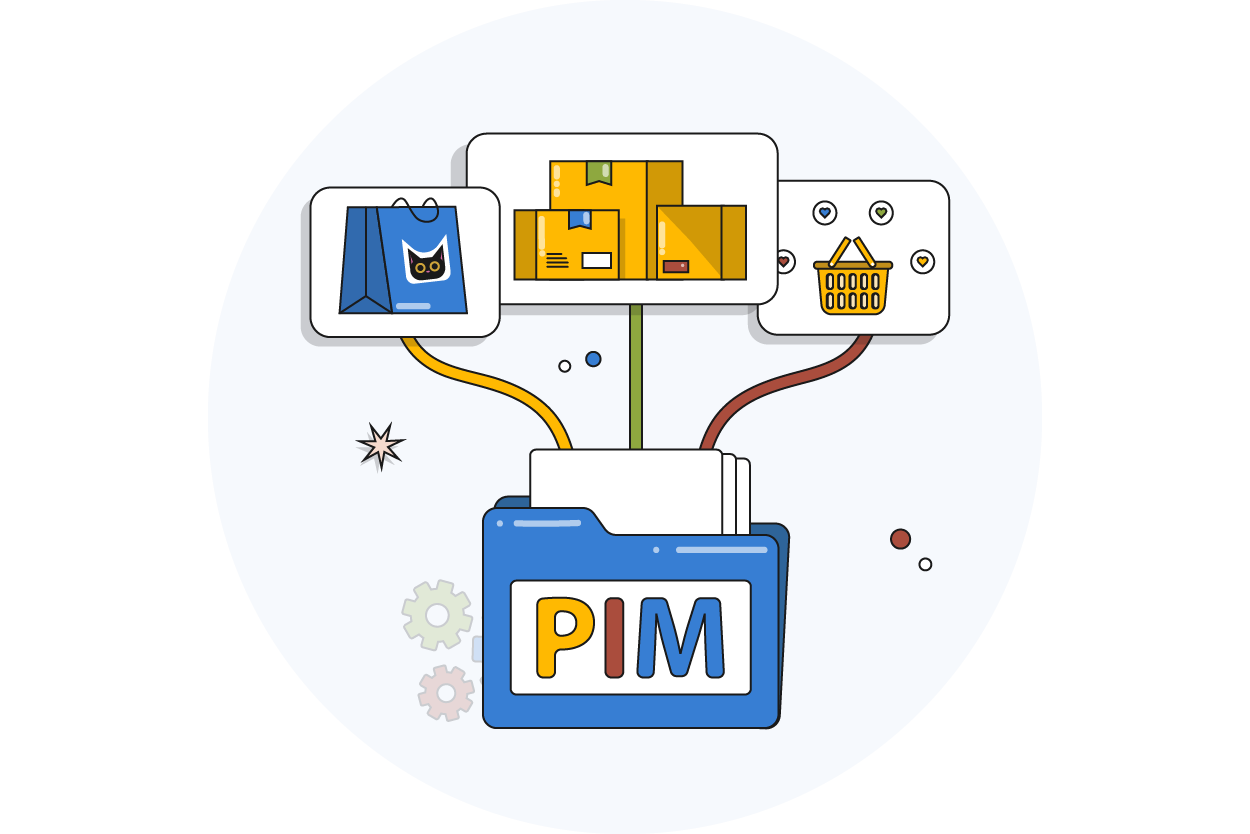
Disseminate Data
Sync product data across channels in real time with a robust API.
Key PIM Features
Besides these key functions, here are additional capabilities of PIMInto product information management systems.

PIM software supports unlimited product channels, allowing users to store and present the same product information in different formats, including multiple languages. This is essential when you work in multinational teams and share your products around the world.
Brand portals help growing companies manage and share product information efficiently. They provide a centralized platform where businesses can distribute accurate product data, images, and marketing materials to retailers and partners. This simplifies eCommerce setup and ensures consistency across sales channels without requiring a large budget.
A PIM system offers multiple views to help users manage product data efficiently. These views allow teams to organize, edit, and analyze product information in ways that best suit their workflow.
Product categories help structure and organize product data. They make it easier for different teams to access relevant information. Marketing teams, IT specialists, and other departments can quickly find the data they need without sifting through unrelated details.
With PIM solutions, you can see several versions of one product. This option allows you to share common characteristics (size, material, colors, season, etc.). You can easily switch between versions to display different variants and product attributes.
With product information management, you can build connections by making different types of associations (for example, recommended products). When you work with product data, relationships will help you see items with similar characteristics, descriptions, or other matches.
Product data often comes in complex formats such as markup text, pre-defined fields, and multi-dimensional pivot tables. PIM systems can transform this data into a structured, standardized format that is easier to manage and distribute.
Who Uses PIM?
Depending on your company's organizational structure, PIM may be used by different departments. While it benefits the entire company, let’s look at the core roles that rely on PIM.
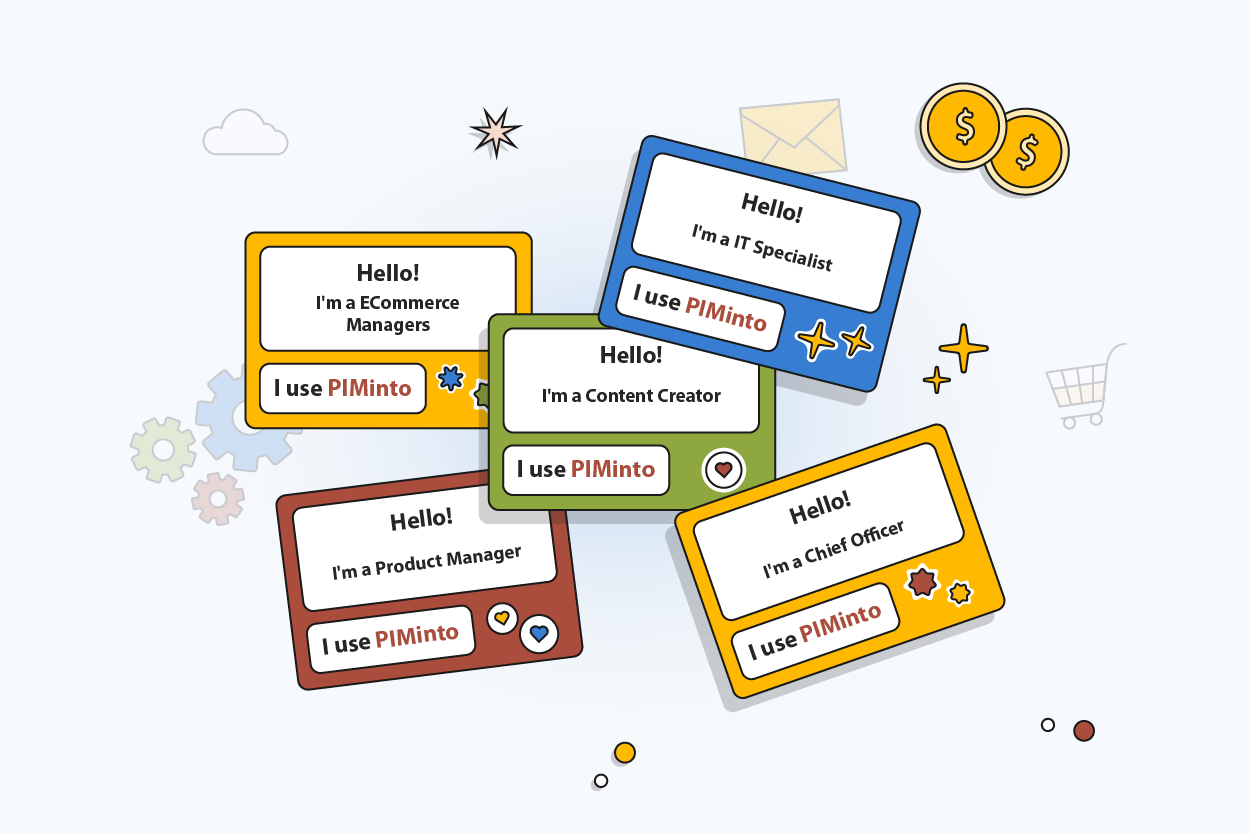
ECommerce managers use PIM to send accurate product listings to syndication platforms without the need for manual verification. Since PIM solutions offer auto-check features, they deliver a superior customer experience without spending much time.
Content writers, photographers, designers, search engine optimization specialists extract product details from the PIM system. Since data is well-structured, individuals don’t need to waste time searching for it.
Product managers rely on PIM to maintain accurate product information throughout its lifecycle. When data changes, PIM automatically updates it across all channels, eliminating the need for manual communication with the marketing team.
PIM simplifies the IT department's work by automating routine tasks, allowing focus for higher-priority operations. Additionally, data is regularly backed up, creating safe and reliable management of product information.
Today, digital presence is an essential component of any business. Regardless of what you do (distribute, sell, or manufacture), you have to maximize your presence on all related platforms while maintaining the quality of product data and digital assets. This is where PIM solutions are invaluable.
Ready to Choose a PIM System?
With so many PIM solutions available, selecting the right one can be overwhelming. Our comprehensive guide breaks down the 15 most critical criteria to evaluate.
Why Is PIM Needed?
PIM simplifies product data management, reducing manual tasks and preventing data inconsistencies. This allows teams to focus on higher-value activities, improving efficiency and reducing stress.

Constantly monitoring and managing product data can overwhelm employees. If teams spend hours on manual updates, it signals a breakdown in data management. As the number of products grows, even experienced specialists may struggle to keep up. Implementing a PIM system prevents this issue by automating processes and ensuring smooth operations.
Data accuracy directly impacts decision-making processes. If something is wrong with the information (for example, it was not updated on time), it may lead to poor decisions. Data analytics must receive only accurate data, and the best way to do it is to implement PIM solutions.
Changes like size updates or other adjustments need to be made quickly to maintain accuracy. Inconsistent information can lead to order cancellations when customers notice discrepancies between descriptions and visuals. Consider using PIM for frequent updates.
Automating product data management speeds up the entire process of launching new products. With a PIM system, updates, approvals, and distribution happen faster, reducing time-to-market with less effort. Even when following strict requirements, preparation becomes more efficient. Faster operations lead to quicker sales and increased revenue potential.
PIM solutions automate workflows and improve the performance of the whole organization. When you remove repeatable tasks and reorganize your processes, you should expect an increase in ROI.
Is Your Business Ready for PIM?
Take our 2-minute assessment and get personalized recommendations
-
Analyze your current product data challenges
Get instant recommendations based on your business profile
See which PIMinto plan fits your needs
Learn if PIM will solve your specific problems
Benefits of a PIM Solution
PIM systems simplify the management of product data. This leads to savings in both time and money while reducing the effort spent maintaining accurate, up-to-date information.
PIM can save companies considerable sums. With good information management, you also avoid excess effort, reducing the time needed to complete tasks. Everything is stored in one place, so any specialist can find data in seconds.
Product information management gives you powerful tools to edit, organize, and optimize data in catalogs of any size. If you are worrying about handling information from multiple sources, leave it to PIM to simplify the process.
When working with data, you must share it with retailers, partners, sales specialists, and other recipients. PIM technology makes it easier to share everything, thanks to quick data exports. The information on catalogs and sales channels can be updated automatically.
You need a strong presence wherever customers are shopping. However, each channel has its own rules and requirements, making manual updates time-consuming and error-prone. PIM simplifies this process by automating data management and meeting compliance standards for each platform. It also allows businesses to easily adjust product information as needed to create a great shopping experience for customers.
Successful marketing campaigns depend on well-organized and accurate product information. PIM enables businesses to go beyond basic selling by supporting upselling and cross-selling strategies. Moreover, modern PIM tools allow you to change the design of the catalogs and sales, making your marketing campaigns more effective.
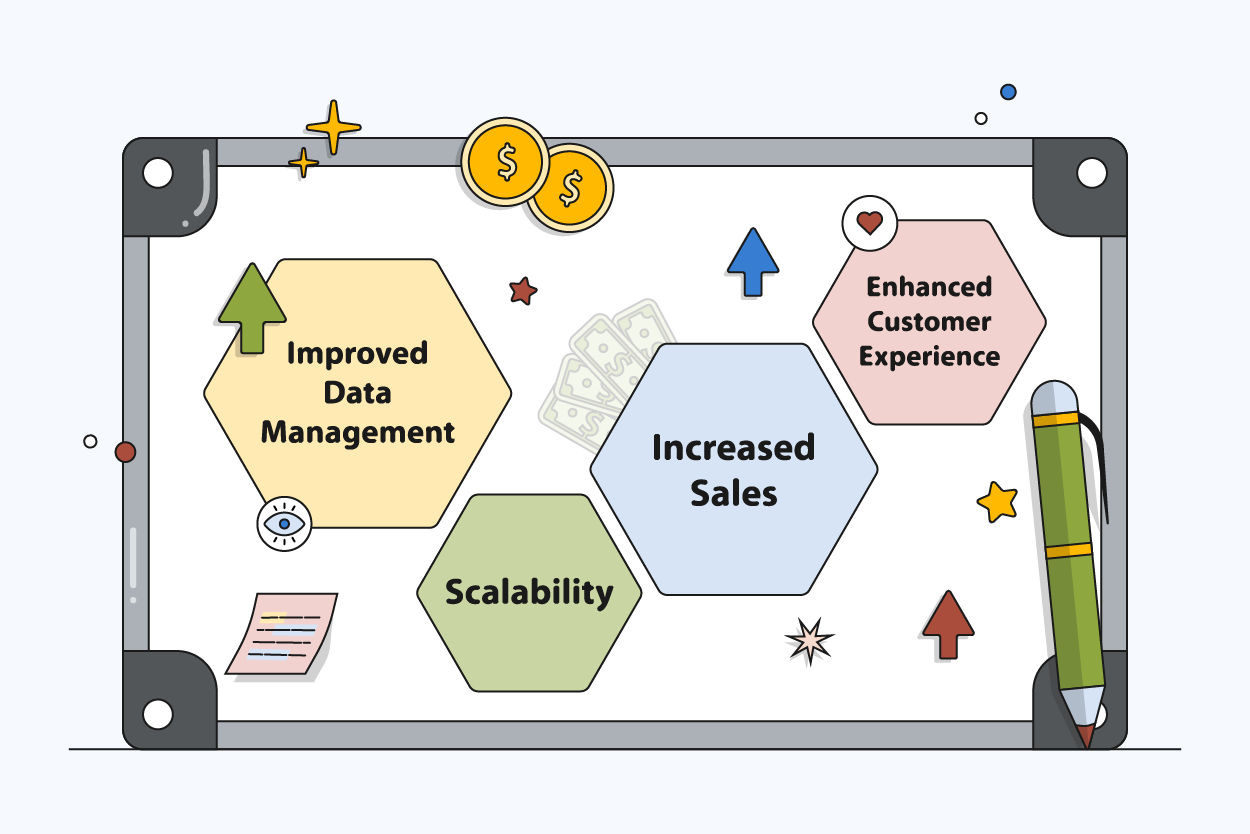
The Role of a Properly Implemented PIM Strategy
A properly implemented PIM strategy will be advantageous for your business. With a well-balanced strategy, you no longer struggle with inaccurate product content that can disorientate customers. With high-quality product listings delivered on time, you can ensure success across channels. Major companies worldwide have already seen changes after implementing product information management.
Additionally, a well-balanced product information management strategy brings positive changes to digital assets management (DAM). Now, when dealing with images and videos related to SKUs, you can easily manage and connect them to the needed descriptions. Here are the key steps to significantly improve performance with PIM.

Clean, structured product data is what powers both search visibility and AI recommendations. A product information management system is only as effective as the data inside it — standardize attributes and set validation rules before scaling.
Connect your PIM software to ecommerce platforms and ERP systems so product updates flow automatically to every sales channel. Manual transfers between systems create errors — a properly integrated PIM system eliminates them.
Invest in AI-powered enrichment to scale content production across large catalogs without proportionally scaling your team. Modern product information management tools generate descriptions and fill missing attributes across thousands of SKUs automatically.
AI agents are already making purchase decisions based on structured product data served through APIs. Your PIM strategy should account for how machines, not just humans, will read your product information.
Real PIM Use Case
Hussmann Corporation

Hussmann Corporation, a subsidiary of Panasonic Corporation engages in millions of dollars of online replacement part sales annually. Hussmann wanted to extend their product line data to contain competitor compatibility information as well as filterable product category specific parts attribute data that could be used to enrich the end consumer experience.
PIMinto PIM was selected to provide the functionality required by Hussmann. All functionality required by Hussmann is supported by PIMinto as standard features.
- Initial product data was imported from spreadsheet into PIMinto.
- PIMInto Feeds were configured to fetch new products / SKU’s nightly from available external business system API’s and add them to the PIM along with available attribute data.
- New products / SKU’s are added to the PIM accordingly. Existing SKU attributes are updated accordingly.
- Headless eCommerce solution extended to utilize PIMINTO fast data serving API’s to deliver product data to eCommerce channel in real time.
- Automated and manual Product and SKU data exports configured for automated and manual channel exports.
By implementing PIMinto PIM, Hussmann Corporation effectively extended their product line data, improved data management, and enhanced the customer experience.
Vermeer Corporation

Vermeer Corporation, founded in 1948 is a manufacturer of industrial and agricultural equipment. Vermeer wanted to expand their eCommerce reach to include retail customer online order placement using a unified platform.
- Initial Product data was loaded by Vermeer from spreadsheets and API connections.
- Dealer access keys were generated for each participating dealer.
- Dealers maintain only their own data.
- Headless retail eCommerce integrates directly with PIMinto.
- All dealers use the same API.
By implementing this solution, Vermeer Corporation successfully expanded their eCommerce reach and streamlined parts data management across their dealer network.
RBI Corporation

RBI Corporation, a distributor with over 250,000 SKU’s and multiple sales channels needed a single source of truth for headless eCommerce.
- Scheduled imports from external business systems.
- Manual enrichment through the PIM UI.
- Supplier attribute imports.
- Real-time API integration with retail and wholesale websites.
By implementing PIMinto PIM, RBI Corporation effectively leveraged product data across multiple sales channels.
Comparing PIM to Other Data Management Tools
PIM is typically compared with other systems for managing data like Product Data Management (PDM), Master Data Management (MDM), and Digital Asset Management (DAM). While these applications are related, they perform distinct roles in managing and organizing business data.
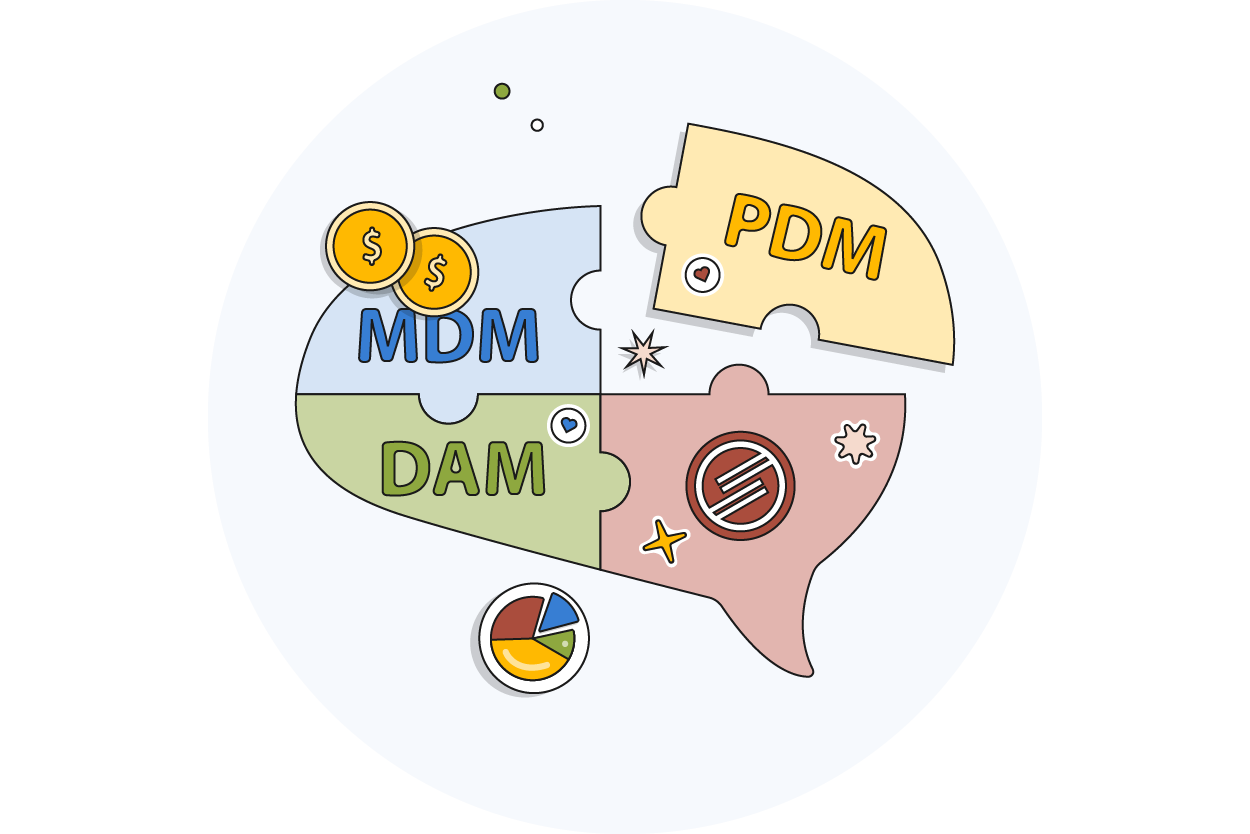
PDM
PDM is used primarily in manufacturing and engineering for product design data, specifications, and managing the product lifecycle.

MDM
MDM is typically an enterprise system that manages and standardizes all the most important business information, including customer, supplier, and financial data.

DAM
DAM systems manage digital assets like images, videos, and brand assets.
PIM is a subset of MDM and is employed to optimize and syndicate product data. While PIM integrates with DAM to link media files to product data, DAM lacks the product data management and syndication capabilities of PIM. All these systems play a role in data governance, but PIM targets specifically centralizing, enriching, and distributing product data effectively to marketing and sales channels.
The Role of PIM in Multichannel Strategies
A well-implemented PIM system is essential for businesses that sell their products through multiple sales channels, including eCommerce websites, marketplaces, social media, and physical stores. No matter what channels users engage with your business, PIM assists in delivering a consistent shopping experience by keeping product information synchronized. One product database ensures that valid and updated data is displayed on every sales channel. Plus, PIM lets you customize data for each channel’s specifications.
In 2026, multichannel also means AI channels. Google AI Mode, ChatGPT, and Perplexity now answer product queries with direct recommendations pulled from structured data. A PIM system that keeps product information accurate, complete, and accessible through APIs ensures your products appear in these AI-powered channels alongside traditional search results, marketplaces, and your own ecommerce storefront.
PIM in the Age of AI and Agentic Commerce
The role of PIM is expanding beyond internal data management. In 2026, two shifts are making PIM critical for how products get discovered and purchased:
AI-Powered Search and Product Discovery
AI Overviews in Google, ChatGPT, and Perplexity now answer buying queries with direct product recommendations. When a shopper asks "best PIM software for ecommerce" or "which product fits my needs," the AI pulls from structured content: comparison tables, specific pricing, feature lists, and verified reviews. Products with incomplete or outdated information are rarely mentioned.
PIM ensures your product data is structured, enriched, and complete enough to be cited by AI systems — not just indexed by traditional search engines.
Agentic Commerce
Google launched the Universal Commerce Protocol in January 2026 with Shopify, Walmart, and Target. AI agents can now search, compare, and check out products on behalf of shoppers. These agents do not browse pages — they read structured product data through APIs. If your specs, images, or pricing are missing or inconsistent, your product gets skipped.
A PIM with a fast, documented API becomes a competitive advantage in this environment. When your product data is centralized and available in real time, AI agents can access it directly — making your products eligible for automated purchasing decisions.
PIM Implementation Steps and Technical Requirements
A successful PIM implementation starts with clearly defined business objectives and an analysis of where your product data currently lives — spreadsheets, ERP fields, ecommerce platforms, supplier files, shared drives. Here are the key steps to get from scattered data to a working PIM system.
Audit and Clean Your Data
Standardize naming conventions, remove duplicates, and fill critical gaps before importing into the PIM. Companies migrating from spreadsheets, legacy ERPs, or bespoke databases need to normalize data first. Clean data going in means clean data coming out — skipping this step creates rework later.
Define Your Data Model
Set up your attribute structure, product categories, variant relationships, and required fields. This is the foundation of your product information management system. Getting it right now prevents restructuring your catalog after the PIM goes live.
Import and Validate
Import your product data into the PIM system. Use validation rules to catch errors during import. Start with a test batch before migrating the full catalog to identify formatting issues early.
Connect Your Sales Channels
Set up connectors to your ecommerce platforms, marketplaces, and partner portals. Configure how product data maps to each channel's format and requirements. Real-time integration with ecommerce platforms, ERP, and DAM systems ensures efficient synchronization.
Set Up Roles and Workflows
Define who can view, edit, and publish product data. Product data, marketing, and ecommerce teams each need appropriate permissions. Approval workflows prevent incorrect information from going live.
Train Your Team and Go Live
User adoption is essential to maximizing the advantages of PIM. A structured onboarding process enables efficient use across teams. With PIM software like PIMinto, standard migrations complete in one to two weeks with onboarding and training included at no extra cost.
When is the Right Time to Invest in a PIM System
There are clear signals that your business has outgrown manual product data management:
- Your catalog has grown beyond 500 SKUs and manual updates are slowing down product launches.
- You sell on three or more channels and keeping product information consistent across all of them requires significant manual effort.
- Multiple team members update product data, and errors regularly slip into live listings.
- Supplier onboarding takes too long because each vendor sends data in a different format.
- You are expanding into new markets or languages and need localized product content.
- Your products are not appearing in AI-powered search recommendations because your data is not structured or complete enough.
How to Choose a PIM system?
Choosing the right PIM depends on your business size, catalog complexity, budget, and technical resources. Here are the key factors to evaluate:
- Ease of use: Can your team start working in the PIM without extensive training? Look for platforms that non-technical users can navigate independently.
- Ecommerce integrations: Does the PIM connect to your current platforms — Shopify, WooCommerce, Magento, BigCommerce, marketplaces? Pre-built connectors save months of custom development.
- Pricing model: Some PIM platforms charge per user, per SKU, or per channel. Others offer flat pricing with unlimited users. Understand the total cost, not just the starting price.
- AI capabilities: Can the PIM generate product descriptions, fill missing attributes, and enrich content automatically? This is increasingly important for scaling content across large catalogs.
- API and headless support: If you run a custom storefront or headless commerce setup, the PIM must serve product data through a fast, documented API.
- Implementation time: Enterprise PIM deployments can take months. SaaS platforms like PIMinto complete standard migrations in one to two weeks.
- Support model: Does the vendor include onboarding and training, or is it an add-on? Will you have access to real support people or just a ticket system?
How Much Does PIM Software Cost?
PIM pricing varies widely depending on the vendor, deployment model, and features included. Here is how the main options compare.
| PIM Platform | Starting Price | Free Plan | AI Included | Unlimited Users |
|---|---|---|---|---|
| PIMinto | $300/mo | Yes | Yes | Yes |
| Plytix | €499/mo | Yes (1,000 SKUs) | Yes | Yes |
| Akeneo | $45,000/yr | Open source | Paid add-on | No |
| Salsify | Custom | No | Paid add-on | No |
| Pimcore | Free (open source) | Self-hosted | No | Yes |
All PIMinto plans include unlimited users, onboarding, training, and free migration from any existing system. Most migrations complete in one to two weeks with zero downtime.
Try the Really Fast PIM from PIMinto
Start with our free plan to experience all the benefits of PIMinto.
What is PIM?
PIM (Product Information Management) is a system that centralizes, organizes, enriches, and distributes product data across all sales and marketing channels. It replaces scattered spreadsheets and manual updates with one platform where every team and every channel pulls from the same accurate, up-to-date product record.
What does PIM stand for?
PIM stands for Product Information Management. It refers to both the practice of managing product data and the software platforms that enable it.
What is a PIM system?
A PIM system is software that collects product data from multiple sources (ERP, suppliers, spreadsheets), organizes it in a centralized database, enriches it with descriptions and media, and publishes it to ecommerce platforms, marketplaces, and other sales channels.
What is PIM software used for?
PIM software is used to manage product titles, descriptions, specifications, pricing, images, videos, and other product attributes in one place. Teams use it to ensure product information is accurate and consistent across every channel they sell on.
Who needs PIM software?
Ecommerce brands, retailers, manufacturers, distributors, and wholesalers who manage large product catalogs across multiple channels. If your team spends significant time on manual product data updates or regularly finds errors in live listings, PIM can help.
How much does PIM software cost?
PIM pricing ranges from free to $300,000+ per year. PIMinto starts at $300/month with a free Starter plan. Plytix starts at €499/month. Akeneo starts at $45,000/year. Enterprise platforms like Salsify use custom pricing. Open-source options like Pimcore are free to license but require developers for setup.
What is the difference between PIM and ERP?
ERP manages transactions — inventory, orders, financials. PIM manages product content — descriptions, specifications, images, attributes. Most businesses need both: ERP as the system of record for pricing and stock, PIM as the system of record for product content that goes to customers and sales channels.
What is the difference between PIM and DAM?
PIM manages structured product data (titles, specs, pricing, attributes). DAM manages digital files (images, videos, documents). Modern platforms like PIMinto include built-in DAM, so product data and digital assets are managed together in one system.
How long does PIM implementation take?
Implementation time depends on catalog size and complexity. With PIMinto, standard migrations complete in one to two weeks. Enterprise platforms with custom integrations can take three to twelve months. Your current systems keep running during migration with zero downtime.
What is the best PIM software?
The best PIM depends on your business size and needs. PIMinto offers PIM, DAM, and AI in every paid plan starting at $300/month with unlimited users. Plytix suits small teams. Akeneo suits mid-market to enterprise. Pimcore offers open-source flexibility for teams with developers.
Can PIM help with SEO?
Yes. PIM lets you manage product titles, descriptions, attributes, and image alt tags at scale. Structured, complete product data improves how your products appear in search results and increases your chances of being cited in AI-powered search recommendations.
How does PIM work with AI and agentic commerce?
AI agents and AI-powered search tools recommend products based on structured data. PIM ensures your product information is complete, accurate, and accessible through APIs — making your products visible to both traditional search engines and AI systems that make or influence purchasing decisions.
Blogs & Views
-
Best PIM Software for Shopify in 2026
Shopify handles products well until the catalog outgrows it. Variants pile up, supplier files arrive in different formats, a second store needs the same products with different content, and spreadsheets become the real system of record. That is the p...
-

Jewelry Product Catalog Software: Managing Product Data, Line Sheets and B2B Catalogs
One engagement ring design can come in three metals, four center-stone weights and twelve ring sizes. Add natural and lab-grown versions, a wholesale price for boutiques and a separate price list for Europe, and a single design turns into hundreds of...
-
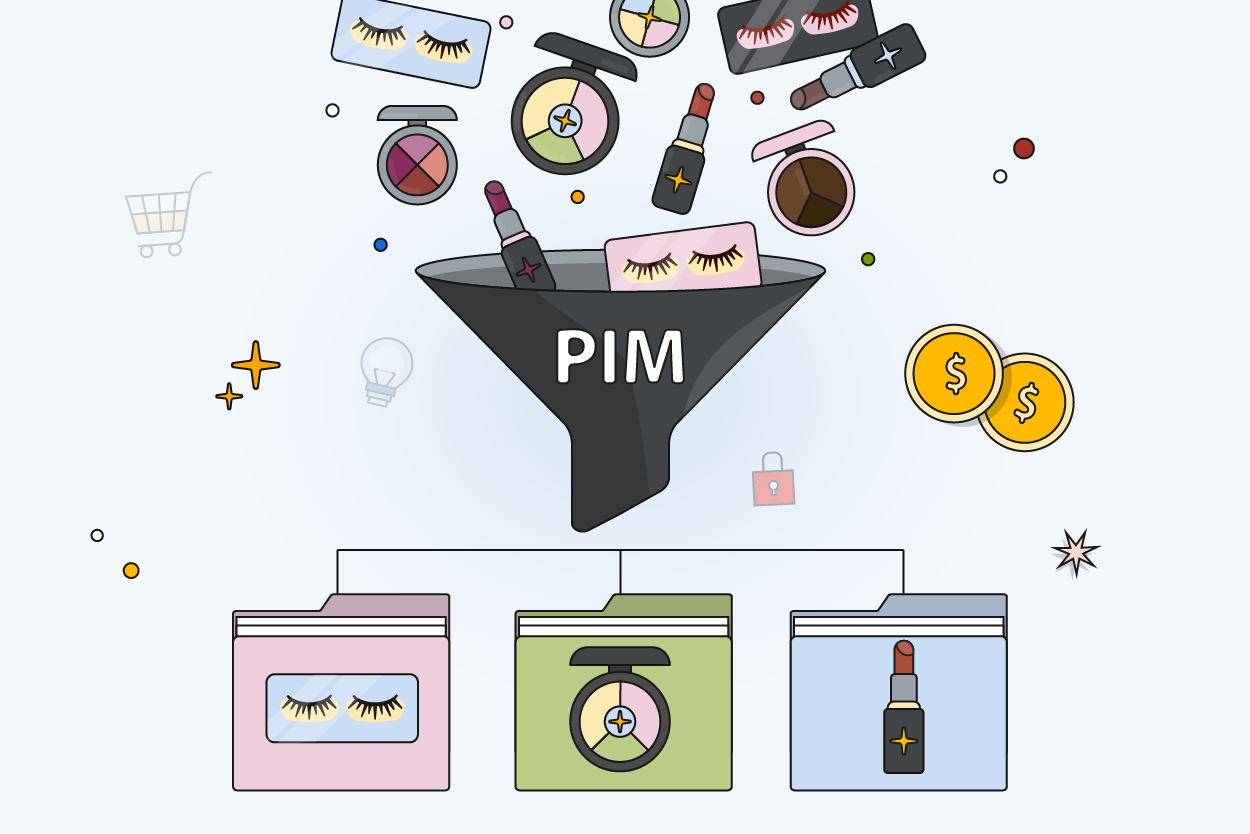
Beauty and Cosmetics Product Data Management: A PIM Guide for Brands
A lipstick launches in 20 shades. Each shade has its own barcode, swatch, product photo, shade description and stock status, and every retailer wants that information in a different spreadsheet. Six months later the brand adds a matte version and a m...
-

Food and Beverage Product Data Management: A Practical Guide for Brands and Distributors
A granola bar recipe changes: almonds replace cashews. The new label goes to print, but the allergen statement on your website, the spec sheet your distributor uses and the listing on an online grocery site still say "contains cashews." Nobody made a...