Welcome to the Blog
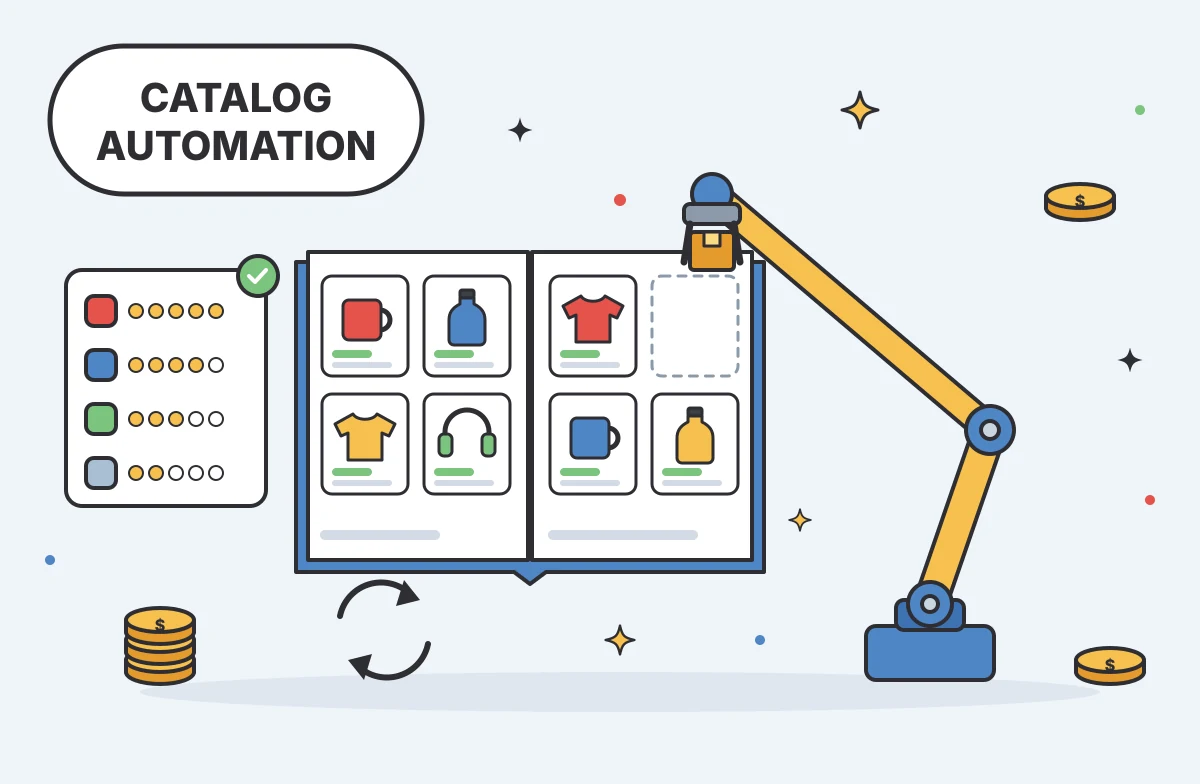
Best Product Catalog Automation Software
Messy product data slows sales and hurts SEO. You need a system that pulls your SKUs into one place, cleans them up, and pushes them out to every shop, marketplace, and ad channel without hand‑coding feeds. Below is a curated shortlist o...

Mark James

Food and Beverage Product Data Management: A Practical Guide for Brands and Distributors
A granola bar recipe changes: almonds replace cashews. The new label goes to print, but the allergen statement on your website, the spec sheet your distributor uses and the listing on an online grocery site still say "contains cashews." Nobody made a...

Multichannel Ecommerce Software: A Practical Guide
A shopper finds your product on Amazon, checks the price in your Shopify store and buys it on Walmart. Behind that one purchase sit three listings, one pool of stock and a product description that has to match everywhere. Multichannel ecommerce softw...

Automotive Aftermarket PIM Software Guide
An aftermarket brake rotor can fit dozens of vehicles, replace three older part numbers, ship in two package sizes and need a California warning label. Multiply that by 20,000 SKUs, and the spreadsheet that used to run your catalog starts sending cus...

Automated Product Descriptions: How They Work
A blank description field can hold up a product launch, especially when the catalog runs into hundreds of SKUs. Automated product descriptions use product data to draft copy at scale, but the writing is only one part of the job. Your tea...
Mark James

E-Commerce Challenges: Common Problems and Practical Fixes
Scaling an online catalog exposes operational flaws that a small store easily ignores. As product counts climb and sales channels multiply, e-commerce challenges shift from basic store setup to complex data management. Keeping up with orders and fulf...
Mark James
How to Sync PIM Data to Amazon
Moving approved product data from an internal database into an Amazon storefront requires precise alignment between your systems and marketplace rules. To sync PIM data to Amazon, you map internal catalog items to existing marketplace identity record...
Mark James

Plytix Alternatives: Compare PIM Platforms
Finding the right platform for your product catalog requires more than comparing feature checklists. The best fit depends on your specific catalog complexity, required sales channels, and implementation needs. When evaluating Plytix alternatives, you...
Mark James

Enterprise PIM Alternatives: 5 Platforms Compared
When your multi-channel catalog expands past a few thousand SKUs, data silos cause publishing errors, misaligned variants, and missing digital assets. Vendors answer this problem with large-scale management suites, but these platforms often introduce...
Mark James

How to Build an Ecommerce Product Feed
A weak product data feed can quietly block listings, waste ad spend, and send shoppers to pages with the wrong price or stock status. We can fix that by treating the feed as a controlled data pipeline, not a last-minute export....
Mark James

PIM vs ERP for Product Data: Who Owns What?
For growing e-commerce and B2B brands, PIMinto offers a fast, accessible, transparently priced PIM/DAM solution that replaces spreadsheet chaos, with unlimited users and outputs without the bloated enterprise price tag. That distinction matters becau...
Mark James

Ecommerce Product Content: What It Is and Why It Matters
Ecommerce product content is all the information a shopper uses to understand a product before buying it: titles, descriptions, specifications, images, videos, documents, and the structured attributes behind them. It is what turns a product page from...